
App
1. VISION: The Revolutionary Social Network


The innovative social Platform making it possible for people to interact with each other in 42 languages automatically translated.
Founded and funded by the one man Simon Wilby 1. Vision matches in few features with Twitter but it presents completely different features and tools that enable users to make the most of this awesome platform.
The users benefit from the powerful tools that include following, sharing and publishing content in many Languages but the users can get real-time translation powered by its AI-based auto Translation system that auto translates the Posts of 42 languages so that language may not remain the barrier to communicate globally. The communication barrier issue has been resolved by this innovative social media platform.
According to its founder Simon, he built this powerful platform with the sole reason that people should communicate freely and understand each other no matter what language they speak and what country they belong, they get real times translation, text-to-text, voice to voice and OCR services that is the revolutionary technology to take the fullest advantage of these scientific advancements in technology and communication channels powered by ever-growing and popular AI-based systems.
The AI-powered Social media platform for communication and interaction with cutting-edge technology features of auto text, voice and OCR translation with Innovative and wonderful features has attracted more than 3 Million users in the united states and more people are joining the platform as it has ease of access and communication features that are rarely found on any biggest platform like Facebook, Twitter or LinkedIn.
Such great features may attract every person to fall in love with 1. Vision.As the name suggests they have one mission to make the conversion easy simple and effective through interpreting tools so that nobody may need any third-party translation software to respond except the platform’s own powerful auto-translation platform.
The name suggests a single vision and single engagement beyond borders.
The founder and CEO Simon Wilby had the foresighted vision to create such a platform where every person could communicate around the world in local languages of their own without translating their thoughts to communicate.
The top level and unique domain “1. vision” domain were registered at GoDaddy by Simon.
It is interesting to share here that Simon received many offers from angel investors, ventures and financiers but refused to offer any share to any prospective. He put his all funds in and still, is the 100 per cent owner of the Site and has no plans to consider any venture-backed financing or selling shares.
The next big news coming to the Television screens is amazing AI to translate video automatically. The Work on the new feature has already started and it will be launching very soon.
Simon says that social media is ageing out but 1. vision will be to rock the social media platforms with the powerful and marvellous features that any other social media platform may offer after years.
Twitter is a waste of time and Facebook is dumb but 1. Vision is engaging social media platforms with new features that will introduce to grab the attention of the users to benefit from our platform.
The CEO announced that Video translation features are launching in 10 days, there is already an overwhelming response from social media users and influencers, entrepreneurs, starts, businesses, and Government and private sector enterprises.US is already using a platform that is secure and effective.
The CEO and founder Simon Wilby also shared that he is reluctant to pay Apple or Google Play for mobile applications since he feels it is waste of time and money as he has plans to keep 1.Vision as a noncommercial and ad-free platform.
Hence he prefers web-based social Media which can auto-customize and optimize as per screen either PC or Mobile. The 1. vision has been in such a manner that it can work on any device anywhere in the world making it convenient and easy to be used and reap the benefits.
The Interesting feature of 1. Video will be added in 1. vision where the movies in any language can be watched in your native language removing linguistic barriers and challenges. Even hate speech will atomically be censored so that there should be positive and healthy communication between the Individuals.
The AI-powered can catch all the communication regardless of accent and delivers it perfectly for the users. It is a feature-rich platform and must join the social media platform to interact with professionals and share your thoughts and insights with the world at Large.
The 1. vision will also facilitate the sports lovers to watch and entertain themselves in their native languages.
The platform solves all the problems of students learning different languages to communicate, Businessmen touring the world for business and meeting different people, 1. Vision comes to the rescue when you are facing a language barrier.
The platform offers all features any big social media platform can offer but it is a standalone platform without VC or crowdfunding or Advertisement with one mission to have 1 platform and 1 conversation. Thanks to visionary Simon Wilby to turn his communication Idea into reality by founding this awesome platform.
Discover more from Remote Work Tips
Subscribe to get the latest posts sent to your email.



AI
The People vs. AI: Why America’s Growing Backlash Against Data Centers Signals a Broader Tech Reckoning

From Virginia’s megacampus communities to Mississippi’s courtrooms, a cross-partisan coalition is demanding that America slow down and ask who, exactly, benefits from the AI revolution—and at what cost.
One icy morning in February, nearly 200 people gathered in a Richmond, Virginia church before dawn. They came from rural farms and suburban subdivisions, from the valleys of Botetourt County and the exurbs of Washington, D.C. Republicans stood alongside Democrats. Pastors sat next to environmental engineers. And though they had arrived carrying different anxieties—higher electricity bills, fouled groundwater, the low industrial hum that now keeps rural families awake at night—they shared a single, galvanizing conviction: that the AI industry’s appetite for infrastructure had outpaced its accountability to the people who must live beside it.
“Aren’t you tired of being ignored by both parties, and having your quality of life and your environment absolutely destroyed by corporate greed?” state senator Danica Roem asked the crowd. The standing ovation that followed was the sound of something new crystallizing in American political life. What is causing AI backlash? The short answer: communities feel they are absorbing all of the costs—environmental, economic, democratic—while the profits flow elsewhere.
The activists marched to the state capitol, where state delegate John McAuliff offered what may be the most honest six-word summary of the public’s relationship with the AI boom: “You’re getting a sh-t deal.”

AI Pessimism Is Not a Fringe Position
Pundits frequently portray skepticism of AI as technophobia. The data tell a different story. According to Pew Research Center’s 2025 AI Attitudes Survey, five times as many Americans are concerned as are excited about the increased use of AI in daily life—a ratio that has widened over the past two years, not narrowed, as the technology has become more pervasive. Majorities believe AI will worsen creative thinking, erode meaningful human relationships, and degrade decision-making. More than half say AI poses a serious risk of spreading political misinformation. These are not marginal anxieties; they are mainstream ones.
Internationally, the United States is among the most skeptical rich nations, a finding that surprises many observers who assume American technological exceptionalism translates into enthusiasm. It does not. The country that houses the majority of the world’s AI compute infrastructure is also one of the most apprehensive about its consequences. The table below, drawn from Pew’s cross-national data, illustrates the divide.
Table 1: AI Optimism vs. Pessimism by Country (Pew Research, 2025)
Country % More Excited % More Concerned Net Sentiment United States 18% 38% −20 (Pessimistic) United Kingdom 17% 42% −25 (Pessimistic) Germany 14% 52% −38 (Pessimistic) India 71% 11% +60 (Optimistic) Indonesia 65% 9% +56 (Optimistic) Nigeria 58% 12% +46 (Optimistic) Japan 20% 48% −28 (Pessimistic) Brazil 55% 14% +41 (Optimistic)
Source: Pew Research Center, “AI Attitudes Survey” 2025. Net sentiment = % excited minus % concerned.
The pattern is stark: wealthy democracies with established labor protections and high wages view AI as a threat to existing quality of life; rapidly developing economies, where AI offers tangible prospects of economic leapfrogging, are markedly more enthusiastic. This is not irrational on either side. It reflects a fundamental asymmetry in who stands to gain from the present deployment trajectory.
Ground Zero: Why Virginia Became the Symbol of Bipartisan Resistance to AI Development
Virginia’s Loudoun County—nicknamed “Data Center Alley”—hosts more data center capacity than any comparable geography on Earth, accounting for roughly 70% of the world’s internet traffic at any given moment. The concentration has brought tax revenue and construction jobs. It has also brought something else: a relentless surge in electricity demand that is reshaping the state’s energy grid and the household budgets of people nowhere near a server rack.
As NPR reported, residential customers in Dominion Energy’s service territory—which covers much of northern and central Virginia—have seen bills climb as the utility pursues new generation capacity to feed data centers whose power purchase agreements are structured to benefit large commercial customers first. Rural residents, already stretched by post-pandemic inflation, are being asked to help finance infrastructure they will never use.
The activists in homemade shirts—“Boondoggle: Data Center in Botetourt County”—were not opposing innovation in the abstract. They were opposing a specific regulatory and financial arrangement in which local residents bear external costs while shareholders and cloud tenants capture value. This is a data center backlash in Virginia 2026 that has become a template: similar coalitions are emerging in Indiana, Arizona, Nevada, and rural Texas.
Stalled Projects and the $98 Billion Question
The activism is having measurable economic effects. According to industry trackers, approximately $98 billion in planned U.S. data center projects were stalled or subject to significant regulatory delay in Q2 2025, with activism and permitting challenges cited as primary factors. The table below breaks down the stalls by state.
Table 2: Stalled U.S. Data Center Projects by State (Q2 2025, est.)
State Est. Capital at Risk Primary Objection Status Virginia $34B Energy costs, noise, water Multiple projects paused Indiana $18B Agricultural land use Zoning litigation Arizona $22B Water scarcity State review ordered Nevada $14B Grid capacity, water Environmental impact review Texas $10B Grid stability (ERCOT) Utility negotiations stalled
Source: Industry estimates, state regulatory filings, Q2 2025. Figures rounded.
The delays are not killing AI development—they are redirecting it, to jurisdictions with cheaper power, laxer environmental oversight, and weaker community organization. This is the classic spatial arbitrage of industrial capitalism: the factory moves when the community pushes back. Whether that dispersal is good or bad depends on whether you are in the community that succeeds in pushing or the one that inherits the factory.
The Legal Front: xAI in Mississippi and the Clean Air Act Test
The backlash has found its way into federal courts. Litigation against Elon Musk’s xAI facility in Memphis, Mississippi alleges violations of the Clean Air Act, with plaintiffs arguing that the company’s backup generators—operated as primary power sources during periods of grid stress—emit pollutants at levels requiring permits the company does not possess. The case is being watched nationally as a potential precedent for whether AI companies can claim de facto exemptions from environmental law by classifying their continuous operations as “emergency” use.
If plaintiffs succeed, the implications for the industry would be significant: hundreds of facilities across the country rely on similar generator arrangements. Environmental lawyers note that the xAI case may open the door to Clean Air Act enforcement against data centers at a scale the sector has never faced. “This is not a fringe environmental argument,” one former EPA enforcement official told The Guardian. “These are the same rules every other industrial emitter has to follow.”
Global Pressure: The AI Impact Summit 2026 and Trade Deal Disruptions
The U.S. backlash is not occurring in isolation. At the AI Impact Summit 2026 in New Delhi, delegates attempting to finalize a framework for AI-driven trade agreements—covering data localization, intellectual property, and labor displacement provisions—were disrupted by Youth Congress activists protesting what they called a “digital colonialism” framework that would concentrate AI-derived wealth in American and European technology companies while requiring developing nations to provide low-cost data and labor. The protests did not collapse the summit, but they delayed a planned joint communiqué and forced a revision of language around benefit-sharing mechanisms.
The New Delhi disruptions signal that AI skepticism is globalizing even as AI enthusiasm in some emerging economies remains strong. The distinction, activists argue, is between optimism about AI as a technology and skepticism about the terms on which it is being deployed. These are separable positions, and conflating them—as advocates for the industry often do—obscures the legitimate grievance at the heart of the backlash.
Bernie Sanders and the Case for a Moratorium
Senator Bernie Sanders has proposed what he calls a “moratorium on AI data center development” to “slow down the revolution and protect workers,” arguing that the pace of deployment has deliberately outrun the capacity of democratic institutions to govern it. The proposal, greeted with skepticism by economists who note that unilateral moratoriums invite capital flight, has nonetheless reframed the debate: instead of asking “how do we govern AI?,” it asks “should we be allowed to pause and decide?”
Sanders’ intervention illustrates the unusual political geography of AI resistance. As The Washington Post has documented in its polling analysis, concern about AI does not sort neatly along partisan lines. MAGA Republicans who distrust Silicon Valley’s cultural influence and democratic socialists who distrust its economic power converge, awkwardly but consequentially, on the same demand: slow down.
The AI Environmental Impact on Communities: What the Data Show
Beneath the politics lies a set of empirical disputes that deserve more rigorous public attention than they typically receive. The AI environmental impact on communities operates along three axes:
- Energy: A single large language model training run can consume as much electricity as several hundred U.S. homes use in a year. The inference costs—running the model millions of times daily—are ongoing and growing.
- Water: Cooling systems for major data centers can consume millions of gallons of water annually, a serious concern in drought-stressed regions like Arizona’s Phoenix metro, where several proposed facilities face water-availability challenges.
- Noise: Industrial cooling equipment operates continuously, producing low-frequency noise that affects nearby residents. Unlike construction noise, it does not stop; it is the permanent ambient condition of living near a data center campus.
None of these harms are, in principle, unmanageable. They are, however, being managed poorly—or not at all—under current regulatory frameworks that were not designed for facilities of this scale or this permanence.
AI Job Displacement: The Other Fear Nobody Talks About Plainly
Community opposition to data centers is partially a proxy for a deeper anxiety: public concerns about AI job loss. When residents object to a data center, they are often also expressing a fear that they are watching the physical infrastructure of their economic replacement being built in their backyard. Data centers employ relatively few people for their footprint—a facility consuming hundreds of megawatts may have a permanent workforce of dozens—while the AI systems they power are actively displacing white-collar and creative jobs in ways the public perceives, even if economists debate the magnitude.
A 2025 McKinsey analysis estimated that generative AI could displace 12 million workers in the United States by 2030 in occupations ranging from customer service to legal research to graphic design. Meanwhile, the TIME investigation into public AI pessimism found that workers in affected industries are not merely worried about losing their jobs; they are worried about losing the sense of purpose and mastery that skilled work confers. This is not easily compensated by a retraining voucher.
What Good Policy Would Look Like
The backlash is real, its grievances are legitimate, and it will not be resolved by dismissing protesters as technophobes or promising trickle-down prosperity from the AI economy. Several policy directions merit serious attention:
- Community benefit agreements: Require data center developers to negotiate directly with affected municipalities before permitting, covering utility cost guarantees, noise mitigation, water use limits, and local hiring commitments.
- Energy cost isolation: Regulatory reform to prevent data center power purchase agreements from socializing costs to residential ratepayers. Industrial customers that drive demand spikes should pay their proportional share of grid expansion costs.
- Environmental permitting reform: Close generator loopholes that allow data centers to operate industrial combustion equipment under emergency-use classifications. Require full Clean Air Act permits for any facility operating generators more than a defined annual threshold.
- AI worker transition funding: Establish a dedicated federal fund—potentially capitalized by a small levy on AI compute revenues—for worker retraining, wage insurance, and economic transition support in communities demonstrating displacement.
- International benefit-sharing frameworks: Pursue multilateral agreements that require AI platform companies to contribute to development funds in countries where their systems are deployed and their training data was sourced.
The Reckoning Is Already Here
The people who gathered in that Richmond church in February were not anti-technology. Most of them use smartphones, stream video, and google their symptoms before seeing a doctor. What they object to is a specific power arrangement: one in which transformative decisions about infrastructure, energy, water, and labor are made by a small number of corporations and ratified by governments responsive to lobbying, with communities consulted—if at all—after the cement has been poured.
AI will not be stopped. The economic incentives are too powerful, the competitive pressures too acute, and the genuine benefits in healthcare, scientific research, and educational access too real to dismiss. But “AI will not be stopped” is different from “the current deployment model is optimal or just.” The backlash against data centers is the most visible symptom of a reckoning the industry has been avoiding: that legitimacy, in a democracy, must be earned—not assumed.
As The New Republic argued in its analysis of local AI rebellions, data centers have become “the enemy we’ve all been waiting for” not because they are the worst thing that corporations do to communities, but because they are immediate, visible, and undeniable. You can see the construction. You can hear the cooling fans. You can open your utility bill.
The AI industry’s best advocates understand this. They know that social license, once forfeited, is very expensive to recover. The question is whether the companies building this infrastructure will engage with the communities affected before they are forced to—or whether they will wait for the lawsuits, the moratoriums, and the legislative backlash to compel them to a table they could have come to voluntarily.
Discover more from Remote Work Tips
Subscribe to get the latest posts sent to your email.
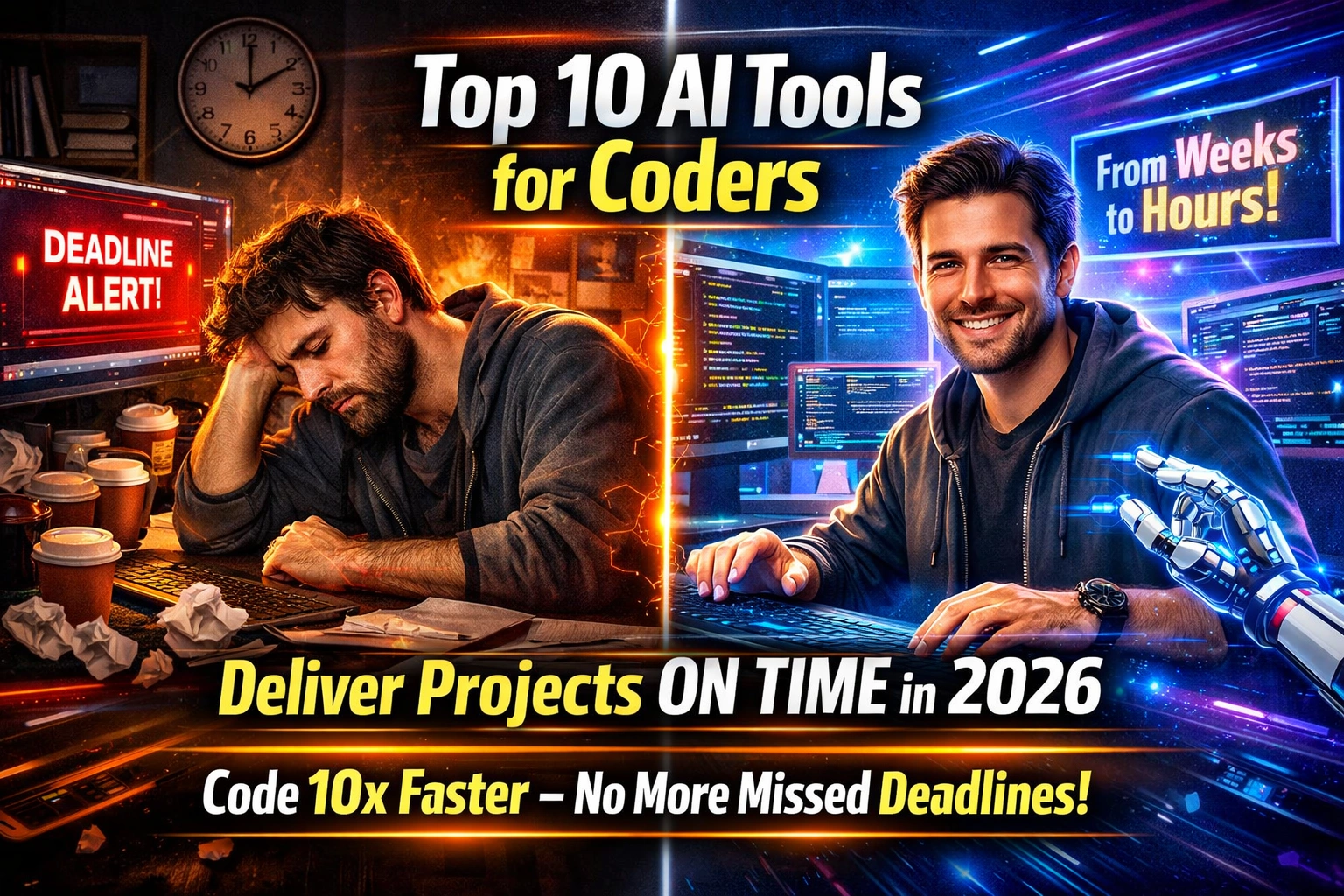
In the relentless world of software development, deadlines define success. Imagine a mid-level engineer at a fintech startup in late 2025: a critical feature looms just days away, the codebase sprawls across thousands of files, tests are breaking, and stakeholders are circling. Overtime feels inevitable, yet progress inches forward. This pressure cooker scenario—repeated daily from Silicon Valley to emerging tech hubs in Bangalore, São Paulo, and Lagos—has been fundamentally reshaped by the maturation of AI coding tools.
By early 2026, generative AI has moved from experiment to essential infrastructure. Engineering analytics platforms and developer surveys now show AI-assisted code accounting for 30-50% of new lines in adopting organizations, with productivity lifts of 25-60% on routine tasks and often 2-5x on complex refactors or debugging. These tools accelerate code completion, slash debugging cycles, automate testing, and streamline reviews—directly enabling teams to hit aggressive timelines that once seemed impossible.
The gains are undeniable, but so are the trade-offs: over-reliance can erode core skills, hallucinations can inject subtle bugs, and security or IP risks linger. This article presents the top 10 AI coding tools of 2026, ranked from most to least impactful based on a rigorous methodology that combines adoption scale (e.g., GitHub Copilot’s 20+ million users), benchmarked productivity gains from sources like Gartner Peer Insights and internal engineering metrics, developer surveys (Stack Overflow, State of AI reports), and consensus across premium outlets including Forbes, TechCrunch, Wired, and MIT Technology Review.
The ranking prioritizes tools that most reliably compress development cycles—especially those with strong agentic capabilities, deep codebase understanding, and measurable impact on deadline adherence—while factoring in accessibility, enterprise readiness, and real-world reliability.
1. Cursor: The AI-Native IDE Redefining Developer Velocity
Cursor, built as an AI-first fork of VS Code, earns the top spot for its seamless end-to-end acceleration of the entire development lifecycle. Its standout features—repository-wide semantic indexing, Cmd+K multi-file editing, autonomous Agent mode with planning/debugging loops, and ultra-fast autocomplete—create a workflow where engineers spend far less time context-switching.
In 2026 reviews and engineering blogs, senior developers consistently report 3-5x productivity on greenfield features and mid-scale applications, with entire subsystems shipped in days rather than weeks. Cursor’s embedded chat, @-referencing of files or symbols, and iterative “fix this” loops keep momentum high without breaking flow state.
Real-world impact: Teams at fast-moving startups cite Cursor as the single biggest factor in recovering slipping timelines. Its balance of speed, accuracy, and control makes it the daily driver for many high-output engineers.
Pricing: Free tier available; Pro at $20/month unlocks full agentic power.
Limitations: Requires switching from standard VS Code; occasional looping on extremely large refactors; best with strong underlying models (Claude or GPT).
Cursor official site | Faros AI 2026 review
2. Anthropic Claude (Code Features): Superior Reasoning for Complex Problems
Claude’s family of models—particularly Claude 3.5 Sonnet and Opus—excels when deep reasoning is required. With 200K+ token context, exceptionally low hallucination rates, and the Projects/Artifacts workflow, it handles architecture design, legacy debugging, and multi-step refactors better than any competitor.
Developers in 2026 routinely escalate hard problems to Claude: “Explain this crash,” “Refactor this module for performance,” or “Migrate this codebase to framework X.” Responses are clear, structured, and often include test cases. Paired with IDE integrations or Cursor, it becomes an unparalleled pair programmer for thorny challenges.
Impact on deadlines: 3-5x faster resolution of blocking issues; accelerates onboarding and code reviews.
Pricing: Pay-per-token via API or Claude.ai Pro ($20/month).
Limitations: Higher cost at scale; most powerful when deliberately invoked rather than always-on autocomplete.
3. GitHub Copilot: The Incumbent Standard at Scale
GitHub Copilot remains the most widely adopted tool, powering code for over 20 million developers and writing nearly half of new lines in many organizations. Its mature ecosystem—fast inline suggestions, agent mode, workspace understanding, and deep integrations across VS Code, JetBrains, and Neovim—makes it reliably productive.
Classic productivity studies, reaffirmed in 2026 analyses, show 55% faster task completion on average. Enterprise controls (quota management, custom models) make it the safe default for large teams.
For consistent, broad-spectrum acceleration without workflow disruption, Copilot is still unmatched.
Pricing: $10/month individual; $19/user/month enterprise.
Limitations: Primarily file-level context; can suggest outdated patterns if not prompted carefully.
GitHub Copilot | Forbes 2026 productivity analysis
4. Augment Code: Enterprise-Grade Architectural Intelligence
Augment distinguishes itself in large-scale and regulated environments with its proprietary Context Engine—a semantic dependency graph that achieves 85-90% accuracy on multi-file refactors and architecture reviews.
Features like automatic PR policy checks, codebase-wide search, and lightweight agent modes make it ideal for monorepos and legacy modernization. Teams report 40-60% faster large-scale changes with fewer regressions.
Pricing: Enterprise-focused, custom plans.
Limitations: Requires cloud trust; premium cost.
5. Google Gemini Code Assist: Strong Multimodal Performance on Generous Tiers
Gemini Code Assist delivers robust inline completions, chat, and Google Cloud integrations, with a particularly generous free tier that democratizes access globally.
Multimodal support (code + diagrams/images) aids documentation and UI work. In 2026, it performs competitively across Android, GCP, and polyglot projects.
Pricing: Free tier; Enterprise $19/user/month.
Limitations: Slightly lower reasoning depth than Claude on edge cases.
6. Amazon Q Developer: Secure, Cloud-Native Acceleration
Formerly CodeWhisperer, Amazon Q shines in AWS ecosystems with infrastructure-as-code suggestions, security scanning, and direct console integration.
It prevents configuration errors that cause deployment delays—critical for cloud-native teams meeting strict release cadences.
Pricing: Free individual; Pro $19/user/month.
Limitations: Value drops sharply outside AWS.
7. Replit Agent: From Idea to Deployed MVP in Hours
Replit Agent enables natural-language app building with autonomous iteration, built-in database/auth, and one-click deployment.
In 2026, it’s the go-to for rapid prototyping, client demos, and hackathons—compressing weeks of work into hours.
Pricing: Usage-based; Pro from $20/month.
Limitations: Browser-centric; less suitable for massive production systems.
8. JetBrains AI Assistant: Deep Integration for Enterprise IDE Users
For teams committed to IntelliJ, PyCharm, or other JetBrains tools, the built-in AI Assistant offers AST-aware refactoring, test generation, and stack-trace analysis that respects project conventions.
It reduces debugging time by 30-40% in Java/Kotlin/Python stacks.
Pricing: Bundled or ~$10-20/month equivalent.
Limitations: IDE lock-in; higher latency than lighter tools.
9. Aider: Terminal-First Precision for Refactors
Aider is the preferred CLI agent for git-native, diff-based editing. Supporting any model (local or cloud), it excels at large-scale refactors and legacy cleanups while respecting version control workflows.
Developers report 2-4x faster bulk changes on monorepos.
Pricing: Free with local models; pay-per-token for cloud.
Limitations: No inline autocomplete; terminal-only.
10. Tabnine: Privacy-First, Self-Hosted Completion
Tabnine continues to serve teams needing strict data control with on-premise or air-gapped deployment and custom model fine-tuning.
Solid for boilerplate and pattern completion (35-40% acceptance), especially in regulated industries.
Pricing: Free basic; Pro $12/month; enterprise custom.
Limitations: Weaker on architectural/multi-file tasks compared to context-rich leaders.
Balancing Speed with Responsibility: The Risks
While these tools dramatically shorten timelines, responsible adoption is essential. Hallucinations remain a concern—AI can introduce vulnerabilities or flawed logic that human review must catch. Security-focused tools like Amazon Q help, but vigilance is non-negotiable.
Over-reliance risks skill degradation, particularly for early-career developers. IP and data privacy issues persist, though private-model options like Tabnine mitigate them.
On a broader scale, automation of routine coding may reduce entry-level opportunities, shifting demand toward system design and oversight. Adoption gaps between regions and company sizes could widen inequality in tech productivity.
Best practice: Enforce code review, track true velocity metrics, and invest in continuous learning.
Outlook: Agentic Future, 2026–2030
The trajectory is clear—AI coding tools will become increasingly agentic, capable of end-to-end feature delivery under light human supervision. By 2030, routine development may be 70-80% autonomous, liberating engineers for higher-level innovation.
Yet human creativity, ethical judgment, and domain expertise will remain the ultimate arbiters of quality and deadlines.
For teams today, starting with Cursor for maximum daily impact, Claude for deep reasoning, or Copilot for broad coverage offers the fastest path to reliable on-time delivery.
Which of these tools has most transformed your ability to ship on schedule? The field moves quickly—share your experiences.
Discover more from Remote Work Tips
Subscribe to get the latest posts sent to your email.
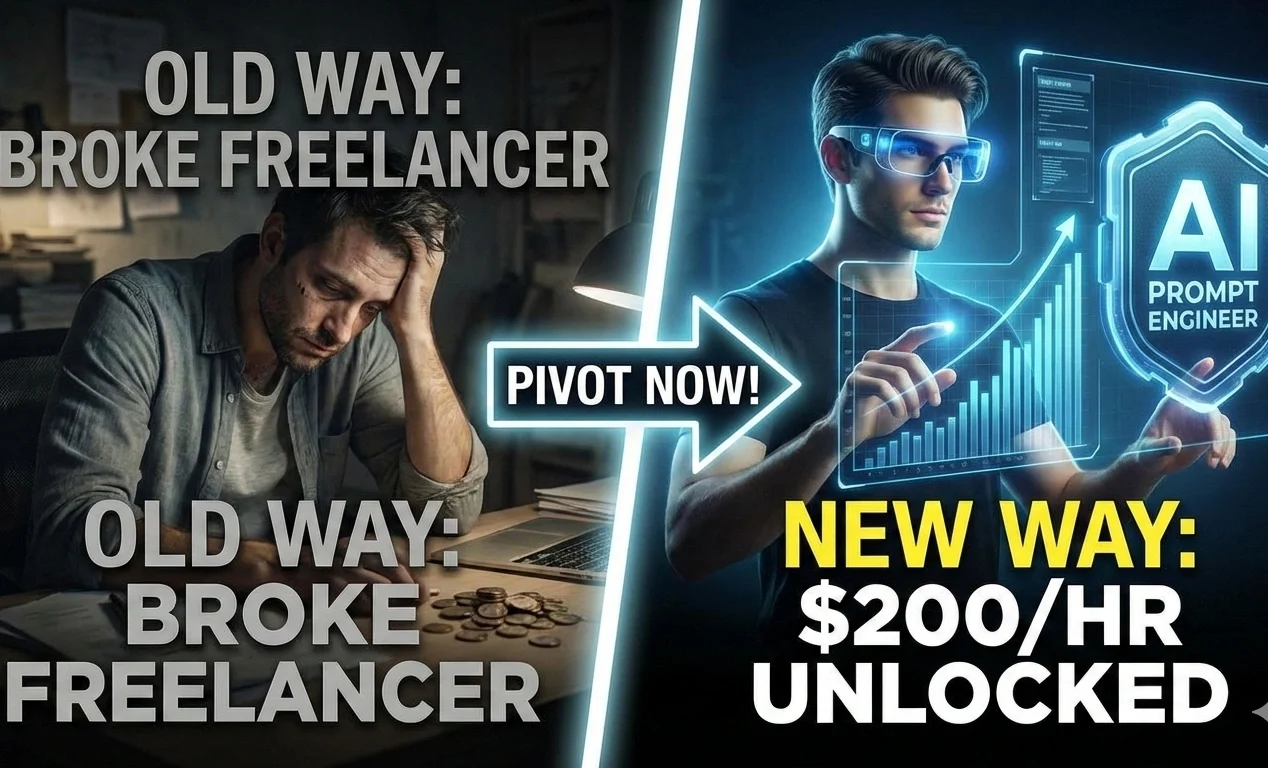
Let’s rip the Band-Aid off: Traditional freelancing is gasping for air.
If you are still selling generic blog writing at $0.05 per word or basic logo design on Fiverr, you are fighting a losing war against algorithms that can do your job in seconds for fractions of a penny. But while the “doers” are panicking, a new class of freelancer is quietly making a killing.
They aren’t “writing” text; they are programming in English.
Welcome to the era of the Prompt Engineer. In 2025, this isn’t just about asking ChatGPT to “write a poem.” It is about orchestrating complex workflows, building autonomous agents, and solving expensive business problems using nothing but natural language and logic.
If you are looking for the highest-leverage skill to learn this year, stop looking. Here is the uncomfortable truth about why Prompt Engineering is the only arbitrage opportunity that matters right now.
1. The Massive “Implementation Gap”
Here is the dirty secret of the corporate world: Everyone has the subscription, but nobody knows how to use it.
Companies are panic-buying Enterprise seats for ChatGPT, Claude, and Gemini. Executives demand “AI integration,” but their teams are paralyzed. They stare at the blinking cursor and type, “Write a marketing email,” get a generic robot-sounding result, and give up.
This is your goldmine.
You aren’t being hired to “type words.” You are being hired to bridge the gap between raw potential and business results.
- The Client’s Reality: They have a Ferrari (GPT-4) but are driving it like a golf cart.
- Your Role: You are the professional driver who knows how to redline the engine without crashing.
When you position yourself as the person who “Unlocks the AI they are already paying for,” you shift from a cost center to a profit multiplier.
2. The “Rate Arbitrage” is Absurd (For Now)
Economics 101: Price is determined by supply and demand. Right now, the demand for advanced prompt engineering is vertical, and the supply of competent engineers is non-existent.
A standard copywriter might charge $50/hour. A Prompt Engineer who builds a “Copywriting System” that generates consistent, on-brand copy for the whole team charges $200/hour—or better yet, a flat $5,000 project fee.
Why the difference? Because you aren’t delivering a fish; you are building a high-tech fishing trawler. When you deliver a system (a library of refined, chain-of-thought prompts) rather than a service (writing the emails yourself), your value detaches from your time.
Pro Tip: Stop selling “hours.” Start selling “assets.” An optimized prompt library is a business asset.
3. Platform Agnosticism: The Technical Moat
“But can’t anyone just type into ChatGPT?”
Sure. Just like anyone can type into Python. But can they write code that compiles?
Real Prompt Engineering in 2025 is deep technical work. It requires understanding the “personality” and parameter nuances of different models.
- Midjourney v6: Requires a distinct syntax of weights (
--iw), stylization (--s), and negative prompting to get usable commercial art. - Claude 3 Opus: Excels at massive context windows and requires “XML tag” structuring to prevent hallucinations.
- OpenAI Playground: Requires tweaking “Temperature” and “Frequency Penalty” settings that the average user doesn’t even know exist.
When you master these nuances, you build a technical moat. You are no longer competing with the client’s intern; you are operating on a level they don’t even understand.
4. Building “Agents,” Not Just Content
This is the biggest shift for 2025. We have moved beyond “Chatbots” to “Autonomous Agents.”
Clients don’t just want a bot that answers questions. They want an Agent that:
- Reads an incoming customer support email.
- Checks the Shopify database for the order status.
- Drafts a refund specifically based on the store’s policy.
- Pings the manager for approval on Slack.
This workflow requires multi-shot prompting, logical reasoning chains, and integration with tools like Zapier or LangChain.
If you can build this, you are not a freelancer. You are an Automation Architect. The “Prompt” is just the glue holding the million-dollar system together.
5. You Become the “Pilot,” Not the Plane
Fear is rampant among freelancers. “Will AI replace me?” No. AI will replace the operator who refuses to upgrade.
Think of the transition from manual arithmetic to Excel. The accountants who refused to learn spreadsheets were wiped out. The ones who mastered Excel became CFOs.
By becoming a Prompt Engineer, you position yourself as the Pilot.
- The Plane: The LLM (Large Language Model).
- The Pilot: You.
The plane creates the value (speed/power), but the pilot determines the destination and ensures a safe landing. You are future-proofing your career by becoming the controller of the intelligence, rather than the intelligence itself.
6. The “No-Code” App Revolution
You used to need 6 months and $50k to build a software tool. Now, with OpenAI’s “GPTs” or Anthropic’s “Artifacts,” you can build a custom software application in an afternoon using only natural language.
Imagine this freelance offer: “I will build a custom internal app for your HR team that instantly scans resumes, compares them to your job descriptions, and grades candidates on a 1-10 scale.”
Two years ago, that was a software engineering contract. Today, it is a complex “System Prompt” inside a secure Custom GPT. You can build, test, and sell this solution without writing a single line of Python or Javascript. This democratizes “Software as a Service” (SaaS) building for non-coders.
7. Low Overhead, Infinite Margin
Let’s talk numbers.
- Inventory: $0.
- Staff: None (The AI is your staff).
- Tools: ~$40/month (ChatGPT Plus + Claude Pro).
- Potential Revenue: $10k+/month.
The economics of an AI freelance business are unbeaten. You don’t need a warehouse, a high-end camera, or a powerful rendering PC. You need a laptop, an internet connection, and a brain that understands logic.
Because the AI does the “heavy lifting” (generating the text, code, or image), your energy is spent on Strategy and Quality Control. This allows you to handle 5x the client volume of a traditional freelancer without burning out.
The “Google Discover” Visibility Checklist
To ensure this knowledge reaches the people who need it, we optimize. If you are writing about AI, you must practice what you preach.
- Emotional Hook: We target the fear of obsolescence (“Traditional freelancing is dying”) and the greed of opportunity (“$200/hr”).
- Visuals: Use Midjourney to generate futuristic, high-contrast headers (1200px wide). Prompt suggestion: “Cyberpunk freelancer working in a holographic interface, neon blue and orange, 16:9 aspect ratio –v 6.0”
- Headline: Must be specific. Not “About Prompt Engineering,” but “7 Reasons Why…” (Listicles perform 2x better on Discover).
Your Immediate Next Step
Stop reading. Start engineering.
You don’t need a certificate. You need a portfolio. Here is my challenge to you:
Go to ChatGPT or Claude right now. Don’t ask it a question. Build a tool. Create a prompt that turns a messy meeting transcript into a perfectly formatted project management checklist. Iterate on it until it works every single time, regardless of the input.
Once you do that, you have your first product.
Are you ready to pivot your career, or are you going to wait until the market is saturated? The clock is ticking.
Tell me in the comments: What is the one “boring” task you want to automate with AI today?
Discover more from Remote Work Tips
Subscribe to get the latest posts sent to your email.


The New Talent Arbitrage: Top 10 Freelance Startups for Investment in 2026
The $5 trillion global gig economy has reached its “Execution Era.” In 2026, the speculative hype surrounding generalist marketplaces like...


Top 15 AI-Powered Freelance Marketplaces for Massive Projects in 2026
The enterprise freelance landscape has undergone a seismic transformation. What began as a tactical hiring solution has evolved into a...


Top 10 AI Tools for Coders to Deliver Projects on Time
In the relentless world of software development, deadlines define success. Imagine a mid-level engineer at a fintech startup in late...


Top 10 Project Management Tools for Freelancers to Succeed in 2026
Discover the 10 best project management tools helping freelancers thrive in 2026. AI-powered platforms, pricing insights, and expert analysis from...


The Future of Work is Here: Mark Your Calendars for the Global Freelancers Festival 2026!
The gig economy is no longer just a trend; it is the backbone of the modern workforce. If you are...


Top 20 Freelance Jobsites and Boards for Opinion Writers for Massive Growth
Explore the definitive guide to 20 premium freelance platforms where opinion writers can scale their careers, backed by authoritative research...


How to Build a Thriving Freelance Journalism Career in 2026: Remote Opportunities and Digital Reporting in the AI Era
In January 2026, the media landscape looks dramatically different from a decade ago. Traditional newsrooms have shrunk, with the U.S....


How to Get Premium Freelance Jobs on LinkedIn and Make Money in 2026
The freelance revolution isn’t coming—it’s already here. With 1.57 billion freelancers worldwide and the freelance market projected to surge beyond...
-

 blogging4 years ago
How to Use Social Media to Promote Your Blog
-

 freelance4 years ago
6 Future-Focused Skills Freelance Creatives Can’t Afford to Ignore
-

 blogging4 years ago
20 Best Freelance Marketplaces for Freelancers in 2022 to Make Money
-

 social media4 years ago
How to Learn Social Media Without Getting Scammed
-

 blogging4 years ago
30 “Proven” Ways to Make Money Online Blogging with WordPress
-

 freelance4 years ago
7 Highest Paying Freelance Jobs For Earning A Steady Income
-

 Digital Banking4 years ago
Pakistan Consumer Confidence Index increased by 8.8% in Q4 2021
-

 Startups4 years ago
Private equity is buying up America’s newspapers