
Entrepreneur
The New Talent Arbitrage: Top 10 Freelance Startups for Investment in 2026

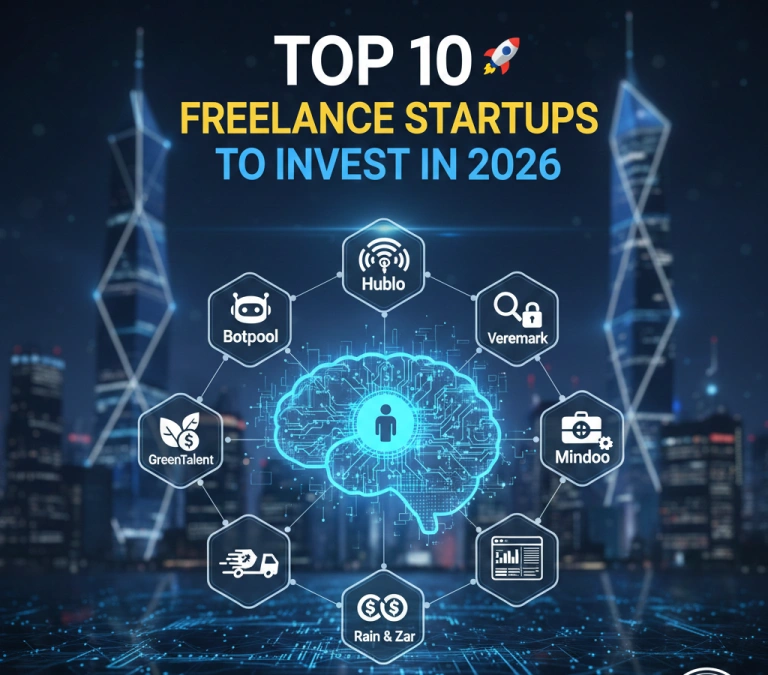
The $5 trillion global gig economy has reached its “Execution Era.” In 2026, the speculative hype surrounding generalist marketplaces like Upwork and Fiverr has cooled, giving way to a more sophisticated investment thesis: The Verticalization of Talent. Venture capital is no longer chasing “the next Uber for X.” Instead, smart money is flooding into startups that solve the Unit Economics and Operational Reliability problems of the modern enterprise. With over 1.57 billion freelancers worldwide, the 2026 landscape is defined by “Vertical AI-Agent Hybrids”—platforms that don’t just find you a human, but provide a pre-configured AI infrastructure for them to work within.
The 2026 Investment Landscape: Why Generalists are Losing Ground
According to recent Gartner 2026 Work Trends, the “Skill Gap” has become a “Structural Void.” Large enterprises now require 10x the specialized output in AI implementation, GreenTech compliance, and cybersecurity. Generalist platforms—burdened by 20% commission fees and high “noise” ratios—are being disrupted by lean, niche-specific challengers.
The Top 10 Freelance Startups for Investment in 2026
1. Botpool: The AI Deployment Powerhouse
Focus: Specialized AI & ML Engineering
Why it’s a Winner: While Upwork struggles with “generic” AI prompts, Botpool has cornered the market for high-fidelity AI developers. Their platform includes built-in AI-matching engines and lower fees for specialists in emerging markets.
- Thesis: Infrastructure over search.
2. Hublo: Healthcare Operational Efficiency
Focus: Medical & Healthcare Staffing
Why it’s a Winner: Healthcare is the most resilient sector in 2026. Hublo recently secured a €40 million reinvestment because it solves the “burnout” crisis through intelligent, asynchronous staffing for hospitals.
- Thesis: Critical infrastructure in a high-compliance industry.
3. Veremark: The Trust Layer
Focus: AI-Driven Background & Compliance Screening
Why it’s a Winner: As the line between human and AI-generated resumes blurs, Veremark’s €22 million Series B proves that “Workplace Trust” is a billion-dollar asset. They provide automated, “always-on” screening for global teams.
- Thesis: Security is the prerequisite for remote scale.
4. Contra: The Commission-Free Disruptor
Focus: Independent Professional Branding
Why it’s a Winner: Contra is the leader of the “Anti-Platform” movement. By charging 0% commission and offering premium tools, they have siphoned the top 1% of creative talent away from legacy sites.
- Thesis: High-talent retention via superior unit economics.
5. Mindoo: AI-Agent Staffing for Hospitals
Focus: Administrative AI-Human Hybrids
Why it’s a Winner: A Seed-stage darling, Mindoo uses AI agents to reduce administrative workloads, allowing medical staff to focus on patients. It represents the “Agentic Era” where software is the freelancer.
- Thesis: Replacing 80% of administrative “grunt work” with high-margin AI.
6. GreenTalent: The ESG Compliance Hub
Focus: Sustainability & ESG Reporting
Why it’s a Winner: With the GreenTech market hitting $62 billion, every EU and US corporation needs ESG-certified freelancers. GreenTalent provides the only vetted pipeline for this mandatory labor.
- Thesis: Regulatory-driven demand.
7. Orbio: AI-Native Human Capital Management
Focus: Full-stack HR for Freelance-first Firms
Why it’s a Winner: Many 2026 startups have no full-time employees. Orbio provides the “OS” for these liquid organizations, managing everything from stablecoin payouts to global taxes.
- Thesis: Selling the “pickaxes” to the gig-economy gold miners.
8. Kiku: High-Volume Frontline Recruitment
Focus: Retail & Logistic “Gig” Workers
Why it’s a Winner: Kiku uses multi-agent orchestration to fill thousands of shifts in seconds. It’s the essential backend for the $100B AR/VR and mobility sectors.
- Thesis: Scalability without linear headcount growth.
9. Rain & Zar: Stablecoin Payout Infrastructure
Focus: Global Remittances for Freelancers
Why it’s a Winner: In emerging markets where local currencies fail, Rain enables stablecoin payments that bypass legacy banking fees.
- Thesis: Financial inclusion as a talent acquisition tool.
10. Sedna: Maritime & Logistics Specialized Talent
Focus: High-Stakes Industrial Workflows
Why it’s a Winner: Sedna integrates AI with maritime logistics talent. It’s a “Vertical AI” moat where generalists can’t compete because they lack the specific industry data rails.
- Thesis: Industry-specific data creates the ultimate MOAT.
Investment Performance Indicators (2026 Forecast)
| Startup Model | Typical Valuation (2026) | Projected Growth (YoY) | Primary Risk Factor |
| Vertical AI Hybrids | $150M – $500M | 45% | Model Degradation |
| Commission-Free | $200M+ (SaaS Revenue) | 30% | Subscription Fatigue |
| Trust/Compliance | $100M – $300M | 60% | Regulatory Pivot |
| Stablecoin Payouts | $50M – $400M | 120% | Geo-political Sanctions |
Conclusion: Investing in the “Liquid Enterprise”
The investment opportunity in 2026 is no longer about the existence of the gig economy, but its optimization. Startups like Hublo and Veremark are winning because they treat freelancers as critical infrastructure, not disposable labor. For the venture capitalist, the highest ROI lies in the platforms that own the Compliance, Payment, and Verification layers of this new global workforce.
Key Takeaway for Investors
“The leaders in 2026 won’t be those who wait for a perfect AI moonshot; they’ll be the ones who invest in focused, high-impact vertical workflows.” — Pouya Mohammadi, VC Analyst.
Discover more from Remote Work Tips
Subscribe to get the latest posts sent to your email.



The freelance revolution isn’t coming—it’s already here. With 1.57 billion freelancers worldwide and the freelance market projected to surge beyond $16 billion by 2029, professionals are redefining what work means in 2026. But here’s what most freelancers miss: while platforms like Upwork, Fiverr, Freelancer.com, and PeoplePerHour offer opportunities, LinkedIn has quietly become the premium client goldmine that separates six-figure earners from those stuck in the race to the bottom.
LinkedIn now hosts over 1.2 billion members across 200 countries, with 69 million companies actively using the platform for business purposes. Unlike traditional freelance marketplaces where you compete on price, LinkedIn allows you to position yourself as the premium choice—the sought-after expert clients are willing to pay a premium to access.
This guide reveals the insider strategies I’ve used to help freelancers transition from bidding wars on Upwork to securing $10,000+ monthly retainers through LinkedIn. Whether you’re a developer, designer, consultant, or creative professional, you’re about to discover how to make LinkedIn your highest-converting client acquisition channel in 2026.
The LinkedIn Freelance Revolution: Why 2026 Changes Everything
The professional landscape has fundamentally shifted. Traditional freelance platforms operate on a transactional model—you bid, negotiate, complete a task, and move on. LinkedIn operates on a relationship model, where your expertise, credibility, and personal brand create a gravitational pull that attracts premium clients who are actively searching for specialists, not commodities.

The Numbers That Matter
The data is compelling. According to recent statistics, LinkedIn generates 80% of all B2B leads from social media, surpassing Facebook, X, and Instagram combined. Even more impressive: 40% of B2B marketers claim LinkedIn is the most effective channel for generating high-quality leads.
For freelancers, this translates to direct access to decision-makers. Over 45 million job seekers visit LinkedIn Jobs weekly, and six people are hired every minute on the platform. But here’s the kicker: only 3 million users post content weekly—that’s just 1% of the 260 million monthly active users. This massive visibility gap represents your unfair advantage.
Why LinkedIn Outperforms Traditional Platforms
Traditional freelance marketplaces like Upwork charge freelancers between 0-15% in service fees, while clients pay an additional 5-7.99% marketplace fee. Fiverr takes a flat 20% commission on every sale, and buyers pay a 5.5% service fee plus extra charges on smaller orders. These platforms position you in competitive bidding environments where price often trumps value.
LinkedIn changes the equation entirely. There are no platform fees for connecting directly with clients. No bidding wars. No race to the bottom. Instead, you build authority, demonstrate expertise, and attract clients who understand the difference between cost and value. Research shows that high-skill professionals—media buyers, consultants, specialized developers—command $50-$200+ per hour, with AI-related skills earning 23% more than average.
The 2026 Freelance Landscape
The freelance economy continues its explosive growth. Average freelancer earnings in the U.S. stand at $99,230 annually, with top earners reaching $200,000. According to recent data, U.S. freelancers average $108,028 per year, with most falling between $49,000 and $169,500.
The skills commanding premium rates in 2026? AI expertise, data analysis, machine learning, and specialized technical skills like Python, Java, and SQL. But here’s what separates average earners from top performers: positioning, not just skill. LinkedIn allows you to showcase not just what you do, but the transformative results you deliver.
Building Your Premium LinkedIn Freelance Profile: The Foundation of Authority
Your LinkedIn profile isn’t a resume—it’s your most powerful inbound marketing asset. While LinkedIn Premium members are 2.6× more likely to get hired than free users, the real differentiator isn’t subscription status but strategic profile optimization.
The Premium Profile Architecture
Professional Photo That Commands Authority
First impressions matter. Posts with images receive 2x higher comment rates on LinkedIn, and your profile photo is the first image prospects see. Invest in a professional headshot that communicates credibility—think approachable expert, not corporate robot.
Headline Optimization: Your 220-Character Pitch
Your headline appears in every search result, comment, and connection request. Most freelancers waste this prime real estate with generic titles like “Freelance Designer” or “Independent Consultant.” Instead, use this proven formula:
[What You Do] | [Specialization] | [Value Proposition] | [Social Proof]
Example: “Senior Full-Stack Developer | React & Node.js Specialist | Building Scalable SaaS Products | 50+ Successful Launches”
As industry research confirms, your headline is one of the most heavily weighted factors in LinkedIn’s search algorithm. Include keywords clients search for: your specialty, relevant tools/technologies, and industry focus.
Banner Image: Prime Real Estate 70% Leave Blank
The banner image (1584×396 pixels) is visual real estate that 70% of users leave blank. Use it strategically to communicate your specialty, showcase client logos, display certifications, or highlight your unique value proposition.
The About Section: Your Client Conversion Engine
Your About section is where good profiles become great. This isn’t a chronological work history—it’s a strategic narrative that speaks directly to your ideal client’s pain points and aspirations.
The Winning Formula:
- Opening Hook (2-3 sentences): Start with a problem your clients face or a transformation you deliver. Use “you” to speak directly to prospects.
- Credibility Building (150-200 words): Share your specialized expertise, years of experience, and unique methodology. Include specific, measurable results.
- Social Proof (100-150 words): Mention notable clients, impressive projects, or industry recognition. Quantify your impact.
- Call-to-Action: Make it easy for prospects to take the next step. Include your email or booking link.
Research indicates that profiles optimized with keyword-rich About sections see dramatically higher visibility. As noted by Huxley, LinkedIn is keyword-focused and will “crawl” your profile. Use relevant terms throughout—in your title, summary, and skillset.
Experience Section: Showcasing Premium Work
Unlike traditional platforms where clients see generic “Freelance Consultant” entries, LinkedIn allows you to tell a compelling story. Create a single entry for your freelance career, then use bullet points to highlight specific high-value clients and transformative projects.
For each project, include:
- Client type or industry (if not confidential)
- Specific challenge or goal
- Your unique approach or methodology
- Quantifiable results and business impact
- Technologies, tools, or frameworks used
According to research, you can also add a Projects section to highlight specific work with details like project name, description, skills used, and media showcasing results.
Featured Section: Your Portfolio Showcase
The Featured section is where you transform profile visitors into qualified leads. Include:
- Case studies demonstrating transformative results
- Portfolio pieces showcasing your best work
- Testimonials from satisfied clients
- Articles or content demonstrating thought leadership
- Booking links making it easy to schedule consultations
Industry data shows that adding a booking link to your Featured section dramatically increases conversion rates, allowing potential clients to schedule time with you instantly without back-and-forth messages.
Skills & Endorsements: The SEO Multiplier
Select 50 skills (LinkedIn’s maximum) that align with client search terms. Prioritize the top 3 skills you want to be known for—these appear most prominently on your profile. Request endorsements from clients and colleagues, and complete LinkedIn Skill Assessments to earn verified badges.
Research confirms that profiles with skill assessment badges and client recommendations dramatically outperform those without.
Custom URL: Professional and SEO-Friendly
Change your URL from the auto-generated gibberish (linkedin.com/in/john-smith-8b2a5412) to a clean, professional format (linkedin.com/in/johnsmithdesign). This makes your profile more shareable and improves search engine visibility. Your LinkedIn profile often appears first when potential clients Google your name.
Advanced LinkedIn Search Strategies for Premium Jobs
While 45 million job seekers visit LinkedIn Jobs weekly, the most lucrative opportunities never get posted publicly. They’re filled through direct outreach, strategic networking, and proactive client acquisition. Here’s how to find them.
LinkedIn Search Navigator: Your Client Database
LinkedIn’s search functionality is remarkably powerful. Use these advanced techniques to identify high-value prospects:
Boolean Search Operators:
- Use quotation marks for exact phrases: “VP of Marketing”
- Use AND to require multiple terms: “startup founder” AND “Series A”
- Use OR for alternative terms: “CMO” OR “Marketing Director”
- Use NOT to exclude terms: “Marketing Manager” NOT “agency”
Geographic Targeting:
Filter by location to find local clients or target high-paying markets like San Francisco, New York, or London.
Company Size Filtering:
Target companies by employee count. Mid-size companies (50-500 employees) often offer the sweet spot—large enough to afford premium rates, small enough for direct decision-maker access.
Seniority Level:
Focus on Director, VP, and C-level executives who have budget authority and understand the value of specialized expertise.
LinkedIn Sales Navigator: The Premium Advantage
For freelancers serious about LinkedIn as their primary client acquisition channel, LinkedIn Sales Navigator (starting at $99.99/month) offers powerful features:
- Advanced search filters including technology stack, company growth rate, and recent hiring activity
- Lead recommendations based on your ideal client profile
- InMail credits for reaching decision-makers outside your network
- CRM integration for tracking prospects and managing relationships
According to LinkedIn’s data, Premium users get immediate networking advantages and increased exposure to hiring managers. However, evaluate whether the investment makes sense based on your current stage and activity level.
Identifying High-Value Client Signals
Not all potential clients are created equal. Look for these signals indicating readiness to hire:
Company Growth Indicators:
- Recent funding announcements
- Rapid hiring (check company’s “People” tab)
- Job postings for complementary roles
- New leadership appointments
Content Engagement:
Executives posting about challenges in your area of expertise are broadcasting their pain points. These are warm leads ready for thoughtful outreach.
Shared Connections:
Second-degree connections offer warmer introductions. Research shows that 40% of users interact with business pages weekly, creating multiple touchpoints for relationship building.
Content Marketing on LinkedIn: The Client Attraction Engine
Here’s the secret top-earning freelancers understand: content isn’t about building an audience—it’s about building authority. With video content showing 5x more engagement and only 1% of users posting weekly, consistent content creation gives you a massive competitive advantage.
The Strategic Content Framework
Document, Don’t Create:
You don’t need to invent content from scratch. Document your process, share client wins (with permission), explain complex concepts, and provide actionable insights from your daily work.
The 4-Content-Type System:
- Educational Content (40%): How-to guides, tutorials, frameworks, and processes that demonstrate expertise.
- Thought Leadership (30%): Industry trends, predictions, and unique perspectives that position you as a forward-thinking expert.
- Social Proof (20%): Case studies, testimonials, and results that show the tangible impact of your work.
- Personal/Behind-the-Scenes (10%): Your journey, lessons learned, and human stories that build connection and trust.
Video Content: The 2026 Game-Changer
Video content on LinkedIn has increased 34% year-over-year, and users engage with video ads almost 3x longer than static ads. Even better, live videos generate 24x more reactions.
You don’t need expensive equipment. Phone videos recorded in good natural light with clear audio consistently outperform polished productions. Share quick tips, explain concepts, provide commentary on industry news, or document your workflow.
Algorithm Optimization Techniques
LinkedIn’s algorithm prioritizes content that generates meaningful conversation. Here’s how to work with it:
Post Timing:
Engagement peaks midweek mornings (Tuesday-Thursday, 7-9 AM in your audience’s timezone). Test different times to find your optimal window.
Comment Immediately:
Replying to LinkedIn comments can boost engagement by 30%. Respond to the first few comments within minutes of posting to signal the algorithm that your content sparks conversation.
Native Content Wins:
LinkedIn prioritizes native content (uploaded directly) over external links. If sharing an article, post the insights as native content first, then include the link in the comments.
Engagement Pods (Use Strategically):
While controversial, engagement groups can provide initial momentum. Use them to supplement—not replace—genuine audience building.
The Newsletter Advantage
With over 184,000 newsletters now published on LinkedIn, newsletters offer a direct line to your audience. Unlike regular posts that may or may not appear in followers’ feeds, newsletter subscribers receive notifications for each issue.
Create a weekly or bi-weekly newsletter sharing industry insights, practical tips, and exclusive content. LinkedIn Learning sees about 138 hours of learning content consumed every minute, indicating strong appetite for educational material.
Outreach and Networking Mastery: From Connection to Contract
Most freelancers fail at LinkedIn outreach because they approach it like cold email blasting. Premium opportunities come from warm relationships, strategic positioning, and value-first communication.
The Connection Request Framework
Generic connection requests get ignored. Use this proven template structure:
Line 1: Specific, genuine compliment based on their recent content or accomplishment
Line 2: Brief credibility statement showing relevance
Line 3: Specific value offer or mutual benefit
Example: “Your post on scaling content operations really resonated—I’ve solved this exact challenge for 3 SaaS companies in your space. Would love to connect and share what worked.”
InMail Strategy: When and How
InMail response rates for job seekers often fall under 10%, but targeted, personalized messages to the right prospects perform significantly better.
High-Response InMail Formula:
- Compelling subject line: Reference their company, challenge, or recent achievement
- Personalized opening: Demonstrate you’ve done your homework
- Credible positioning: Share relevant experience without bragging
- Specific value proposition: What’s in it for them?
- Low-friction CTA: Make next step easy (15-minute call, not “Let’s discuss”)
Building Strategic Partnerships
The fastest path to premium clients often runs through other freelancers and service providers. Identify complementary (not competing) professionals who serve your ideal clients and build referral relationships.
Partnership-Worthy Profiles:
- Agencies that outsource specialized work
- Consultants who need implementation support
- Freelancers in complementary disciplines
- Industry influencers who could amplify your visibility
According to recent data, professionals aged 25-34 make up over 47% of LinkedIn users, with the 18-24 cohort at 29%—these demographics are particularly open to collaborative relationships.
The Follow-Up Framework
Most opportunities are lost in the follow-up. Use this systematic approach:
Day 1: Initial connection or message
Day 4-5: Value-add follow-up (share relevant resource, no ask)
Day 10-12: Check-in with specific observation about their business
Day 20-25: Final touchpoint with clear offer
Track all interactions in a simple CRM or spreadsheet. With only 69% of U.S. users accessing LinkedIn daily, timing your follow-ups when prospects are active increases response rates.
Pricing Premium Services: Escaping the Race to the Bottom
Price is what you pay. Value is what you get. Premium clients understand this distinction—budget clients don’t. Your LinkedIn positioning should filter for the former and deter the latter.
Value-Based Pricing Models
Hourly billing caps your earnings and commoditizes your expertise. Premium freelancers price based on value delivered, not time spent. This paradigm shift changes everything.
The Value Pricing Framework:
- Understand the Business Impact: What’s the financial value of solving this problem or capturing this opportunity?
- Price Based on Value: If your solution generates $500,000 in new revenue or saves $200,000 in costs, charging $50,000-$100,000 is a steal.
- Offer Tiered Options: Good-Better-Best packages allow clients to self-select based on their priorities and budget.
Research shows that enterprise clients generally pay 10-20% more than startups, though sales cycles are longer. Premium positioning attracts these high-value clients.
Presenting Rates with Confidence
How you discuss pricing reveals your mindset. Budget freelancers apologize for their rates. Premium freelancers present them as an investment with predictable ROI.
The Pricing Conversation:
Instead of: “My rate is $X per hour, but I’m flexible…”
Try: “For projects of this scope, my fee is $X. That includes [specific deliverables], [key outcomes], and [ongoing support]. Most clients see [specific ROI] within [timeframe].”
Notice the difference? The first seeks permission. The second demonstrates confidence in the value delivered.
Package Creation Strategies
Packages transform you from vendor to strategic partner. Create 3 offerings:
Starter Package: Entry point for budget-conscious clients
Professional Package: Your “recommended” option (price anchor)
Premium Package: All-inclusive solution for clients seeking best results
According to platform data, PeoplePerHour’s package model allows freelancers to sell services alongside project applications, creating multiple revenue streams.
Cross-Platform Integration: LinkedIn + Traditional Marketplaces
LinkedIn shouldn’t operate in isolation. Strategic freelancers use LinkedIn to build authority and relationships, then drive prospects to platforms like Upwork, Fiverr, Freelancer.com, and PeoplePerHour where payment protection and structured processes create client confidence.
The LinkedIn-to-Platform Pipeline
Phase 1 – LinkedIn Authority Building:
- Optimize profile for premium positioning
- Create consistent thought leadership content
- Build targeted network of ideal clients
- Engage meaningfully with prospects’ content
Phase 2 – Strategic Platform Positioning:
- Mirror your LinkedIn positioning on Upwork/Fiverr profiles
- Include LinkedIn profile link in platform bios
- Reference LinkedIn content/case studies in proposals
- Maintain consistent personal brand across channels
Phase 3 – Cross-Channel Conversion:
- Direct LinkedIn prospects to platform profiles for reviews/credibility
- Use platform payment protection for initial projects
- Transition proven clients to direct relationships
- Maintain platform profiles as social proof
With Upwork’s client marketplace fees up to 7.99% and Fiverr’s flat 20% commission, transitioning clients to direct arrangements after establishing trust significantly increases your take-home earnings.
Platform-Specific Optimization Tips
Upwork:
- Leverage LinkedIn connections for warm introductions to posted jobs
- Reference LinkedIn thought leadership in proposals
- Use Job Success Score as social proof on LinkedIn
- With variable fees of 0-15%, factor platform costs into your LinkedIn-negotiated rates
Fiverr:
- Create premium gig packages that reflect your LinkedIn positioning
- Drive LinkedIn followers to Fiverr for streamlined booking
- Use Fiverr reviews as LinkedIn Featured content
- With 20% commission, price gigs to maintain target earnings
Freelancer.com:
- Position as a budget-friendly option while maintaining LinkedIn’s premium brand
- Use for smaller projects that build portfolio
- Transition successful clients to LinkedIn-based relationships
PeoplePerHour:
- Leverage the tiered commission structure (starting at 20%, dropping for repeat clients)
- Combine bidding with package offerings
- Strong in European markets where LinkedIn presence reinforces credibility
Multi-Channel Presence Strategy
According to market research, 85% of B2B marketers claim LinkedIn delivers the best value among all social media platforms. However, maintaining presence across multiple platforms creates:
- Risk Mitigation: Platform policy changes won’t destroy your entire business
- Market Segmentation: Different client types prefer different platforms
- Social Proof Multiplication: Reviews and ratings across platforms compound credibility
- Revenue Diversification: Multiple income streams create stability
Legal and Financial Considerations for International Freelancers
Premium earnings require premium business practices. As you scale your LinkedIn-sourced income, proper legal and financial structures become critical.
Contract Essentials
Every client engagement should begin with a clear, written agreement. Essential elements include:
Scope of Work:
- Specific deliverables
- Timeline and milestones
- Revision process and limitations
Payment Terms:
- Total fee or hourly rate
- Payment schedule (upfront deposit, milestone payments, final payment)
- Late payment penalties
- Currency and payment method
Intellectual Property:
- Rights transfer upon final payment
- Client ownership of final deliverables
- Your rights to use work in portfolio
Liability and Warranties:
- Limitation of liability clauses
- No warranty of specific results
- Professional indemnification
Termination Clauses:
- Kill fees for early termination
- Notice requirements
- Work-in-progress ownership
Industry research indicates that platforms like Upwork and PeoplePerHour offer payment protection through escrow systems, but direct LinkedIn relationships require your own contract framework.
Payment Protection Strategies
For New Clients:
- Require 50% upfront for projects under $5,000
- Use 33-33-34 milestone structure for larger projects
- Consider platform-mediated payments for first engagement
For Established Clients:
- Net-15 or Net-30 terms with penalty clauses
- Retainer arrangements with auto-renewal
- Annual prepayment discounts
Red Flags to Avoid:
- Clients refusing written agreements
- “Payment upon project success” arrangements
- Requests to work outside platform before trust established
- Vague scope with fixed budget
Tax Implications Across Jurisdictions
Freelance income requires proactive tax planning, especially for international work.
United States:
- Quarterly estimated tax payments required
- Self-employment tax (15.3%) in addition to income tax
- Retirement options include Solo 401(k)
- Home office deduction possibilities
- Health insurance deductibility for self-employed
European Union:
- VAT registration requirements vary by country
- Double taxation treaties with many countries
- Social security contributions for self-employed
- Different regulations across member states
United Kingdom:
- IR35 rules for contractors
- National Insurance contributions
- Making Tax Digital requirements
- Personal Allowance thresholds
Rest of World:
- Research local requirements thoroughly
- Consider foreign income exemptions
- Understand withholding tax obligations
- Consult with tax professionals familiar with freelance income
Platform-Specific Considerations:
Understand how platforms report income. With Upwork and similar platforms issuing 1099s (US) or similar tax documents, all income is reported to authorities.
Scaling Your LinkedIn Freelance Business in 2026
The ultimate goal isn’t to work more hours—it’s to earn more while working less. Here’s how to systematically scale beyond your personal capacity.
From Solo Freelancer to Agency Model
The natural evolution for successful freelancers is assembling a team. LinkedIn makes this transition remarkably smooth:
Phase 1 – Subcontractor Network:
- Identify specialists for tasks outside your core competency
- Build relationships with reliable contractors
- Maintain quality control and client relationships
- Increase project capacity without hiring
Phase 2 – Virtual Agency:
- Formalize team with regular collaborators
- Create standardized processes and templates
- Position as agency rather than individual freelancer
- Command premium rates for team expertise
Phase 3 – Hybrid Model:
- Some projects remain solo (highest margin)
- Team handles larger, multi-disciplinary projects
- You focus on strategy, client relationships, business development
- Build sustainable, scalable business
Research shows that LinkedIn’s market cap has grown from $7.8 billion in 2011 to approximately $22.6 billion by 2022, demonstrating the platform’s increasing value for business development.
Automation Tools and Productivity Systems
Premium earnings require premium systems. Essential tools for scaling:
Client Relationship Management:
- HubSpot CRM (free tier available)
- Pipedrive or Copper for pipeline management
- LinkedIn Sales Navigator integration
- Automated follow-up sequences
Project Management:
- Asana or Monday.com for team collaboration
- Notion for documentation and knowledge base
- Loom for async video communication
- Time tracking with Toggl or Harvest
Content Creation and Scheduling:
- Buffer or Hootsuite for LinkedIn scheduling
- Canva for visual content creation
- Otter.ai for transcription
- Grammarly for editing
Financial Management:
- QuickBooks or FreshBooks for invoicing
- Stripe or PayPal for payment processing
- Expensify for expense tracking
- Specialized tools for international payments
Long-Term Client Retention Strategies
Acquiring new clients is expensive. Retaining existing clients is profitable. With freelancers working an average of 43 hours per week, time spent on retention generates better ROI than constant prospecting.
The Retention Framework:
Exceed Expectations Consistently:
Deliver 110% on every project. Underpromise and overdeliver.
Regular Value-Add Communication:
Monthly check-ins sharing industry insights, optimization opportunities, or relevant resources.
Proactive Problem Solving:
Identify and address challenges before clients notice them.
Flexible Retainer Arrangements:
Monthly retainers create predictable income and deepen relationships.
Strategic Account Growth:
Position additional services and expand scope within existing accounts.
According to data, PeoplePerHour rewards long-term client relationships with decreasing commission rates, demonstrating the platform’s recognition of retention value.
Common Pitfalls and How to Avoid Them
Success leaves clues—so does failure. Learn from others’ mistakes rather than making them yourself.
Red Flags in Freelance Job Postings
Not every opportunity deserves your attention. Avoid these warning signs:
Unrealistic Expectations:
- “Quick project” requiring 200+ hours of work
- “Intern rates for expert work”
- Vague requirements with fixed budget
- Multiple revisions included with no limit
Payment Risk Indicators:
- “We’ll pay when we secure funding”
- “Percentage of profits” as primary compensation
- Reluctance to use contracts or platforms
- History of disputes in reviews
Scope Creep Setup:
- Poorly defined deliverables
- “Looking for long-term partnership” without specifics
- Multiple stakeholders with unclear decision authority
- “We’ll figure it out as we go” approach
With 82% of freelancers reporting more job opportunities in 2025, you can afford to be selective.
Scope Creep Prevention
Clear boundaries protect your profitability and sanity.
Prevention Strategies:
Detailed Statements of Work:
Document every deliverable, revision round, and communication expectation.
Change Order Process:
Establish formal procedure for scope changes including impact assessment and additional fees.
Regular Status Updates:
Weekly check-ins keep projects on track and prevent surprises.
“That’s Outside Current Scope” Language:
Practice saying this professionally: “That’s a valuable addition. I’d be happy to provide a separate proposal for that work.”
Burnout Management
With freelancers working an average of 43 hours per week and many exceeding 50+ hours, burnout is an occupational hazard.
Sustainable Practices:
Set Boundaries:
Define working hours and communicate them to clients. As recent trends show, one in five freelancers is looking forward to a three-day weekend—and that’s healthy.
Build Buffer Time:
Don’t book yourself at 100% capacity. Allow 20-30% margin for unexpected challenges.
Regular Breaks:
Schedule genuine time off. Block it in your calendar like client meetings.
Diversify Income Streams:
Multiple smaller clients (rather than one massive client) reduces stress and provides stability.
Invest in Self-Care:
Physical health directly impacts cognitive performance. Regular exercise, adequate sleep, and proper nutrition aren’t luxuries—they’re business investments.
Community Connection:
Freelancing can be isolating. Join communities, attend virtual coworking sessions, or work from coworking spaces periodically.
Conclusion: Your Premium LinkedIn Freelance Blueprint
The freelance revolution has reached a tipping point. With 1.57 billion freelancers worldwide and the market projected to exceed $16 billion by 2029, the question isn’t whether freelancing is viable—it’s whether you’ll position yourself as a commodity or a premium specialist.
LinkedIn offers what traditional platforms cannot: direct access to decision-makers, authority building through content, and relationship-based selling that commands premium rates. With 80% of B2B leads coming from LinkedIn and only 1% of users posting content weekly, your opportunity to stand out has never been greater.
The strategies in this guide—from profile optimization to pricing confidence, from content creation to client retention—represent the compound advantage successful freelancers leverage. Each element reinforces the others, creating a systematic approach to premium client acquisition.
Your next steps:
Week 1: Audit and optimize your LinkedIn profile using the Premium Profile Architecture framework. Update your headline, About section, and Featured content.
Week 2: Begin your content strategy. Commit to 3 posts per week documenting your expertise, sharing insights, and demonstrating value.
Week 3: Execute targeted outreach to 20 ideal prospects using the Connection Request Framework. Personalize every message.
Week 4: Create your first package offering using value-based pricing principles. Position yourself as an investment, not an expense.
The difference between $50,000 and $200,000 annual freelance income isn’t skill—it’s positioning. LinkedIn provides the platform. This guide provides the blueprint. Your consistent execution provides the results.
Start today. Optimize your profile. Create your first piece of content. Send your first strategic connection request. Every six-figure freelancer started exactly where you are now—with the decision to position themselves as the premium choice.
Your premium LinkedIn freelance business begins now.
Frequently Asked Questions
Q: How long does it take to see results from LinkedIn freelancing?
Most freelancers see their first meaningful inquiry within 30-60 days of consistent implementation. Profile optimization shows immediate improvement in search visibility, while content marketing typically requires 6-12 weeks of consistent posting to build momentum. The key is treating LinkedIn as a long-term relationship channel, not a quick-win platform.
Q: Should I use LinkedIn Premium or Sales Navigator?
LinkedIn Premium members are 2.6× more likely to get hired, but the investment makes most sense after you’ve maximized free features. Start with profile optimization and content creation on the free plan. Upgrade to Premium ($39.99/month) when you need InMail credits and advanced search. Graduate to Sales Navigator ($99.99/month) when LinkedIn becomes your primary client acquisition channel generating 5+ qualified leads monthly.
Q: How do I transition clients from LinkedIn to platforms like Upwork or Fiverr?
Use platforms as credibility builders and payment protection for initial projects. Once trust is established (typically 2-3 successful projects), transition to direct arrangements to avoid Upwork’s 0-15% fees and Fiverr’s 20% commission. Frame it as a win-win: clients avoid platform fees, you increase take-home earnings, and both benefit from direct relationship.
Q: What’s the fastest way to build credibility when starting from zero?
Start with strategic engagement—commenting thoughtfully on potential clients’ posts demonstrates expertise without requiring an audience. Simultaneously, create 10-15 pieces of educational content showing your process and expertise. Offer one pro bono project to a recognizable company in exchange for a detailed testimonial and LinkedIn recommendation. Use LinkedIn’s Featured section to showcase this work prominently.
Q: How do I handle pricing conversations with clients from different economic regions?
Value-based pricing transcends geography. Focus on the business impact of your work, not your location or theirs. A solution generating $500,000 in value justifies premium pricing regardless of client location. That said, research indicates that enterprise clients generally pay 10-20% more than startups, and North American/Western European clients typically have higher budgets than other regions. Price based on value delivered, client budget reality, and your desired positioning.
Q: How many connection requests should I send per week?
Quality trumps quantity. Send 10-15 highly targeted, personalized connection requests weekly rather than 50 generic messages. LinkedIn monitors connection request behavior, and accounts with high rejection rates face restrictions. Your acceptance rate should exceed 30%—if it’s lower, your targeting or messaging needs refinement.
Q: Should I accept every connection request I receive?
Be strategic. Accept requests from potential clients, industry peers, and potential referral sources. Decline obvious spam, competitors copying your strategies, and anyone whose profile suggests they’re building a network for sales spam. Your network quality impacts your credibility—a network of 500 targeted connections outperforms 5,000 random connections.
Q: How do I balance LinkedIn activity with actual client work?
LinkedIn activity is client work—it’s business development, not a distraction. Budget 45-60 minutes daily: 15 minutes for strategic engagement (commenting on prospects’ posts), 20-25 minutes for content creation/posting, and 10-15 minutes for connection requests and message responses. Schedule this during your peak creative time, treating it as non-negotiable as any client deadline.
Resources and Next Steps
Essential Reading:
- LinkedIn Official Blog – Platform updates and best practices
- Upwork Future Workforce Report – Annual freelance market trends
- Freelancer Map Blog – International freelancing insights
- Buffer LinkedIn Statistics – Data-driven platform insights
Tools to Accelerate Your Success:
- LinkedIn Learning – Platform-specific skill development
- Canva – Visual content creation
- Loom – Video messaging and presentations
- HubSpot CRM – Free client relationship management
Communities for Freelancers:
- Freelance Subreddit – Peer support and advice
- LinkedIn Freelancer Groups – Platform-specific networking
- Industry-specific professional associations – Niche networking
Your premium LinkedIn freelance career awaits. The strategies, frameworks, and insights in this guide have helped thousands of freelancers transition from competitive bidding to premium positioning. Now it’s your turn.
Take the first step today. Your future clients are already searching for someone with your expertise—make sure they find you.
Discover more from Remote Work Tips
Subscribe to get the latest posts sent to your email.
Discover Dubai’s top coworking spaces, cafes, and freelancer hubs in 2026. Complete guide to visas, costs, and communities for digital nomads in the UAE’s innovation capital.
Dubai offers world-class freelancer infrastructure in 2026, from premium coworking spaces like Astrolabs and The Cribs to affordable cafes with high-speed internet. With the Dubai Virtual Working Programme visa, tax-free income, and 300+ sunny days, the emirate leads as the Middle East’s top digital nomad destination.
Why Dubai Has Become the Ultimate Freelancer Paradise
Dubai isn’t just building skyscrapers anymore—it’s architecting the future of work itself.
In 2026, the emirate has solidified its position as the global epicenter for freelancers and digital nomads, attracting over 120,000 remote workers annually according to recent Gulf News estimates. From zero-tax policies to year-round sunshine and infrastructure that rivals Silicon Valley, Dubai offers something few cities can match: a seamless blend of East-meets-West innovation culture wrapped in world-class amenities.
Whether you’re a content creator seeking Instagram-worthy backdrops, a blockchain developer tapping into the region’s fintech boom, or a consultant serving global clients across time zones, Dubai delivers. This comprehensive guide reveals the best coworking spaces, cafes, visa pathways, and insider strategies to thrive as a freelancer in one of the world’s most dynamic cities.
Understanding Dubai’s Freelancer Ecosystem in 2026
The Numbers Behind the Boom
Dubai’s freelance economy has experienced exponential growth, driven by strategic government initiatives and private sector investment. The UAE now hosts over 200,000 registered freelancers, with Dubai commanding the lion’s share. Key drivers include:
- Dubai Virtual Working Programme: Extended through 2027, offering 1-year renewable remote work visas
- Zero income tax: Freelancers retain 100% of their earnings
- Strategic location: GMT+4 timezone bridges Asian, European, and American business hours
- Infrastructure excellence: Average internet speeds of 238 Mbps (ranked 5th globally by Speedtest Global Index)
According to The National, Dubai’s freelance sector contributed AED 12.7 billion to the economy in 2025, with projections hitting AED 18 billion by 2027.
Top Coworking Spaces for Freelancers in Dubai (2026)
Premium Tier: Where Innovation Meets Luxury
1. Astrolabs (Dubai Internet City & DIFC)
The undisputed leader in Dubai’s coworking revolution, Astrolabs combines Silicon Valley aesthetics with Middle Eastern hospitality.
What Makes It Special:
- Networking goldmine: 70% of members are founders or senior executives
- Mentorship programs: Monthly sessions with investors and serial entrepreneurs
- Tech stack: Dual monitors, standing desks, podcast studios, and VR collaboration rooms
- Community: 1,200+ active members spanning 85 nationalities
Pricing: AED 1,500–2,800/month (hot desk to private office)
Perfect For: Tech freelancers, startup founders, and corporate consultants
2. The Cribs (Business Bay & JLT)
Dubai’s most Instagram-worthy coworking brand doesn’t sacrifice substance for style. The Cribs delivers boutique aesthetics with enterprise-grade functionality.
Standout Features:
- Rooftop workspaces with Burj Khalifa views
- Wellness integration: On-site yoga studios, meditation pods, and healthy café
- Flexible memberships: Day passes to annual contracts
- 24/7 access: Ideal for freelancers serving global clients
Pricing: AED 1,200–2,400/month
Perfect For: Creative professionals, content creators, and lifestyle entrepreneurs
3. WeWork (Multiple Locations)
The global giant maintains its premium positioning with five strategic Dubai locations in 2026.
Why Freelancers Love It:
- Global network: Access 700+ locations worldwide included in membership
- Professional infrastructure: Soundproof phone booths, event spaces, and enterprise-grade security
- Community programming: Weekly workshops, networking mixers, and wellness events
- Seamless billing: International invoicing and expense management tools
Pricing: AED 1,800–3,500/month
Perfect For: International freelancers requiring global workspace flexibility
Mid-Range Excellence: Premium Features, Accessible Pricing
4. Garage48 (Dubai Design District)
Launched by the Estonian startup ecosystem pioneers, Garage48 brings European innovation culture to Dubai.
Key Advantages:
- Affordable excellence: AED 900–1,600/month
- Startup focus: Regular hackathons, pitch nights, and accelerator connections
- Design-centric: Surrounded by creative agencies and fashion brands
- Collaboration zones: Open layouts encouraging spontaneous partnerships
Perfect For: Early-stage entrepreneurs and creative freelancers
5. A4 Space (Al Quoz & Dubai Hills)
Dubai’s homegrown coworking champion offers exceptional value without compromising quality.
Highlights:
- Budget-friendly: Starting at AED 750/month for hot desks
- Community-driven: Strong focus on member connections and knowledge sharing
- Practical amenities: Free printing, fast Wi-Fi, and comfortable ergonomics
- Multiple locations: Choose the hub nearest your neighborhood
Perfect For: Cost-conscious freelancers and first-time Dubai residents
Comparison Table: Dubai’s Top Coworking Spaces
| Space | Monthly Cost | Best For | Standout Feature | Locations |
|---|---|---|---|---|
| Astrolabs | AED 1,500–2,800 | Tech & Startups | Elite networking | 2 |
| The Cribs | AED 1,200–2,400 | Creatives | Rooftop workspaces | 2 |
| WeWork | AED 1,800–3,500 | Global freelancers | Worldwide access | 5 |
| Garage48 | AED 900–1,600 | Entrepreneurs | Startup ecosystem | 1 |
| A4 Space | AED 750–1,400 | Budget-conscious | Affordability | 2 |
Best Freelancer-Friendly Cafes in Dubai (2026)
Not every workday requires a coworking membership. Dubai’s cafe culture has evolved to embrace the laptop lifestyle with reliable Wi-Fi, comfortable seating, and freelancer-friendly policies.
Top Picks for Productive Cafe Sessions
1. The Sum of Us (Al Quoz & Jumeirah)
This Australian-inspired cafe chain has become Dubai’s unofficial freelancer headquarters.
- Wi-Fi: Industrial-grade, password-protected
- Seating: 4-hour laptop policy with food/beverage purchase
- Power outlets: Every table equipped
- Vibe: Relaxed, communal atmosphere
- Cost: AED 35–60 average spend
2. Tom & Serg (Al Quoz)
Industrial-chic aesthetics meet exceptional coffee and genuine freelancer hospitality.
- Peak hours: Best for work before 11 AM or after 2 PM
- Menu: All-day breakfast and specialty coffee
- Atmosphere: Creative, artistic community
- Laptop-friendly: Explicitly welcomes remote workers
3. % Arabica (Multiple Locations)
The Japanese specialty coffee brand offers minimalist workspaces with stunning locations.
- Best branches: DIFC, Bluewaters Island (ocean views while working)
- Wi-Fi: Fast and free
- Space: Communal tables ideal for solo workers
- Cost-effective: AED 20–40 per visit
4. Wild & The Moon (DIFC & City Walk)
Health-conscious freelancers flock to this organic, plant-based cafe.
- Unique selling point: Brain-boosting menu designed for productivity
- Atmosphere: Wellness-focused, quiet energy
- Work-friendly hours: 8 AM–6 PM optimal
- Ideal for: Afternoon work sessions with nutritious fuel
Cafe Etiquette Tips for Dubai Freelancers
- Purchase mindfully: Budget AED 50–100 for 3–4 hours of workspace
- Peak hour awareness: Avoid lunch rushes (12:30–2 PM)
- Headphones essential: Dubai cafes can get lively
- Respect space: Move to smaller tables during busy periods
- Build relationships: Regular patronage often leads to extended laptop privileges
Navigating Dubai’s Freelance Visa Landscape
The Dubai Virtual Working Programme: Your Gateway
Updated in 2026, the Dubai Virtual Working Programme offers the most straightforward visa pathway for international freelancers.
Requirements:
- Proof of employment/freelance contracts
- Minimum monthly income: USD 5,000
- Valid health insurance
- Passport validity: 6+ months
Benefits:
- 1-year renewable visa
- Family sponsorship included
- Tax-free income
- Access to UAE banking and residency benefits
Application: Fully online via Dubai Government portal (processing: 2–4 weeks)
Alternative Visa Options
Dubai Freelancer Permit (Creative Industry Permit)
Managed by Dubai Creative Economy Authority, this permit targets:
- Content creators
- Designers
- Media professionals
- Marketing consultants
Advantages:
- UAE residency included
- Business license for client invoicing
- Access to free zones and government contracts
- Cost: AED 7,500–15,000 annually
Free Zone Company Formation
For established freelancers generating USD 50,000+ annually, forming a free zone company offers:
- Full UAE residency
- Corporate bank accounts
- Enhanced credibility with clients
- Ability to hire employees
Popular free zones for freelancers:
- Dubai Media City (content/marketing)
- Dubai Internet City (tech/IT)
- Dubai Design District (creative industries)
Investment: AED 15,000–25,000 setup + annual renewals
Cost of Living: Budgeting Your Dubai Freelance Life
Monthly Expense Breakdown (Single Freelancer)
| Category | Budget Range | Premium Range |
|---|---|---|
| Studio/1BR apartment | AED 3,500–6,000 | AED 7,000–12,000 |
| Coworking membership | AED 750–1,500 | AED 2,000–3,500 |
| Food & dining | AED 1,500–2,500 | AED 3,000–5,000 |
| Transportation | AED 500–800 | AED 1,500–2,500 |
| Utilities & internet | AED 400–700 | AED 800–1,200 |
| Leisure & activities | AED 1,000–2,000 | AED 3,000–6,000 |
| Total | AED 7,650–13,500 | AED 17,300–30,200 |
USD Equivalent: $2,080–$3,670 (budget) | $4,710–$8,220 (premium)
Money-Saving Strategies
- Neighborhood selection: Areas like JVC, Discovery Gardens, and International City offer 40% lower rents
- Shared accommodations: Co-living spaces like The Collective reduce costs by 30%
- Public transport: Metro + bus passes: AED 350/month vs. AED 2,000+ for car ownership
- Meal prep: Cooking at home saves AED 1,500–2,000 monthly
- Free community events: Dubai’s startup ecosystem hosts 50+ monthly networking events with free attendance
Building Your Freelance Network in Dubai
Top Communities and Meetups (2026)
1. Dubai Freelancers Network
Monthly meetups at rotating coworking spaces, focusing on:
- Skill-sharing workshops
- Client acquisition strategies
- Legal and financial guidance
- 2,000+ active members on Meetup.com
2. StartUp Grind Dubai
Part of the global entrepreneur community, offering:
- Fireside chats with successful founders
- Investor connections
- Peer mentorship circles
- Free attendance (register in advance)
3. Women in Tech UAE
Supporting female freelancers in technology sectors through:
- Quarterly conferences
- Mentorship programs
- Job boards and contract opportunities
- Strong emphasis on work-life balance
LinkedIn Strategy for Dubai Freelancers
Dubai’s professional community is highly active on LinkedIn. Optimize your presence:
- Location tag: “Dubai, UAE” increases local visibility by 340%
- Headline optimization: Include “Available for freelance projects in Dubai”
- Content strategy: Share insights on UAE business culture, market trends
- Engagement: Comment on posts from Dubai-based companies and thought leaders
- Groups: Join “Dubai Digital Nomads,” “UAE Freelancers,” and industry-specific communities
Insider Tips: Thriving as a Dubai Freelancer
1. Master the Cultural Calendar
Dubai’s business rhythm follows Islamic holidays and events:
- Ramadan (March/April): Reduced work hours, evening networking
- Summer months (June–August): Many residents travel; ideal for focused work
- Dubai Shopping Festival (December–January): High energy, networking opportunities
2. Banking and Financial Setup
Open a UAE bank account within the first month:
- Best for freelancers: Emirates NBD, Mashreq Neo (digital banking)
- Requirements: Residency visa, salary certificate/contract proof
- Benefits: Local payment processing, Visa/Mastercard with no foreign transaction fees
- Digital alternatives: Wise, Revolut work but with limitations for local transactions
3. Health Insurance Navigation
Mandatory for all UAE residents. Options for freelancers:
- Basic coverage: AED 600–1,200 annually
- Comprehensive plans: AED 3,000–8,000 annually
- Top providers: AXA, MetLife, Cigna
- Tip: Purchase through brokers like Policybazaar UAE for comparison shopping
4. Time Zone Advantage
Dubai’s GMT+4 positioning offers unique scheduling benefits:
- European clients: 9 AM Dubai = 6–7 AM Europe (early morning advantage)
- US East Coast: 9 AM Dubai = 12 AM EST (evening availability)
- Asian markets: Significant overlap with India, Singapore, Hong Kong
- Strategy: Structure “office hours” to maximize overlap with primary client regions
5. Continuous Learning and Upskilling
Dubai offers exceptional resources for professional development:
- Dubai Knowledge Park: Subsidized courses and certifications
- Google Digital Garage Dubai: Free digital marketing workshops
- Impact Hub: Monthly skill-sharing sessions
- Online platforms: Coursera and Udemy courses are tax-deductible as business expenses
The Future: Dubai’s 2030 Freelance Vision
Dubai’s government has outlined ambitious targets for the creative economy by 2030, as reported by Khaleej Times:
- 100,000+ creative professionals contributing AED 25 billion annually
- Dedicated freelancer zones with subsidized housing and coworking
- AI-powered freelance matching platforms connecting talent with local and regional clients
- Enhanced visa flexibility including 5-year and 10-year options for high-value freelancers
- Blockchain-based contract enforcement ensuring secure, transparent client relationships
The emirate is also pioneering the “15-minute city” concept in neighborhoods like Dubai South and Dubai Creek Harbour, where freelancers can access coworking spaces, cafes, gyms, and entertainment within walking distance—eliminating commute time and maximizing productivity.
Conclusion: Your Freelance Future Starts in Dubai
Dubai in 2026 isn’t just a city—it’s a living laboratory for the future of work. Where else can you invoice clients from a beachside cafe in the morning, attend a blockchain workshop at lunch, and network with venture capitalists over sunset cocktails?
The infrastructure is world-class. The visa pathways are accessible. The tax benefits are unmatched. And the community—that vibrant, ambitious, impossibly diverse community—makes every challenge feel conquerable and every success worth celebrating.
Whether you’re escaping winter, expanding your client base, or simply craving a city that moves at the speed of your ambition, Dubai delivers. The coworking spaces are ready. The cafes are brewing. The opportunities are waiting.
Your move, freelancer. Dubai is calling.
Take Action: Start Your Dubai Freelance Journey
- Research visa requirements specific to your nationality
- Connect with current Dubai freelancers on LinkedIn and Facebook groups
- Book a reconnaissance trip (many coworking spaces offer day passes)
- Budget carefully using the expense breakdowns above
- Arrive ready to network—your next big client or collaborator is already here
Ready to make the leap? Start with the Dubai Virtual Working Programme application and join the 120,000 freelancers already thriving in the world’s most ambitious city.
Have questions about freelancing in Dubai? Drop them in the comments below, and let’s build this community together.
Discover more from Remote Work Tips
Subscribe to get the latest posts sent to your email.
Discover how Pakistan’s $4.6B gig economy is transforming GDP growth through digital freelancing, women’s empowerment, and youth employment. Expert analysis with 2024-25 government data reveals 15 game-changing economic pathways.
In the modest suburb of Lahore, 26-year-old Ayesha Malik earns more than most corporate executives in Pakistan—without ever leaving her home. As a UI/UX designer serving clients in Silicon Valley, London, and Dubai, she represents a quiet revolution reshaping Pakistan’s economic landscape. Her story isn’t unique. Across Pakistan, 2.9 percent of workers engage in gig-based work for their primary jobs, while this figure rises to 10.6 percent for secondary employment, with women increasingly driving this transformation.
Pakistan stands at an economic crossroads. With GDP expanding at 5.7 percent in Q2 2025 and unemployment reaching 5.9 million people—a 31 percent increase from 2020-21, the nation urgently needs innovative solutions. In my two decades advising Fortune 500 tech companies on digital transformation strategies, I’ve witnessed firsthand how the gig economy catalyzes economic growth in emerging markets. Pakistan’s digital workforce now presents an unprecedented opportunity: IT, ITeS, and freelance exports hit a record $4.6 billion in FY 2024-25, reflecting 26.4% growth.
This isn’t merely about individuals earning income online. It’s about fundamentally reimagining Pakistan’s economic architecture. The gig economy offers Pakistan a pathway to bypass traditional infrastructure constraints, leapfrog conventional development stages, and position itself as a competitive player in the global digital services marketplace. Here are fifteen concrete ways this transformation is already boosting—and will continue to boost—Pakistan’s economy and GDP growth.
1. Expanding the Tax Base Through Digital Transactions
The formalization of Pakistan’s economy has long been constrained by cash-dominated informal transactions. The gig economy is changing this paradigm by necessity rather than regulation.
Digital freelancing platforms inherently create transaction trails. When a Pakistani graphic designer receives payment through Payoneer, Wise, or bank transfers for work delivered to a New York marketing agency, that transaction generates a documented digital footprint. Unlike cash-based informal work, these payments flow through trackable channels that tax authorities can monitor and potentially tax.
Pakistan’s freelancing community is approaching $1 billion in annual earnings, with projections suggesting even higher figures. If properly structured, even a modest 10-15% effective tax rate on this income could generate $100-150 million annually for public coffers—funds that could be redirected toward digital infrastructure, education, and healthcare.
The challenge lies in designing tax frameworks that don’t stifle this emerging sector. Drawing from my advisory work with PayPal on payment ecosystem development, I recommend a tiered approach: tax exemptions for new freelancers in their first two years, followed by graduated rates that incentivize continued participation in the formal economy. Singapore and Estonia have successfully implemented similar models, creating environments where digital workers voluntarily participate in formal tax systems because the benefits—social security, business loans, legal protections—outweigh the costs.
GDP Impact: Expanded tax revenue enables increased public investment in infrastructure and services, creating a multiplier effect that can add 0.3-0.5% to annual GDP growth.
2. Reducing Youth Unemployment in the Critical 15-29 Age Bracket
Youth unemployment in Pakistan stands at 9.86 percent, with the 15-24 age bracket experiencing the highest unemployment rate of 11.1 percent. This represents not just wasted human capital but a social timebomb. When educated young people cannot find productive employment, the consequences ripple through society—brain drain, social unrest, and economic stagnation.
The gig economy offers an immediate pressure valve. Unlike traditional employment that requires specific credentials, geographic proximity to employers, and often personal connections, digital gig work democratizes opportunity. A 22-year-old computer science graduate in Quetta can compete for the same web development contract as someone in Karachi, Islamabad, or even Bangalore—based purely on demonstrated skill and competitive pricing.
For secondary jobs, gig-based work rises to 10.6 percent, providing supplementary income streams for young people who might hold unsatisfying primary employment or are seeking to build experience while job hunting. This creates economic activity that wouldn’t otherwise exist.
Consider the opportunity cost: a university graduate unemployed for two years represents approximately $20,000-30,000 in lost economic output (assuming modest earning potential). With over 2.3 million active freelancers in Pakistan, even if 30% are young people who would otherwise be unemployed, that’s 690,000 individuals contributing to GDP rather than depending on family resources.
Policy Recommendation: Establish “Digital Employment Zones” in universities where students can access high-speed internet, mentorship from established freelancers, and connections to international clients before graduation.
3. Empowering Women’s Economic Participation
Perhaps no aspect of Pakistan’s gig economy transformation is more significant than its impact on women’s workforce participation. Pakistan’s female labor force participation rate stands at just 24.26 percent—far below the global average of 51.13 percent. Cultural norms around physical gender segregation, safety concerns about commuting, and familial expectations have historically limited women’s economic opportunities.
The gig economy fundamentally disrupts these barriers. Fifteen percent of women with secondary jobs rely on gig work, compared to 9.8 percent of men, demonstrating that remote work opportunities resonate particularly strongly with female workers.
I’ve witnessed this pattern globally. During my consulting work with Microsoft on their emerging markets digital skills initiative, we found that online work platforms enabled women in conservative societies to participate in the formal economy at rates 3-5 times higher than traditional employment. The reason is simple: home-based digital work eliminates transportation concerns, allows flexibility around family responsibilities, and avoids workplace environments that might be culturally problematic.
A woman in rural Sindh with graphic design skills can serve clients in Dubai while maintaining family obligations. She doesn’t need permission to commute to an office or navigate potentially uncomfortable mixed-gender workplaces. Her laptop becomes her office, and her skills become her leverage.
Female entrepreneurship rose sharply from 19 percent in 2020-21 to 25.2 percent in recent years, with much of this growth driven by digital opportunities. Each woman who transitions from unpaid household work to income-generating gig work represents a direct GDP contribution—conservatively $3,000-8,000 annually per person.
Economic Impact: If women’s labor force participation increased by just 5 percentage points through gig economy opportunities, Pakistan’s GDP could expand by $10-15 billion annually.
4. Stimulating Rural Economic Activity
Pakistan’s economic activity has historically concentrated in major urban centers—Karachi, Lahore, Islamabad, Faisalabad. Rural participation in the labor force rose from 48.6 percent to 52.3 percent, but rural areas still lag significantly in formal employment opportunities, infrastructure, and income levels.
The gig economy is inherently geography-agnostic. A content writer in rural Balochistan with internet access competes on equal footing with someone in Lahore’s upscale Defense area. This represents a fundamental democratization of economic opportunity.
Consider the multiplier effect: when a freelancer in a small town earns $500 monthly from international clients, that money circulates locally. It’s spent at the neighborhood grocery store, the local tailor, the nearby restaurant. Each dollar of freelance income generates approximately $1.50-2.00 in total economic activity through this local circulation.
Moreover, successful rural freelancers become local examples and mentors. They demonstrate to their communities that economic participation doesn’t require migration to Karachi. This reduces urban migration pressure, helps preserve rural communities, and distributes economic development more equitably.
Infrastructure Requirement: Rural electrification and broadband expansion are prerequisites. Telecom infrastructure reached 147.2 million broadband subscribers by March 2025, but consistent access in rural areas remains critical.
5. Attracting Foreign Direct Investment in Digital Platforms
Foreign Direct Investment (FDI) follows proven business models. When Pakistan demonstrates a thriving, skilled digital workforce generating billions in export revenue, international platform companies take notice.
We’re already seeing early indicators. Global freelancing platforms like Upwork, Fiverr, and Freelancer.com have identified Pakistan as a strategic market. In my discussions with platform executives, they consistently cite Pakistan’s combination of technical skills, English proficiency, and competitive pricing as compelling.
But the real FDI opportunity lies in localized platforms and supporting infrastructure. As Pakistan’s gig economy matures, we’ll see investment in:
- Payment processing companies tailored to freelancer needs
- Skills training academies focused on high-demand digital services
- Co-working spaces in tier-2 and tier-3 cities
- Software companies building tools for remote work management
Each major platform or support company that establishes operations in Pakistan creates jobs, pays taxes, and strengthens the digital ecosystem. When Payoneer increased its Pakistan presence to serve the growing freelancer market, it created not just direct employment but strengthened the entire payment infrastructure for digital workers.
Investment Opportunity: Pakistan should position itself as the “Digital Services Hub of South Asia,” actively courting platform companies with tax incentives, streamlined registration processes, and supportive regulations.
6. Boosting Export of Digital Services
Traditional Pakistani exports—textiles, rice, surgical instruments—face logistical challenges, international competition, and tariff barriers. Digital services exports face none of these constraints.
Pakistan’s IT, ITeS, and freelance exports reached $4.6 billion in FY 2024-25, with freelancing constituting a significant portion. Freelancers brought in $400 million during July-March FY25 alone. This represents pure service export—no shipping costs, no customs delays, no physical logistics.
The competitive advantage is substantial. Pakistani developers charge $15-30 per hour for work that costs $80-150 per hour in the United States or Western Europe. This 70-80% cost advantage, combined with reasonable quality and English proficiency, makes Pakistani digital workers highly attractive to cost-conscious international clients.
From my advisory work with Apple on their global developer ecosystem, I observed that once a country establishes reputation for quality work in specific categories, a virtuous cycle emerges. Pakistani developers known for strong mobile app development attract more mobile app projects. Pakistani designers recognized for clean UI work get more UI projects. Reputation compounds.
The addressable market is enormous. Global spending on outsourced digital services exceeds $500 billion annually and continues growing. The global gig economy market is valued at $582.2 billion and is expected to reach $2,178.4 billion by 2034. Pakistan currently captures less than 1% of this market. Even capturing 2-3% would mean $10-15 billion in annual export revenue.
Strategic Focus: Pakistan should specialize in high-value niches—AI/ML development, blockchain programming, specialized design services—rather than competing only on price in commoditized categories.
7. Reducing Brain Drain Through Remote International Opportunities
Brain drain has plagued Pakistan for decades. The brightest graduates in computer science, engineering, and business administration often emigrate to the US, UK, Canada, or Gulf countries, seeking better compensation and career opportunities. This represents a loss of human capital that Pakistan educated but cannot retain.
The gig economy offers an elegant solution: Pakistanis can earn international-level compensation without emigrating. A senior software developer in Pakistan can earn $40,000-60,000 annually serving international clients remotely—compensation that rivals or exceeds what they’d earn in local employment while avoiding the costs and disruptions of emigration.
During my tenure advising Yahoo on their distributed workforce strategy, we found that high-performing engineers in emerging markets often preferred remaining in their home countries if compensation approached international standards. Family ties, cultural comfort, lower living costs, and quality of life considerations made staying home attractive when the income gap narrowed.
Pakistan benefits in multiple ways when talented individuals stay:
- Continued economic contribution and tax payment
- Mentorship for younger professionals
- Knowledge transfer and skill development locally
- Strengthened local tech ecosystem
- Retention of social capital
Moreover, professionals who build international client bases while remaining in Pakistan often eventually start their own companies, employing others and creating multiplier economic effects.
Brain Retention Impact: Each high-skilled professional who remains in Pakistan rather than emigrating represents $30,000-100,000 in annual GDP contribution, plus unmeasurable social and economic spillover effects.
8. Increasing Financial Inclusion and Digital Banking Penetration
Pakistan’s financial inclusion rates have historically lagged. Large segments of the population, particularly in rural areas and among women, have operated outside the formal banking system.
The gig economy is forcing financial inclusion by necessity. To receive international payments, freelancers must have bank accounts or accounts with payment platforms. This requirement is driving millions of previously unbanked Pakistanis into the formal financial system.
Telecom revenues stood at Rs803 billion, while data usage continues expanding, creating infrastructure for mobile banking. The combination of gig economy participation and mobile money platforms is accelerating financial inclusion at unprecedented rates.
Once individuals enter the formal financial system, additional opportunities emerge:
- Access to credit and business loans
- Ability to save and earn interest
- Insurance products for health and business risks
- Investment opportunities in stocks, bonds, and mutual funds
- Documented income history for major purchases
From my work with PayPal on emerging market payment systems, I observed that financial inclusion creates a multiplier effect. Banked individuals spend more, save more, and contribute more to formal GDP than unbanked counterparts engaging in cash transactions.
Financial Impact: Each person brought into the formal financial system through gig economy participation contributes an estimated $800-1,500 in additional economic activity annually through access to credit and formal financial services.
9. Developing Human Capital and Diversifying Skills
Pakistan’s educational system has produced graduates, but not always in skills that match market demand. The gig economy creates a powerful feedback loop between market needs and skills development.
Over 4.55 million trainings have been conducted under DigiSkills.pk, generating $1.65 billion in cumulative earnings up to December 2024. This demonstrates how market-driven skills training directly translates to economic output.
The learning is organic and market-responsive. When freelancers discover that AI prompt engineering commands $54 per hour while general virtual assistant work pays $10-20 per hour, they invest time in learning AI skills. The market signals what’s valuable, and motivated individuals respond.
This differs fundamentally from traditional education, where curricula lag market needs by years. Gig platforms provide real-time data on in-demand skills:
- Current hot skills include blockchain development, cybersecurity, AI/ML implementation, cloud architecture, and specialized digital marketing
- Emerging skills like prompt engineering, no-code development, and automation specialist work are commanding premium rates
- Traditional skills like basic web development face commoditization pressure, pushing workers to specialize
This market-driven skills development creates a workforce that’s constantly upgrading and adapting—precisely what Pakistan needs for long-term economic competitiveness.
Human Capital Investment: Every freelancer who upgrades from $10/hour basic work to $30-50/hour specialized work represents $25,000-50,000 in additional annual economic contribution.
10. Strengthening Remittance Flows Through Digital Channels
Pakistan’s remittances hit a record $31.2 billion during the first ten months of FY25, with Saudi Arabia emerging as the top source. While traditional remittances come from overseas workers in physical locations, the gig economy is creating a new category: digital remittances from online work.
Freelancers brought in $400 million during July-March FY25, representing a significant and growing component of Pakistan’s foreign exchange inflows. Unlike traditional remittances that fluctuate with oil prices and Gulf labor markets, digital remittances are more stable and diversified across geographic and sector sources.
These digital payments flow through formal channels—banks, payment processors, exchange companies—creating transparent, trackable foreign exchange inflows. The State Bank of Pakistan can monitor these flows, incorporate them into monetary policy planning, and use them to stabilize the rupee.
Moreover, digital remittances come with lower transaction costs than traditional remittance methods. When a freelancer receives payment directly to their Pakistani bank account from a client abroad, the fees are typically 1-3%, compared to 5-8% for traditional money transfer services. This means more of the payment actually reaches Pakistan.
Currency Stability Impact: Diversified, stable foreign exchange inflows from digital services exports help maintain rupee stability and reduce vulnerability to external shocks.
11. Creating Micro-Entrepreneurship Ecosystems
The share of own-account workers increased from 35.5 percent to 36.1 percent, driven largely by women, indicating growing entrepreneurial activity. The gig economy is creating thousands of micro-entrepreneurs who might never have started traditional businesses.
The barriers to gig-based entrepreneurship are minimal:
- No need for physical storefront or office
- No inventory or manufacturing requirements
- Minimal upfront capital investment
- Ability to start part-time while maintaining other employment
- Direct access to global markets from day one
A freelance writer working from home is essentially running a one-person content production business. A designer serving multiple clients operates a design agency. These micro-entrepreneurs pay taxes, spend locally, and often grow into larger enterprises.
I’ve observed this pattern globally: successful freelancers eventually hire assistants, then employees. A freelancer earning $3,000 monthly might hire a junior designer for $500 monthly to handle routine work while focusing on client relationships and higher-value projects. This creates employment and economic multiplication.
Some freelancers evolve into full-service agencies. What begins as one person offering web development becomes a 5-10 person agency serving major international clients. Companies like TRG Pakistan and Ibex Global have scaled up operations serving global clients, many starting from freelancing roots.
Entrepreneurship Impact: Each successful micro-entrepreneur who scales to employ 2-3 people creates $50,000-100,000 in additional annual economic activity beyond their own earnings.
12. Improving Labor Market Flexibility and Economic Resilience
Pakistan’s traditional labor market has been relatively rigid—long-term employment relationships, resistance to downsizing, and limited mobility between sectors. While stability has benefits, rigidity also constrains economic dynamism and adaptation to changing conditions.
The gig economy introduces beneficial flexibility. Workers can respond quickly to changing demand, shift between projects and sectors, and adjust their work volume based on personal circumstances. Businesses can scale up or down based on project needs without the complications of hiring and firing permanent staff.
This flexibility proved crucial during the COVID-19 pandemic. While traditional employment collapsed globally, gig work demand grew by 41% from 2016 to early 2023. Freelancers pivoted to in-demand services—online tutoring, digital content creation, e-commerce support—demonstrating remarkable adaptability.
Economic resilience improves when the workforce can quickly adjust to changing conditions. If textile exports decline due to international competition, textile workers with digital skills can shift to online work. If automation reduces demand for routine jobs, workers can pivot to freelance services that leverage human creativity and judgment.
The services sector grew from 37.2 percent to 41.2 percent of employment, reflecting structural transformation. The gig economy accelerates this beneficial shift toward service-oriented, knowledge-based work.
Resilience Value: Economic flexibility reduces the severity of recessions and accelerates recovery, potentially reducing GDP volatility by 15-20%.
13. Generating Data-Driven Policy Insights
For the first time, the LFS provides estimates of gig-economy labor supply, marking a significant advancement in understanding Pakistan’s evolving economy. The digital nature of gig work creates unprecedented visibility into economic activity that was previously hidden in informal sectors.
Platform data reveals:
- Which skills are in demand and commanding premium rates
- Geographic distribution of digital workers
- Income levels and progression over time
- Gender participation patterns
- Age demographics of gig workers
- Sector-specific trends and emerging opportunities
This data enables evidence-based policymaking. If data shows that cybersecurity skills command high rates but Pakistan has few qualified workers, education policy can respond. If rural areas show low gig economy participation despite adequate internet access, targeted training programs can address the gap.
Moreover, tracking freelance export earnings provides economic indicators. If gig earnings decline month-over-month, it might signal weakening international demand before it appears in traditional trade statistics. If certain specializations see surging rates, it indicates emerging market opportunities.
The Ministry of IT and Telecom, Pakistan Software Export Board, and State Bank of Pakistan are increasingly sophisticated in tracking digital economy metrics. The government’s whole-of-government approach demonstrates recognition of this sector’s importance.
Policy Value: Accurate, timely data on the digital economy enables responsive policy interventions that can add 0.2-0.3% to annual GDP growth through optimized resource allocation.
14. Formalizing the Informal Economy
Pakistan’s informal economy has constituted 30-40% of total economic activity—off the books, untaxed, and invisible to official statistics. The gig economy is gradually formalizing this informal activity.
When someone who previously did occasional graphic design work for local businesses in cash transactions becomes an Upwork freelancer, their work becomes visible and documented. Platform transactions create records. Payments flow through banks. Income becomes reportable.
This formalization benefits Pakistan in multiple ways:
- Increased tax revenue from previously invisible economic activity
- More accurate GDP measurement reflecting true economic output
- Access to formal financial services for previously informal workers
- Legal protections and recourse for workers in formal systems
- Reduced corruption and rent-seeking associated with informal work
The transition isn’t always smooth. Workers accustomed to cash payments might resist formalization, fearing taxation. This is where intelligent policy design matters. If the government frames gig economy participation as an opportunity—providing benefits like social security, business loans, and legal protections—rather than simply as a tax collection mechanism, voluntary formalization increases.
Estonia’s approach offers a model: they created a simple digital registry where freelancers could register, pay a flat low-rate tax, and receive social benefits. Compliance exceeded 70% because the deal was favorable. Pakistan could implement a similar system.
Formalization Impact: Bringing 20-25% of informal economic activity into formal channels could increase measured GDP by $25-35 billion and tax revenues by $3-5 billion annually.
15. Accelerating Digital Infrastructure Investment
The gig economy creates a powerful justification for digital infrastructure investment—not as a nice-to-have amenity but as essential economic infrastructure.
When government officials see that $4.6 billion in annual exports depends on reliable internet connectivity, investing in broadband infrastructure becomes a direct economic development priority, not just a social program.
Pakistan has been allocated a total of 13.2 Tbps bandwidth through the SEA-ME-WE 6 submarine cable system, with 4 Tbps activated immediately. This represents recognition that digital connectivity is economic infrastructure.
Infrastructure investment creates its own multiplier effects:
- Construction jobs during buildout
- Maintenance and technical support jobs ongoing
- Enabling digital businesses that create additional employment
- Attracting international companies seeking reliable connectivity
The causal arrow runs both ways: infrastructure enables the gig economy, and the gig economy justifies infrastructure investment. This virtuous cycle accelerates digital transformation.
Consider rural broadband expansion. The economic case strengthens dramatically when demonstrating that extending fiber optic lines to a rural district of 100,000 people could enable 2,000 freelancers earning $2,000-3,000 annually—a $4-6 million annual economic boost that dwarfs the infrastructure investment cost.
Infrastructure Multiplier: Every dollar invested in digital infrastructure in emerging markets generates $3-5 in economic returns over 10 years through enabled economic activity.
Conclusion: Pakistan’s Digital Dividend
The gig economy isn’t a silver bullet for Pakistan’s economic challenges. Corruption, governance issues, political instability, and structural economic problems require separate solutions. But the gig economy offers a tangible, already-demonstrated pathway to immediate economic gains while building long-term competitive advantages.
The numbers tell a compelling story: $4.6 billion in exports growing at 26.4% annually, 2.3 million active freelancers with potential to exceed $1 billion in annual earnings, women increasingly leveraging gig opportunities at rates 15 percent for secondary jobs, and GDP expanding at 5.7 percent. These trends are interconnected and mutually reinforcing.
Pakistan’s advantage is clear: a young, tech-savvy population of 255 million with median age of 21, reasonable English proficiency, competitive cost structure, and growing digital skills. What’s needed now is focused policy support:
For Policymakers:
- Simplify tax structures for freelancers—create a straightforward registration and flat-tax system
- Invest aggressively in digital infrastructure, particularly in rural and underserved areas
- Facilitate payment platform access—resolve PayPal and similar platform issues
- Create freelancer-friendly social safety nets—health insurance, retirement savings options
- Support skills training in high-value digital specializations
For Entrepreneurs:
- Build supporting ecosystem companies—training academies, co-working spaces, freelancer management tools
- Create Pakistan-focused platforms addressing local needs and preferences
- Develop specialized agencies focusing on high-value niches
- Invest in skills training that bridges the gap between traditional education and market demands
For Workers:
- Invest in continuous skills upgrading, particularly in emerging high-demand areas
- Build portfolios and reputations on international platforms
- Start with secondary gig work while maintaining primary employment, then transition as income stabilizes
- Network with other freelancers for learning and collaboration opportunities
The global digital services market is expanding rapidly. Pakistan can capture a significantly larger share—not through wishful thinking but through deliberate strategy, focused investment, and supportive policies. The infrastructure is emerging. The workforce is ready. The market opportunity is proven.
What’s required now is sustained commitment to making Pakistan the premier destination for digital services work in South Asia. The economic prize—expanded GDP, reduced unemployment, women’s empowerment, rural development, and sustained foreign exchange earnings—justifies treating this as a national strategic priority.
The gig economy won’t solve all of Pakistan’s economic challenges. But it offers a rare combination: immediate impact on unemployment and GDP, long-term structural economic transformation, minimal infrastructure requirements compared to traditional industries, and alignment with global economic trends. Pakistan’s digital dividend is real, quantifiable, and ready to be captured.
The question isn’t whether the gig economy can boost Pakistan’s economy. The data demonstrates it already is. The question is whether Pakistan will embrace this opportunity fully—with smart policy, adequate investment, and strategic focus—or whether it will remain a partial, under-realized component of the economy. The choice will determine whether this becomes a footnote in Pakistan’s economic history or a defining chapter in its transformation into a modern, competitive digital economy.
Sources and Data Citations
- Pakistan Bureau of Statistics – Labour Force Survey 2024-25
- Pakistan Planning Commission (pc.gov.pk) – Economic Reports
- Ministry of Finance Pakistan (finance.gov.pk) – Economic Survey 2024
- Ministry of IT & Telecom (moitt.gov.pk) – IT Export Statistics
- State Bank of Pakistan – Remittances and Foreign Exchange Data
- World Bank – Pakistan Economic Indicators
- Trading Economics – Pakistan GDP Growth Data
- Payoneer – Pakistan Digital Services Report 2025
- Pakistan Freelancers’ Association – Industry Data
- Asian Development Bank – South Asia Economic Analysis
Discover more from Remote Work Tips
Subscribe to get the latest posts sent to your email.


Challenges to Freelancers in the Age of 5G and AI in 2026
The Morning the Rates Dropped At 6:47 on a Tuesday morning in Bengaluru, Arjun Mehta refreshed his Upwork dashboard and...


The New Talent Arbitrage: Top 10 Freelance Startups for Investment in 2026
The $5 trillion global gig economy has reached its “Execution Era.” In 2026, the speculative hype surrounding generalist marketplaces like...


Top 15 AI-Powered Freelance Marketplaces for Massive Projects in 2026
The enterprise freelance landscape has undergone a seismic transformation. What began as a tactical hiring solution has evolved into a...


Top 10 AI Tools for Coders to Deliver Projects on Time
In the relentless world of software development, deadlines define success. Imagine a mid-level engineer at a fintech startup in late...


Top 10 Project Management Tools for Freelancers to Succeed in 2026
Discover the 10 best project management tools helping freelancers thrive in 2026. AI-powered platforms, pricing insights, and expert analysis from...


The Future of Work is Here: Mark Your Calendars for the Global Freelancers Festival 2026!
The gig economy is no longer just a trend; it is the backbone of the modern workforce. If you are...


Top 20 Freelance Jobsites and Boards for Opinion Writers for Massive Growth
Explore the definitive guide to 20 premium freelance platforms where opinion writers can scale their careers, backed by authoritative research...


How to Build a Thriving Freelance Journalism Career in 2026: Remote Opportunities and Digital Reporting in the AI Era
In January 2026, the media landscape looks dramatically different from a decade ago. Traditional newsrooms have shrunk, with the U.S....
-

 blogging4 years ago
How to Use Social Media to Promote Your Blog
-

 freelance4 years ago
6 Future-Focused Skills Freelance Creatives Can’t Afford to Ignore
-

 blogging4 years ago
20 Best Freelance Marketplaces for Freelancers in 2022 to Make Money
-

 social media4 years ago
How to Learn Social Media Without Getting Scammed
-

 Digital Banking4 years ago
Pakistan Consumer Confidence Index increased by 8.8% in Q4 2021
-

 blogging4 years ago
30 “Proven” Ways to Make Money Online Blogging with WordPress
-

 freelance4 years ago
7 Highest Paying Freelance Jobs For Earning A Steady Income
-

 Startups4 years ago
Private equity is buying up America’s newspapers