
AI
7 Reasons Why You Should Become a Prompt Engineer to Dominate AI Freelancing in 2025

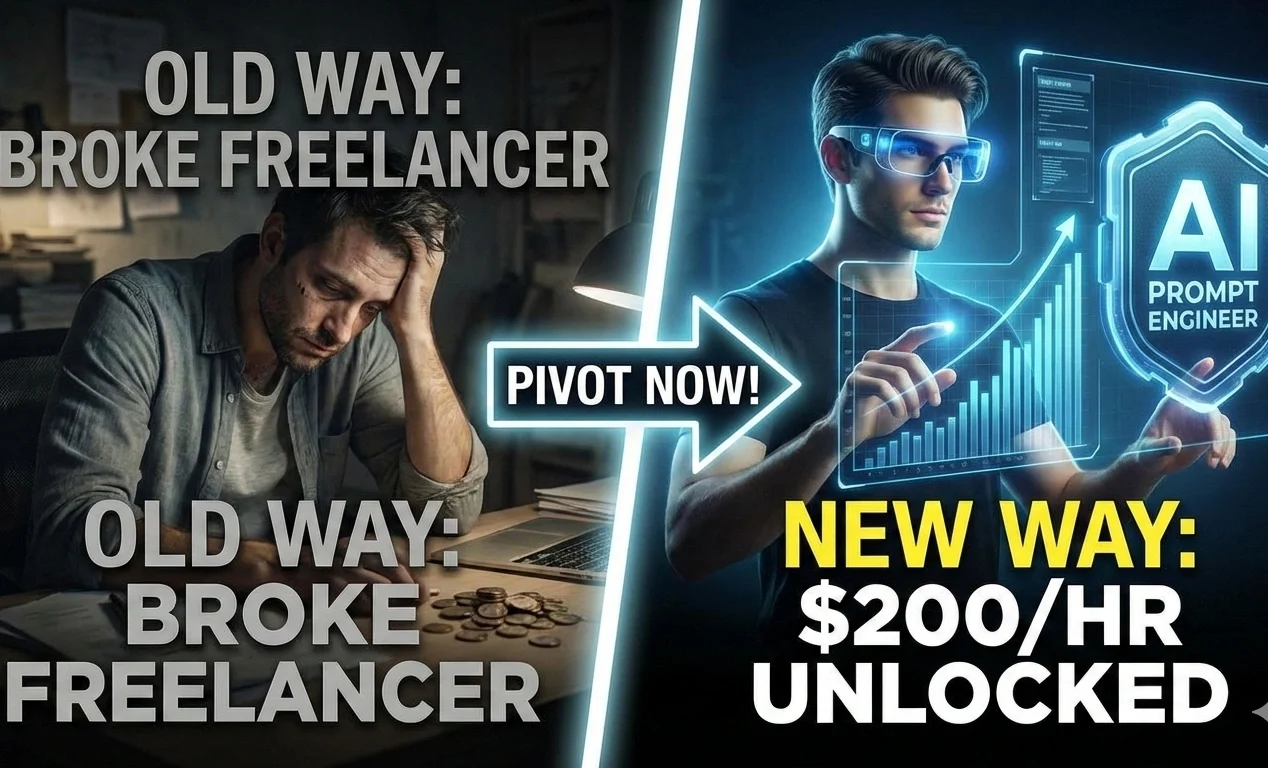
Let’s rip the Band-Aid off: Traditional freelancing is gasping for air.
If you are still selling generic blog writing at $0.05 per word or basic logo design on Fiverr, you are fighting a losing war against algorithms that can do your job in seconds for fractions of a penny. But while the “doers” are panicking, a new class of freelancer is quietly making a killing.
They aren’t “writing” text; they are programming in English.
Welcome to the era of the Prompt Engineer. In 2025, this isn’t just about asking ChatGPT to “write a poem.” It is about orchestrating complex workflows, building autonomous agents, and solving expensive business problems using nothing but natural language and logic.
If you are looking for the highest-leverage skill to learn this year, stop looking. Here is the uncomfortable truth about why Prompt Engineering is the only arbitrage opportunity that matters right now.
1. The Massive “Implementation Gap”
Here is the dirty secret of the corporate world: Everyone has the subscription, but nobody knows how to use it.
Companies are panic-buying Enterprise seats for ChatGPT, Claude, and Gemini. Executives demand “AI integration,” but their teams are paralyzed. They stare at the blinking cursor and type, “Write a marketing email,” get a generic robot-sounding result, and give up.
This is your goldmine.
You aren’t being hired to “type words.” You are being hired to bridge the gap between raw potential and business results.
- The Client’s Reality: They have a Ferrari (GPT-4) but are driving it like a golf cart.
- Your Role: You are the professional driver who knows how to redline the engine without crashing.
When you position yourself as the person who “Unlocks the AI they are already paying for,” you shift from a cost center to a profit multiplier.
2. The “Rate Arbitrage” is Absurd (For Now)
Economics 101: Price is determined by supply and demand. Right now, the demand for advanced prompt engineering is vertical, and the supply of competent engineers is non-existent.
A standard copywriter might charge $50/hour. A Prompt Engineer who builds a “Copywriting System” that generates consistent, on-brand copy for the whole team charges $200/hour—or better yet, a flat $5,000 project fee.
Why the difference? Because you aren’t delivering a fish; you are building a high-tech fishing trawler. When you deliver a system (a library of refined, chain-of-thought prompts) rather than a service (writing the emails yourself), your value detaches from your time.
Pro Tip: Stop selling “hours.” Start selling “assets.” An optimized prompt library is a business asset.
3. Platform Agnosticism: The Technical Moat
“But can’t anyone just type into ChatGPT?”
Sure. Just like anyone can type into Python. But can they write code that compiles?
Real Prompt Engineering in 2025 is deep technical work. It requires understanding the “personality” and parameter nuances of different models.
- Midjourney v6: Requires a distinct syntax of weights (
--iw), stylization (--s), and negative prompting to get usable commercial art. - Claude 3 Opus: Excels at massive context windows and requires “XML tag” structuring to prevent hallucinations.
- OpenAI Playground: Requires tweaking “Temperature” and “Frequency Penalty” settings that the average user doesn’t even know exist.
When you master these nuances, you build a technical moat. You are no longer competing with the client’s intern; you are operating on a level they don’t even understand.
4. Building “Agents,” Not Just Content
This is the biggest shift for 2025. We have moved beyond “Chatbots” to “Autonomous Agents.”
Clients don’t just want a bot that answers questions. They want an Agent that:
- Reads an incoming customer support email.
- Checks the Shopify database for the order status.
- Drafts a refund specifically based on the store’s policy.
- Pings the manager for approval on Slack.
This workflow requires multi-shot prompting, logical reasoning chains, and integration with tools like Zapier or LangChain.
If you can build this, you are not a freelancer. You are an Automation Architect. The “Prompt” is just the glue holding the million-dollar system together.
5. You Become the “Pilot,” Not the Plane
Fear is rampant among freelancers. “Will AI replace me?” No. AI will replace the operator who refuses to upgrade.
Think of the transition from manual arithmetic to Excel. The accountants who refused to learn spreadsheets were wiped out. The ones who mastered Excel became CFOs.
By becoming a Prompt Engineer, you position yourself as the Pilot.
- The Plane: The LLM (Large Language Model).
- The Pilot: You.
The plane creates the value (speed/power), but the pilot determines the destination and ensures a safe landing. You are future-proofing your career by becoming the controller of the intelligence, rather than the intelligence itself.
6. The “No-Code” App Revolution
You used to need 6 months and $50k to build a software tool. Now, with OpenAI’s “GPTs” or Anthropic’s “Artifacts,” you can build a custom software application in an afternoon using only natural language.
Imagine this freelance offer: “I will build a custom internal app for your HR team that instantly scans resumes, compares them to your job descriptions, and grades candidates on a 1-10 scale.”
Two years ago, that was a software engineering contract. Today, it is a complex “System Prompt” inside a secure Custom GPT. You can build, test, and sell this solution without writing a single line of Python or Javascript. This democratizes “Software as a Service” (SaaS) building for non-coders.
7. Low Overhead, Infinite Margin
Let’s talk numbers.
- Inventory: $0.
- Staff: None (The AI is your staff).
- Tools: ~$40/month (ChatGPT Plus + Claude Pro).
- Potential Revenue: $10k+/month.
The economics of an AI freelance business are unbeaten. You don’t need a warehouse, a high-end camera, or a powerful rendering PC. You need a laptop, an internet connection, and a brain that understands logic.
Because the AI does the “heavy lifting” (generating the text, code, or image), your energy is spent on Strategy and Quality Control. This allows you to handle 5x the client volume of a traditional freelancer without burning out.
The “Google Discover” Visibility Checklist
To ensure this knowledge reaches the people who need it, we optimize. If you are writing about AI, you must practice what you preach.
- Emotional Hook: We target the fear of obsolescence (“Traditional freelancing is dying”) and the greed of opportunity (“$200/hr”).
- Visuals: Use Midjourney to generate futuristic, high-contrast headers (1200px wide). Prompt suggestion: “Cyberpunk freelancer working in a holographic interface, neon blue and orange, 16:9 aspect ratio –v 6.0”
- Headline: Must be specific. Not “About Prompt Engineering,” but “7 Reasons Why…” (Listicles perform 2x better on Discover).
Your Immediate Next Step
Stop reading. Start engineering.
You don’t need a certificate. You need a portfolio. Here is my challenge to you:
Go to ChatGPT or Claude right now. Don’t ask it a question. Build a tool. Create a prompt that turns a messy meeting transcript into a perfectly formatted project management checklist. Iterate on it until it works every single time, regardless of the input.
Once you do that, you have your first product.
Are you ready to pivot your career, or are you going to wait until the market is saturated? The clock is ticking.
Tell me in the comments: What is the one “boring” task you want to automate with AI today?
Discover more from Remote Work Tips
Subscribe to get the latest posts sent to your email.

How Independent Workers Can Navigate—and Thrive—in the Age of Automation
The freelance economy is experiencing an unprecedented transformation. With over 70 million Americans engaged in independent work and freelancers contributing $1.5 trillion to the U.S. economy in 2024, the gig workforce has evolved from a fringe career choice into a mainstream economic powerhouse. Yet beneath these impressive numbers lies a more complex reality: freelancers are navigating their most disruptive era yet, one defined by artificial intelligence, platform dependency, and rapidly evolving client expectations.
The intersection of AI and freelancing presents a paradox. AI-related work on Upwork grew 60% year-over-year in 2024, signaling explosive demand for AI-literate talent. Simultaneously, research reveals that freelancers in occupations more exposed to generative AI experienced a 2% decline in contracts and a 5% drop in earnings following ChatGPT’s launch in late 2022. This isn’t a simple story of technology replacing humans—it’s a nuanced reshaping of what freelance work means, who succeeds, and what skills command premium rates.
For the 1.57 billion global freelancers charting their course through this transformation, understanding these challenges isn’t just academic—it’s essential for survival and growth. Here are the fifteen most critical obstacles freelancers face in an AI-powered world, backed by data, expert analysis, and actionable insights.
1. The Commoditization Crisis: When Your Work Becomes “Good Enough”
The most insidious challenge facing freelancers isn’t that AI does their job better—it’s that AI does it “good enough” for clients willing to sacrifice quality for speed and cost savings.
Demand for substitutable skills like writing and translation decreased by 20-50% relative to pre-ChatGPT trends, with the sharpest declines hitting short-term projects lasting one to three weeks. This data reveals a harsh market reality: clients increasingly view certain freelance services as interchangeable commodities rather than specialized expertise.
The commoditization effect particularly impacts entry-level and mid-tier freelancers who built their businesses on volume rather than specialization. When a marketing manager can generate ten blog outlines in minutes using ChatGPT instead of hiring a content strategist for $500, the calculus changes dramatically. The work still needs human refinement, but the perceived value—and therefore the price clients will pay—has fundamentally shifted.
This creates a bifurcated market where generalists struggle while specialists thrive. Freelance writers earn around $42,000 annually on average, but this range varies dramatically based on specialization and AI integration. Those offering generic “blog writing” services face downward pricing pressure, while technical writers in AI, machine learning, or cybersecurity command premium rates as 55% of leaders express concern about having enough talent to fill specialized roles.
2. The Race to the Bottom: Pricing Pressure in AI-Saturated Markets
Related to commoditization but distinct in its mechanism, pricing pressure represents the downward spiral when too many providers compete on cost rather than value. AI hasn’t just made some freelance work easier to automate—it’s flooded markets with low-cost alternatives that reset client expectations.
The data paints a sobering picture. While writing jobs declined 33% on Upwork from November 2022 to February 2024, those remaining showed slight wage increases, suggesting a counterintuitive dynamic: as simple tasks disappear, the complex work that remains becomes more valuable—but only for freelancers positioned to capture it.
The pricing pressure manifests in three ways. First, clients increasingly expect faster turnarounds at lower costs, assuming freelancers now use AI assistants. Second, the barrier to entry has lowered, with novices using AI to produce passable work, increasing competition. Third, platform algorithms often surface lower-priced options prominently, forcing experienced freelancers to either match questionable rates or invest heavily in differentiation.
This challenge compounds in global markets where freelancers in Kenya and other developing nations saw demand plummet and pay decline as clients turned to AI for tasks previously outsourced internationally. The race to the bottom becomes global when technology enables anyone, anywhere, to compete on the same playing field.
3. Skill Obsolescence at Warp Speed: The Treadmill of Perpetual Learning
The half-life of professional skills has always been finite, but AI has accelerated obsolescence to unprecedented speeds. What took a decade to become outdated now shifts in eighteen months. For freelancers whose marketability depends on current expertise, this creates an exhausting treadmill of perpetual upskilling.
Among Upwork freelancers, 71% of Gen Z and 67% of millennials have received AI skills training, compared to just 21% of baby boomers. This generational divide reveals how skill obsolescence increasingly correlates with learning agility rather than experience. The veteran graphic designer with fifteen years of client relationships faces displacement not from lack of talent, but from unfamiliarity with AI-powered design tools that younger competitors wield fluently.
The challenge extends beyond acquiring new technical capabilities. 66% of business leaders say they wouldn’t hire someone without AI skills, and 71% would rather hire a less experienced candidate with AI skills than a seasoned professional without them. This preference fundamentally rewrites the value proposition of experience, forcing established freelancers to prove they’re not only skilled but also adaptable.
Research shows freelancers spend significantly more time learning than traditional employees—some estimates suggest ten times more—yet this investment yields diminishing returns as the knowledge they acquire becomes outdated faster. The psychological toll compounds the practical challenge: constant learning fatigue, imposter syndrome from always feeling behind, and the fear that today’s hard-won skills will be tomorrow’s obsolete baggage.
4. The Expectation Explosion: Doing More With Less Time
AI’s promise of productivity gains has created a perverse side effect: clients expect superhuman output from human freelancers. If AI can write a draft in ninety seconds, why should a freelance writer need three days? This logic, however flawed, increasingly shapes project timelines and client demands.
The expectation explosion manifests in compressed deadlines, expanded scope without proportional compensation, and assumption that freelancers use AI to achieve impossible productivity. Freelancers using AI save about eight hours per week on average, but these gains often don’t translate to higher earnings—they simply enable meeting accelerated client demands.
This creates a troubling dynamic where freelancers must maintain AI-assisted productivity levels to remain competitive, even when human judgment, creativity, and strategic thinking require time that algorithms can’t compress. A brand strategist might use AI to analyze market data faster, but developing an authentic brand voice still requires extended human contemplation and iteration.
The expectation explosion also extends to availability. The “always-on” culture, amplified by AI’s 24/7 accessibility, pressures freelancers to respond instantly and deliver continuously. Clients accustomed to ChatGPT’s immediate responses unconsciously apply the same standards to human contractors, eroding boundaries and fueling burnout.
5. Quality Differentiation in an AI-Saturated Marketplace
When every freelancer claims to deliver “high-quality, professional work,” and AI can produce serviceable outputs in seconds, how does a skilled independent worker demonstrate genuine value? This challenge of quality differentiation has become the defining question for freelance sustainability.
The problem is partly perceptual: clients increasingly struggle to distinguish between AI-generated content and human-crafted work, leading some to unfairly accuse legitimate freelancers of using AI or to question whether paying premium rates makes sense when “AI can do it free.” This suspicion erodes trust, forcing freelancers into defensive positions where they must prove their humanity and value simultaneously.
Quality differentiation requires what economists call “costly signaling”—investments that genuinely skilled professionals can afford but imposters cannot. This might include specialized certifications, published thought leadership, case studies with measurable results, or video portfolios that demonstrate process and expertise. Yet these signals themselves require time and resources that many freelancers, especially those already struggling with income volatility, can barely spare.
More than 60% of freelance writers now incorporate AI into their work, making the line between “AI-assisted” and “AI-generated” increasingly blurry. Successful freelancers navigate this by positioning AI as an amplifier of human expertise rather than a replacement, but communicating this nuance to clients proves difficult when procurement decisions focus on deliverables rather than process.
6. Platform Algorithm Changes That Favor Automation
Freelance platforms—the digital marketplaces where billions in independent work gets transacted—increasingly deploy AI algorithms to match clients with contractors. While theoretically neutral, these systems often favor characteristics that disadvantage human freelancers competing in AI-influenced markets.
Upwork’s revenue from ads and monetization increased 35% year-over-year in Q3 2024, reflecting platforms’ growing emphasis on algorithmic promotion rather than organic discovery. Freelancers who don’t pay for enhanced visibility find themselves buried beneath competitors who do, creating a pay-to-play dynamic that favors those with capital over those with purely merit.
Platform algorithms also tend to prioritize metrics like response time, acceptance rate, and pricing—factors easily optimized by less experienced freelancers using AI tools to maintain constant availability and quick turnarounds. Meanwhile, seasoned professionals who carefully vet projects and maintain sustainable work boundaries get penalized by systems that mistake selectivity for unresponsiveness.
The rise of AI-powered platform assistants like Upwork’s Uma creates another layer of algorithmic influence. While these tools help freelancers with administrative tasks, they also standardize proposal writing and communication, potentially reducing the differentiation that previously helped skilled freelancers stand out. When everyone uses the same AI assistant to craft pitches, proposals become homogenized, and clients default to price as the primary differentiator.
7. Vanishing Entry Points: The Disappearing Junior Freelancer
One of AI’s most underappreciated impacts on freelancing is the elimination of entry-level opportunities that historically served as career launchpads. The junior copywriter who cut her teeth on routine blog posts, the novice coder who learned by building simple websites, the apprentice designer who refined skills on small logo projects—these developmental pathways are evaporating.
Demand for novice workers in complementary AI clusters declined despite overall growth in those categories. This means even in expanding fields like machine learning, entry-level positions disappear as AI handles the basic tasks that once trained new professionals.
The disappearing entry point creates a cruel paradox: freelancers need experience to command rates that support sustainable careers, but the routine work that builds that experience no longer exists or pays too little to justify the investment. This forces aspiring freelancers into a catch-22 where they’re either overqualified for automated tasks or underqualified for the complex work that remains valuable.
The impact extends beyond individual career trajectories to threaten the entire freelance ecosystem’s sustainability. If newcomers can’t enter and learn progressively, the pipeline of skilled independent workers dries up, potentially creating future talent shortages even as current workers face displacement. This dynamic particularly impacts underrepresented groups who traditionally used freelancing’s lower barriers to entry as pathways to economic mobility.
8. Income Volatility on Steroids: Financial Insecurity Amplified
Freelancers have always faced income unpredictability, but AI-driven market disruption has amplified volatility to unprecedented levels. The traditional “feast or famine” cycle has become more extreme, with boom periods shorter and bust periods deeper.
Income volatility is a defining characteristic of the gig economy, with workers struggling to predict or rely on steady income streams. Research indicates freelancers experience dramatic income fluctuations month to month, severely disrupting financial stability. This volatility compounds in AI-influenced markets where client needs shift rapidly and project types emerge and disappear within months rather than years.
The amplified volatility manifests in several ways. First, the project pipeline becomes less predictable as clients experiment with AI alternatives before returning to human freelancers for specific needs. Second, pricing negotiations intensify as clients benchmark against AI costs, leading to greater variation in rates achieved. Third, skill-based income differences widen, with AI-complementary specializations commanding premiums while substitutable skills face depression.
Gig workers must pay both employer and employee portions of Social Security and Medicare taxes, totaling 15.3% of net income, and without employer-sponsored benefits, freelancers bear the full burden of health insurance, retirement contributions, and emergency funds. When income fluctuates violently, saving for these necessities becomes nearly impossible, creating a downward spiral where financial insecurity prevents the investments needed to achieve stability.
The tax implications particularly sting. Gig workers should allocate 20-25% of profits for federal taxes and 5% for state taxes, but this becomes unmanageable when income swings dramatically quarter to quarter. Many freelancers face difficulties obtaining loans or credit due to irregular income, limiting their ability to smooth consumption or invest in business development during lean periods.
9. The Continuous Learning Treadmill: Education as Full-Time Job
While skill obsolescence (Challenge #3) addresses what needs learning, the continuous learning treadmill focuses on the exhausting process of constant education itself. For freelancers, professional development isn’t a periodic investment—it’s become an unending second job that competes with income-generating work.
The numbers reveal the scale of this commitment. 65% of freelancers upgraded their skills in 2023, and 42% intended to do so in 2024. Nearly 90% of freelancers report clients want specialized expertise, forcing continuous upskilling. Research suggests freelancers spend ten times more time learning new skills than full-time employees, yet this investment comes entirely from personal time and resources.
The AI era intensifies this challenge exponentially. Each new AI tool, platform update, or algorithmic shift potentially requires mastery. 73% of freelancers use generative AI tools in their work, but effective integration demands learning proper prompting, understanding output limitations, and developing workflows that leverage AI’s strengths while compensating for weaknesses. This education never appears in client budgets but becomes mandatory for competitiveness.
The continuous learning treadmill creates opportunity costs that traditional employment doesn’t impose. A full-time employee might attend a company-sponsored training during work hours, receiving education as part of their salary. Freelancers forgo billable hours to learn, essentially paying double—once in lost income, again in course fees or subscription costs. This creates a regressive dynamic where successful freelancers can afford continuous education while struggling ones cannot, widening inequality.
10. Mental Health Under Siege: Isolation, Anxiety, and Burnout in Digital Workspaces
The freelance mental health crisis predates AI, but algorithmic disruption and platform dependency have dramatically worsened psychological challenges. The data paints an alarming picture of independent workers under severe stress.
45% of freelancers saw their mental health decline in 2024, with multiple contributing factors including increased cost of living, global conflict, and ongoing challenges finding work. 31% were unable to work for three or more days during the year due to poor mental health, and two-thirds felt less able to work due to psychological challenges at some point, directly affecting productivity and income.
The isolation component particularly devastates freelancers. 90% of freelancers felt isolated, disconnected or lonely during 2024—nearly three times higher than the national average for traditional workers. 71.9% felt isolated or lonely sometimes or frequently, highlighting how remote work’s flexibility comes at significant social cost.
AI amplifies these challenges in unexpected ways. The constant pressure to prove human value against algorithmic alternatives creates existential anxiety. 48% of freelancers are very concerned about AI taking their jobs, with this percentage reaching 58% among U.S. freelancers—the highest among regions surveyed. This sustained anxiety compounds with income volatility and skill obsolescence fears to create overwhelming psychological burden.
The burnout epidemic reaches crisis proportions. 54% of workers experienced burnout or mental health challenges due to work in the past year, with rates even higher in finance (58%) and IT (55%). For freelancers lacking traditional workplace support structures, burnout spirals unchecked. 91% of workers reported extreme stress compared to 46% in 2021, and a quarter feel unable to manage this pressure.
Financial stress intertwines with psychological challenges. 72% experienced ghosting during 2024, with 60% saying this negatively affected their mental health. Additionally, 71% experienced late payments and had to chase them, with 55% reporting negative mental health impacts. These practical challenges compound isolation and anxiety into debilitating psychological conditions.
Perhaps most concerning: 70% of freelancers don’t feel they have adequate support for their mental health at work, and similar percentages don’t know where to turn for help. 82% did not feel supported by government in self-employment, leaving independent workers without the safety nets or institutional support that might mitigate these challenges.
11. The Verification Vacuum: Trust, Authenticity, and Proving Human Value
In an era where AI can generate convincing portfolios, fabricate testimonials, and even conduct initial client consultations, establishing authentic credentials and trustworthiness has become increasingly complex. The verification vacuum represents the growing challenge of proving genuine expertise when digital fraud becomes trivially easy.
This challenge cuts both ways. Clients struggle to verify whether freelancers truly created their portfolio work or used AI to generate it. Meanwhile, freelancers face unfounded accusations of using AI even when work is entirely human-crafted. Clients increasingly struggle to distinguish between AI-generated content and human work, creating a climate of suspicion that erodes the trust foundation essential for successful freelance relationships.
The verification challenge extends to credentials themselves. Traditional markers of expertise—degrees, certifications, years of experience—carry diminishing weight when AI can help novices produce work that superficially resembles expert output. Clients increasingly question whether impressive portfolios represent genuine capability or clever AI assistance, making differentiation based on demonstrated work less effective.
Some freelancers respond by creating verification systems: video documentation of their process, time-lapse recordings of work creation, or detailed case studies explaining decision-making. Yet these solutions impose additional labor burdens on already stretched independent workers, essentially requiring freelancers to prove their humanity and value continuously rather than letting their work speak for itself.
The verification vacuum also enables fraudulent actors to proliferate. AI makes it easier for scammers to impersonate legitimate freelancers, create convincing fake portfolios, and deliver AI-generated work while claiming human authorship. This degrades overall market trust, harming all freelancers regardless of their actual integrity.
12. Intellectual Property Nightmares: Copyright, Ownership, and AI Collaboration
The intersection of AI, freelancing, and intellectual property creates unprecedented legal and ethical complexities. When freelancers use AI tools in their work, who owns the output? What happens when AI training datasets include copyrighted material? How should contracts address AI assistance?
These questions lack clear answers, creating an intellectual property minefield that freelancers navigate without adequate guidance. Medium no longer allows AI-generated content to be paywalled as part of their Partner Program, beginning May 2024, reflecting platforms’ struggle to establish consistent policies. Substack takes different approaches, and client expectations vary widely, forcing freelancers to negotiate IP terms on a case-by-case basis.
The copyright challenges operate on multiple levels. First, freelancers must determine whether using AI tools in their process affects the work’s copyright status. Can you claim full authorship of content that AI helped create? Second, clients increasingly include contract clauses prohibiting AI use or requiring disclosure of any AI assistance, but these provisions often lack precision about what constitutes prohibited “AI use” versus acceptable “AI-assisted workflow.”
Third, the question of downstream liability looms large. If a freelancer unknowingly delivers content that AI generated by incorporating copyrighted material from its training data, who bears legal responsibility? Many contracts leave this ambiguous, creating exposure for independent workers who lack legal departments to review agreements.
The intellectual property nightmare extends to defensive considerations. Freelancers’ own work may be scraped to train AI models without consent or compensation, effectively allowing technology companies to profit from their creative output. Some freelancers attempt to protect their work through licensing restrictions or watermarking, but enforcement remains nearly impossible at internet scale.
13. Global Competition on AI-Leveled Playing Fields
AI’s democratizing effect on skill deployment has paradoxically intensified global competition by reducing traditional advantages that differentiated freelancers across markets. When language barriers diminish, geographic arbitrage erodes, and access to cutting-edge tools equalizes, freelancers compete not regionally but globally.
The data reveals this intensification. The global freelancing workforce reached 1.57 billion people in 2025, representing 46.6% of the total workforce. This massive talent pool, increasingly interconnected through digital platforms, creates unprecedented competition where pricing, expertise, and responsiveness must satisfy global benchmarks rather than local standards.
AI particularly affects global competition by neutralizing language advantages. Translation tools enable freelancers who previously couldn’t access English-language markets to compete effectively, expanding the talent pool clients can choose from. While this benefits clients seeking cost-effective talent, it pressures freelancers in high-cost regions who previously commanded premiums partly based on native fluency.
Geographic wage differences, once a source of competitive advantage for freelancers in lower-cost regions, begin compressing. As work becomes increasingly digital and AI-assisted, clients focus less on where freelancers are located and more on their ability to deliver results efficiently. Freelancers in the United States earned an average of $47.71 per hour as of October 2025, but growing competition from skilled international freelancers willing to work for less creates downward pressure on these rates.
The global competition dynamic creates winners and losers based largely on specialization depth rather than geographic location. Generalists face intense pressure from worldwide competition, while deep specialists in emerging technologies or niche industries maintain pricing power regardless of their physical location.
14. Platform Dependency and the Extraction Economy
The rise of freelance platforms created valuable marketplaces connecting independent workers with clients globally, but this convenience comes with significant costs. Platform dependency has evolved into a form of digital feudalism where independent workers pay substantial fees for access to opportunities they theoretically should be able to capture directly.
The numbers reveal the scale of this dependency. The freelance platform market is projected to reach $16.54 billion by 2030, growing from $7.65 billion in 2025. This explosive growth reflects both market expansion and platforms’ increasing ability to extract value from transactions between freelancers and clients. Upwork holds 61.25% market share, giving it enormous influence over how millions of freelancers access work.
Platform dependency manifests in multiple ways. First, the direct costs: platforms typically charge freelancers 5-20% of earnings, a substantial cut from already-tight margins. Second, the indirect costs of platform-specific reputation systems that don’t transfer between marketplaces, locking freelancers into platforms where they’ve built credibility. Third, the algorithmic control platforms exert over visibility and opportunities, forcing freelancers to optimize for platform metrics rather than client value.
AI intensifies platform dependency by making platforms increasingly essential for work discovery. As clients grow more comfortable with algorithmic matching rather than personal networking, freelancers who aren’t platform-visible become effectively invisible to potential clients. Upwork’s revenue from Freelancer Plus subscriptions increased 48% year-over-year in Q3 2024, indicating freelancers increasingly pay premiums for enhanced platform features because not doing so means falling behind competitors who do.
The extraction economy also manifests in data asymmetry. Platforms collect comprehensive data about freelancer performance, client preferences, and market trends, using these insights to optimize their algorithms and business models. Freelancers, meanwhile, operate with limited visibility into how these systems work or how they can succeed within them, creating an imbalanced power dynamic.
15. Work-Life Boundaries in “Always-On” AI Environments
The final challenge represents perhaps the most insidious: the erosion of work-life boundaries in digital workspaces where AI creates expectations of constant availability and instant response. The flexibility that attracted many to freelancing paradoxically becomes a trap when clients expect 24/7 accessibility and AI-assisted productivity.
The data reveals concerning patterns. 36% of freelancers took less than 14 days of voluntary leave during the year, and 32% felt additional stress or negative impact to their mental health by taking time off. This reflects how freelancing’s lack of paid time off combines with market pressures to create conditions where rest becomes a luxury many can’t afford.
The always-on culture manifests through multiple channels. Email, Slack, project management platforms, and freelance marketplaces create an expectation of rapid response. Clients accustomed to ChatGPT’s immediate answers unconsciously apply similar standards to human contractors, creating pressure to check messages constantly and respond quickly regardless of the hour. 74% of respondents planning to or currently freelancing said freelancing has or will improve their mental health through flexibility, yet this same flexibility becomes problematic when boundaries dissolve entirely.
The challenge intensifies as global client bases span time zones, creating continuous demands that prevent true disconnection. A freelancer serving clients in New York, London, and Singapore faces a reality where someone always needs something, making traditional “end of workday” boundaries meaningless.
AI paradoxically worsens this dynamic despite promising productivity gains. Because AI enables faster turnarounds, clients assume compressed timelines and immediate availability are reasonable. The freelancer who once needed three days to complete a project now faces pressure to deliver in one day because “you’re using AI anyway, right?” This assumption ignores that human elements—strategy, creativity, judgment—still require time, but the expectation persists.
31% of respondents said having more flexibility in work hours/schedule would help improve their well-being, along with 26% wanting to work from home more often. Yet achieving this flexibility requires actively defending boundaries against clients, platforms, and one’s own internalized pressure to remain constantly productive in uncertain markets.
The always-on environment creates a cruel irony: freelancers chose independent work partly for autonomy and work-life balance, but market forces powered by AI expectations conspire to eliminate these benefits, leaving freelancers working longer hours under greater stress than traditional employees without the benefits or security employment provides.
Finding Opportunity in Disruption: The Path Forward
These fifteen challenges paint a sobering picture, but they’re not deterministic. The same AI transformation creating these obstacles also generates unprecedented opportunities for freelancers who adapt strategically.
Demand for machine learning programming grew 24%, and demand for AI-powered chatbot development nearly tripled after ChatGPT’s launch. 4.7 million independent workers in the U.S. earned over $100,000 in 2024, a significant increase from 3 million in 2020. These numbers reveal that while some freelance categories decline, others explode—and skilled workers positioned correctly thrive.
The winning strategy combines three elements: deep specialization in areas where human judgment remains essential, fluent AI literacy that treats algorithms as amplifiers rather than replacements, and relentless focus on demonstrable value creation that transcends commoditized deliverables.
Freelancers excelling in this environment don’t compete on cost—they compete on outcomes. They don’t resist AI—they master it. They don’t chase every opportunity—they build authority in narrow domains where their expertise commands premium rates. They don’t tolerate exploitative platform terms or client demands—they establish boundaries that make their work sustainable.
Skilled freelancers lead in continuous learning, problem-solving (71% high proficiency compared to 49% overall), critical thinking (67% versus 43%), and adaptability (53% versus 41%). These capabilities—quintessentially human attributes that AI cannot replicate—represent the foundation for freelance success in an automated world.
The future of freelancing isn’t about surviving AI disruption but about leveraging it. The freelancers who embrace these challenges, adapt their skills and positioning, and maintain the resilience to weather turbulent transitions will find themselves not just surviving but thriving in the world’s largest and most dynamic workforce segment.
Key Takeaways
- AI creates a bifurcated freelance market: Demand for specialized, complex work grows while routine tasks face automation, widening the gap between thriving and struggling freelancers.
- Continuous adaptation is non-negotiable: The half-life of professional skills has compressed dramatically, requiring freelancers to invest heavily in ongoing education simply to maintain competitiveness.
- Mental health represents a critical vulnerability: With 45% of freelancers reporting declining mental health in 2024 and minimal support structures, psychological resilience becomes as important as technical skills.
- Quality differentiation demands costly signaling: In AI-saturated markets, freelancers must invest significant resources in demonstrating genuine expertise through portfolios, certifications, and thought leadership.
- Platform dependency creates structural vulnerability: While freelance platforms provide valuable market access, their growing dominance and fee extraction raises questions about long-term sustainability for independent workers.
- The human advantage lies in judgment, strategy, and relationships: Technical skills increasingly require AI augmentation, but uniquely human capabilities—creative problem-solving, strategic thinking, emotional intelligence, and relationship building—remain valuable and difficult to automate.
- Success requires specialization, AI fluency, and boundary-setting: Thriving freelancers focus on narrow expertise domains, master AI as a productivity amplifier, and establish sustainable work practices that prevent burnout.
Sources:
- Upwork Research Institute – Future Workforce Index 2025
- Mellow – Freelance Statistics and Trends 2025
- Medium Analysis – AI’s Impact on Creative Freelancer Income 2024
- Upwork – The State of AI: Statistics and Facts for 2024
- Notta – Upwork Statistics for 2025
- Skillademia – Freelancer.com Statistics 2025
- Accio – Freelancing Trends 2025
- Quantumrun – Freelancing Statistics and Trends 2025
- Brookings Institution – Generative AI and the Freelance Market
- Journal of Economic Behavior & Organization – Winners and Losers of Generative AI
- ResearchGate – Gig Economy Financial Challenges
- World Economic Forum – The Gig Economy and Workers
- Upwork – Gig Economy Statistics and Market Trends
- The Interview Guys – State of Gig Economy 2025
- International Journal of Research – Financial Challenges for Freelancers
- ClearVoice – Gig Economy Future 2024 & Beyond
- Carry – 2025 Gig Economy Trends
- Drishti IAS – Rise and Challenges of India’s Gig Economy
- Fidelity – Freelance Work and the Gig Economy
- WGU – Pros and Cons of the Gig Economy
- Elna Cain – AI and Freelance Writing Industry
- AIContentfy – Impact of AI on Content Creation Jobs
- Medium – How AI Impacted Freelance Writing Career
- Freelance Writing Coach – Will AI Replace Writers?
- Location Rebel – Future of Freelance Writing 2024
- Damilola Jonathan – AI-Generated Content and Freelance Jobs
- Single Catholic Writer – How AI Affected Multi-Platform Writing
- Imperial Business School – How AI Affects Freelance Jobs
- GravityWrite – Will AI Replace Writers?
- Nectafy – Will AI Replace Content Writers?
- GlobeNewswire – Employee Burnout Crisis 2024
- Freelance Informer – How to Spot
Discover more from Remote Work Tips
Subscribe to get the latest posts sent to your email.
The freelance landscape has officially shifted. We’ve moved past the “gig economy”—where people traded time for quick tasks—into the Expert Economy. In 2026, the most successful freelancers aren’t just “service providers”; they are strategic partners who leverage cutting-edge technology to solve complex problems.
Why is 2026 the turning point? We’ve hit the “AI Maturity” phase. Companies have stopped panicking about AI and started integrating it into every fiber of their operations. This has created a massive skills gap. According to recent data from Upwork, demand for AI-specialized roles has surged by over 220%, and businesses are now prioritizing proven expertise over traditional degrees.
If you want to build a sustainable freelance income, you need to stop chasing low-value gigs and start building “money streams” in these 20 high-growth areas.
Category A: The AI & Tech Frontier
This is the “Gold Rush” of 2026. Tech is no longer just for developers; it’s for anyone who can bridge the gap between human intent and machine execution.
1. Generative AI Specialist / Prompt Engineer
Prompt engineering has evolved. It’s no longer just about “talking to a chatbot.” In 2026, it’s about LLM Optimization—fine-tuning models to maintain a brand’s specific voice and ensuring outputs are factually airtight.
- Why it Rocks: Gartner estimates that by 2026, 80% of enterprises will have integrated GenAI into their workflows. They need experts to build the “instructions.”
- Money Stream Potential: $150 – $350/hr.
- Tools to Master: OpenAI API, Claude Projects, Midjourney, LangChain.
2. AI App Developer
The world doesn’t need more generic wrappers; it needs specialized AI apps. Developers who can build custom solutions using Python and LLM frameworks are in desperate demand.
- Why it Rocks: Small businesses are now hiring freelancers to build internal AI tools that automate their specific admin or sales tasks.
- Money Stream Potential: $2,000 – $10,000 per project.
- Tools to Master: Python, Pinecone (Vector Databases), LangChain, GitHub.
3. Cybersecurity Analyst
With remote work being the global standard, companies are more vulnerable than ever. A freelance “Security Auditor” is the digital equivalent of a high-end insurance policy.
- Why it Rocks: Cyberattacks have increased significantly, and the “cost of a breach” is now a boardroom-level fear.
- Money Stream Potential: $120 – $250/hr.
- Tools to Master: Wireshark, Burp Suite, Metasploit, Cloudflare.
4. DevOps & Cloud Engineer
In 2026, the “Cloud” is where everything lives. Companies need freelancers to manage the infrastructure that keeps their global teams connected and their AI models running.
- Why it Rocks: High-paying industries like Finance and Biotech are leading the charge in remote cloud migration.
- Money Stream Potential: $140 – $200/hr.
- Tools to Master: AWS, Docker, Kubernetes, Terraform.
5. Blockchain & Smart Contract Developer
Beyond the crypto hype, blockchain is now the backbone of secure, cross-border freelance payments and transparent supply chains.
- Why it Rocks: Businesses use smart contracts to automate “payment on delivery,” removing the trust barrier in global freelancing.
- Money Stream Potential: $150 – $300/hr.
- Tools to Master: Solidity, Rust, Ethereum, Polygon.
6. No-Code / Low-Code Architect
Speed is the currency of 2026. Companies don’t want to wait six months for a custom app. They want it in six days. No-code experts are the “rapid response” teams of the tech world.
- Why it Rocks: It allows startups to test ideas instantly without a massive engineering budget.
- Money Stream Potential: $3,000 – $7,000 per build.
- Tools to Master: Bubble, Webflow, Zapier, Make.com.
Category B: Data & Strategy
Data is the oil of the 21st century, but in 2026, we have too much oil and not enough “refiners.”
7. Data Analyst & Visualizer
Raw data is useless. The real money is in Data Storytelling—taking complex numbers and turning them into a visual narrative that a CEO can understand in 30 seconds.
- Why it Rocks: Businesses are drowning in AI-generated data and need humans to interpret the “So What?”
- Money Stream Potential: $80 – $160/hr.
- Tools to Master: Tableau, PowerBI, SQL, Python (Pandas).
8. Digital Marketing Strategist (ROI-Focused)
The “post-it-and-pray” era of social media is dead. In 2026, companies only pay for Performance Marketing. If you can prove your ads result in $5 for every $1 spent, you’ll never be out of work.
- Why it Rocks: Ads are getting more expensive; precision is the only way to survive.
- Money Stream Potential: $100 – $200/hr + Performance Bonuses.
- Tools to Master: Meta Ads Manager, Google Analytics 4 (GA4), HubSpot.
9. SEO & AEO Specialist (The “Search” Evolution)
SEO has changed. It is now Answer Engine Optimization (AEO). You aren’t just ranking for blue links on Google; you’re optimizing so that ChatGPT, Perplexity, and Gemini cite your client as the definitive answer.
- Why it Rocks: Over 60% of searches now end without a click (Zero-click searches). You must be the “answer” provided by the AI.
- Money Stream Potential: $120 – $200/hr.
- Tools to Master: Semrush, Ahrefs, Schema Markup, Google Search Console.
10. E-commerce Specialist
As global shipping and AI-driven logistics mature, small “micro-brands” are exploding. They need experts to manage the backend of their digital storefronts.
- Why it Rocks: The barrier to entry for e-commerce has vanished, but the complexity of global competition has soared.
- Money Stream Potential: $75 – $150/hr.
- Tools to Master: Shopify, Amazon FBA, Klaviyo (Email Marketing).
Category C: Creative & Design
AI can generate an image, but it can’t build a brand experience. This is where the human touch commands a premium.
11. UX/UI & Spatial Designer
With the rise of AR/VR (think Apple Vision Pro), design is moving off the screen and into the room. Spatial design—how users interact with 3D environments—is the next frontier.
- Why it Rocks: Traditional UI is a commodity; Spatial Design is a specialized high-income skill.
- Money Stream Potential: $100 – $180/hr.
- Tools to Master: Figma, Adobe XD, Unity, Spline.
12. Video Editor & Motion Graphics Artist
Short-form video is the only way brands get noticed in 2026. But it’s not just about “cutting clips”; it’s about psychology-based editing that stops the scroll.
- Why it Rocks: Attention spans are shorter than ever. If you can hold attention, you own the market.
- Money Stream Potential: $75 – $150/hr (or $500 – $1500 per 60-second video).
- Tools to Master: Adobe Premiere Pro, After Effects, CapCut (Advanced), Runway Gen-2.
13. Human-Centric Content Strategist
AI-written fluff is everywhere, and users are developing an “AI-blindness.” Premium brands are paying extra for content that feels uniquely human, deeply empathetic, and strategically sound.
- Why it Rocks: Empathy is the one thing AI cannot fake convincingly (yet).
- Money Stream Potential: $0.50 – $1.00 per word or $100/hr.
- Tools to Master: Notion, WordPress, Jasper (for augmentation), Originality.ai.
14. 3D Modeler & Animator
From virtual try-ons in e-commerce to assets for the Metaverse, 3D artists are the architects of the digital world.
- Why it Rocks: Product photography is being replaced by 3D rendering—it’s cheaper, faster, and more flexible for brands.
- Money Stream Potential: $80 – $160/hr.
- Tools to Master: Blender, Cinema 4D, ZBrush.
Category D: Service & Human Connection
In an automated world, the “Human Premium” is real. Skills involving leadership, coaching, and complex coordination are future-proof.
15. Specialized Project Manager
Remote teams are often fragmented. A specialized PM who knows how to run Agile or Scrum workflows for a distributed, global workforce is the “glue” that keeps $10M companies from falling apart.
- Why it Rocks: Coordination is the biggest bottleneck in the remote work era.
- Money Stream Potential: $90 – $150/hr.
- Tools to Master: Jira, ClickUp, Asana, Slack.
16. Online Coach / Consultant
Expertise is the new currency. If you’ve solved a specific problem (e.g., “Scaling a SaaS from 0 to $1M”), you can sell that blueprint.
- Why it Rocks: The e-learning market is projected to continue its massive growth as people reskill for the AI age.
- Money Stream Potential: $150 – $500/hr.
- Tools to Master: Zoom, Kajabi, Loom, Calendly.
17. Community Manager
Brands are moving away from “Followers” and toward “Communities.” A manager who can foster engagement in a Discord or Slack group is worth their weight in gold.
- Why it Rocks: A community is a moat. Algorithms can change, but a loyal community stays.
- Money Stream Potential: $50 – $100/hr.
- Tools to Master: Discord, Circle.so, Telegram, Geneva.
18. Strategic Virtual Executive Assistant
The 2026 VA is not just booking flights. They are “Strategic Partners” who manage AI workflows, handle high-level research, and basically act as a Chief of Staff for busy founders.
- Why it Rocks: High-level founders are desperate to outsource their “cognitive load.”
- Money Stream Potential: $50 – $120/hr.
- Tools to Master: AI productivity suites, Notion, Zapier, G-Suite.
19. Sustainability & ESG Consultant
By 2026, most mid-to-large companies face strict environmental reporting laws. They need freelancers to help them calculate their carbon footprint and stay compliant.
- Why it Rocks: It’s a legal requirement for many, making it a “must-have” rather than a “nice-to-have” service.
- Money Stream Potential: $120 – $200/hr.
- Tools to Master: ESG Reporting Frameworks (GRI, SASB), Carbon accounting software.
20. Online Tutor / EdTech Creator
As traditional education fails to keep up with tech, “Micro-learning” is the solution. Creating niche, high-impact courses is a massive passive income stream.
- Why it Rocks: Skills-based hiring means people care about what you can do, not your diploma.
- Money Stream Potential: Passive income ($5k – $50k+ per course launch).
- Tools to Master: Teachable, Thinkific, Skool.
2026 Freelance Skill Comparison Table
| Skill Category | Average Hourly Rate (Premium) | Top Tool to Master | Growth Potential |
| AI Specialist | $150 – $350 | LangChain / Python | ★★★★★ |
| Cybersecurity | $120 – $250 | Wireshark / Cloudflare | ★★★★★ |
| SEO/AEO Specialist | $120 – $200 | Ahrefs / Schema.org | ★★★★☆ |
| Spatial Designer | $100 – $180 | Figma / Unity | ★★★★☆ |
| Project Manager | $90 – $150 | Jira / ClickUp | ★★★☆☆ |
| VA (Strategic) | $50 – $120 | Zapier / Notion | ★★★☆☆ |
Expert Suggestions for “Rocking” 2026
To truly thrive, you can’t just have a skill; you need a Strategy.
1. The “Skill Stacking” Method
Don’t just be a writer. Be a “Writer who specializes in AI Workflows.” By combining a traditional skill with a tech-forward skill, you move from being a commodity to a rarity. This is how you double your rates overnight.
2. Build “You Inc.” (Personal Branding)
In 2026, your LinkedIn profile and your “Proof of Work” (portfolio) are more important than your resume. Share your process openly. If you are a Data Analyst, post a weekly visualization of a trending topic. Let the clients find you through your expertise.
3. Move from Platforms to Partnerships
Upwork and Fiverr are great starting points, but the real “money streams” are direct. Use platforms to find your first three clients, then focus on long-term retainers and referrals. Your goal is to be the “Consultant” they can’t live without.
Conclusion
The future of freelancing in 2026 isn’t about working harder; it’s about working smarter at the intersection of technology and human empathy. Whether you choose to dive into the AI Frontier or double down on Human Connection, the key is to start upskilling today.
Would you like me to create a 30-day “Fast-Track” learning roadmap for any specific skill mentioned above to get you started?
FAQ: Navigating the 2026 Freelance World
Q: Is freelancing safe in 2026 with AI taking over?
A: It is safer than a traditional 9-to-5 if you adapt. AI doesn’t replace freelancers; it replaces freelancers who refuse to use AI. By leveraging these tools, you can do 10x the work in half the time.
Q: Which skill is the easiest to learn for a beginner?
A: “Strategic Virtual Assistant” or “Community Manager” are excellent entry points because they rely heavily on “Soft Skills” (communication, organization) which you likely already possess. You can then “stack” tech skills on top of them.
Q: How do I compete with global talent on low-cost platforms?
A: Don’t compete on price; compete on Outcome. High-value clients don’t want the cheapest freelancer; they want the one who will solve their problem with the least amount of friction. Specificity (niche expertise) is your best weapon against low-cost competition.
Discover more from Remote Work Tips
Subscribe to get the latest posts sent to your email.
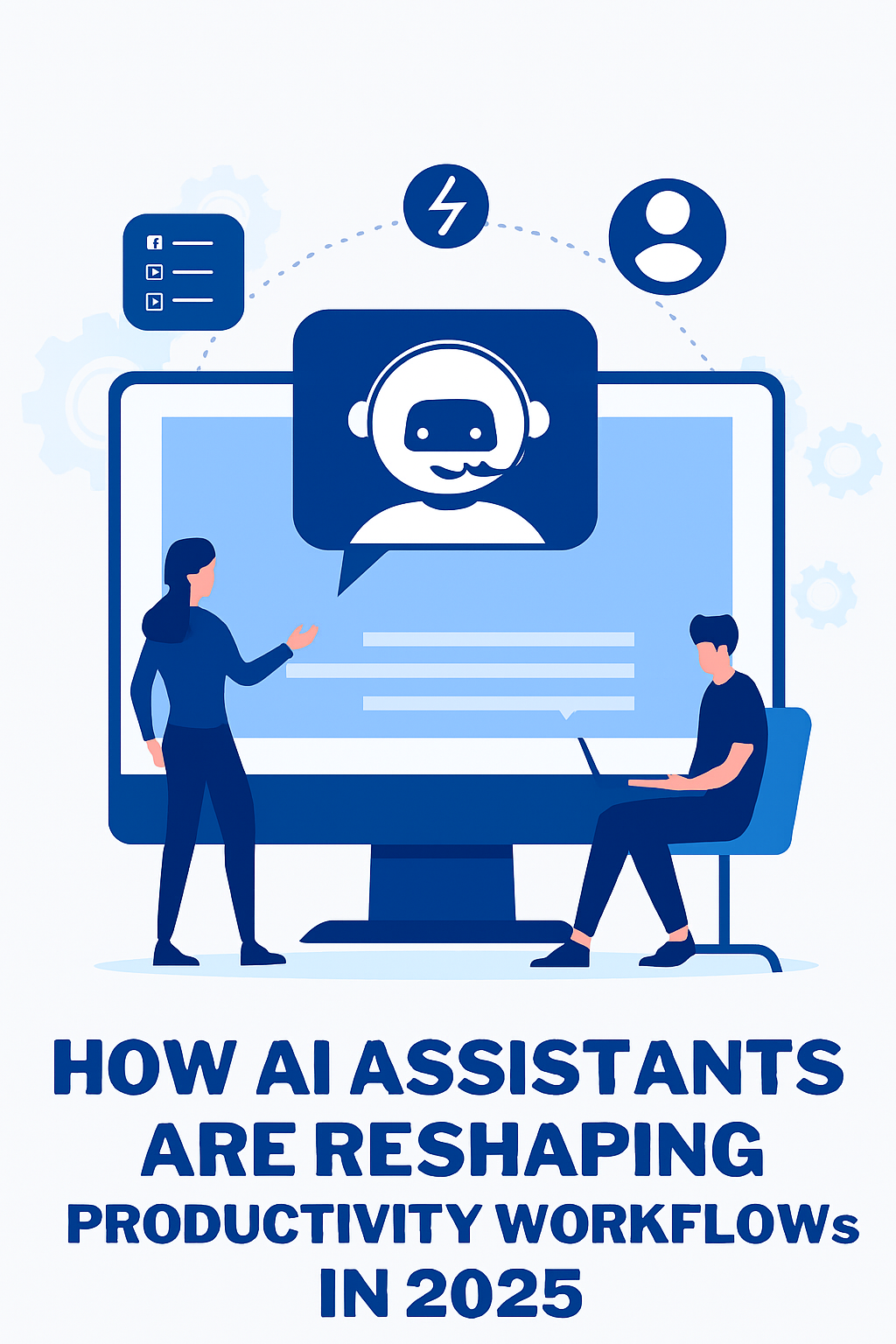
Discover how AI assistants revolutionise productivity workflows with automation, collaboration, and future-ready tools. Learn how businesses, freelancers, and digital nomads can harness AI for efficiency and growth.
The global workforce is undergoing a seismic shift. Remote work, hybrid models, and digital-first enterprises have become the norm, not the exception. In this environment, productivity is no longer about working harder—it’s about working smarter. Enter AI assistants, the silent partners transforming how tasks are managed, decisions are made, and workflows are executed.
By 2025, AI assistants have evolved from novelty tools into indispensable workflow architects. They don’t just help with small tasks; they orchestrate entire productivity ecosystems. For remote workers, freelancers, and enterprises alike, AI assistants are redefining efficiency, collaboration, and creativity.
The Evolution of AI in Productivity Workflows
From Chatbots to Workflow Architects
- Early Chatbots (2010s): Simple Q&A bots answering customer service queries.
- Smart Scheduling (2020): Tools like Google Assistant and Siri began managing calendars and reminders.
- Generative AI (2023–2024): ChatGPT, Jasper, and Copilot introduced advanced writing, coding, and brainstorming capabilities.
- 2025 and Beyond: AI assistants now integrate across platforms, handle multimodal inputs (text, voice, vision), and act as workflow orchestrators rather than isolated helpers.
Why 2025 Is a Turning Point
- Integration: AI assistants are embedded into productivity suites (Microsoft 365, Notion, Slack).
- Accessibility: Freemium models make advanced AI tools available to freelancers and small businesses.
- Trust: Improved data privacy and compliance frameworks encourage enterprise adoption.
Core Benefits of AI Assistants
1. Time Savings
AI assistants automate repetitive tasks:
- Drafting emails and reports.
- Scheduling meetings across time zones.
- Generating summaries of long documents.
This frees professionals to focus on strategic, creative, and high-value work.
2. Collaboration Boost
Remote teams thrive when communication is seamless. AI assistants:
- Translate conversations in real time.
- Suggest task allocations based on workload.
- Provide instant project updates via dashboards.
3. Reduced Burnout
By offloading mundane tasks, AI assistants reduce cognitive load. Workers experience less stress and more energy for innovation.
4. Workflow Efficiency
Predictive analytics allow AI assistants to:
- Prioritize urgent tasks.
- Forecast project timelines.
- Identify bottlenecks before they escalate.
Real-World Use Cases
Remote Teams
Distributed teams use AI assistants to:
- Track deadlines across multiple time zones.
- Automate meeting notes and action items.
- Ensure accountability with smart reminders.
Freelancers
Independent professionals leverage AI for:
- SEO-optimised content creation.
- Automated invoicing and client communication.
- Brainstorming creative ideas for pitches.
Enterprises
Large organisations integrate AI assistants into:
- HR: Resume screening and onboarding workflows.
- Finance: Forecasting, compliance checks, and reporting.
- Customer Support: AI-driven chatbots handling Tier 1 queries.
Digital Nomads
Nomads benefit from AI assistants that:
- Plan travel itineraries.
- Track expenses in multiple currencies.
- Suggest productivity hacks for working on the move.
Top AI Assistants for Productivity (Comparison Table)
| AI Assistant | Best For | Key Features | Pricing Model |
|---|---|---|---|
| Microsoft Copilot | Enterprise workflows | Office integration, automation | Subscription |
| ChatGPT | Content creation | Writing, brainstorming | Freemium |
| Notion AI | Knowledge management | Docs, tasks, notes | Subscription |
| Jasper | Marketing | SEO, copywriting | Subscription |
| Otter.ai | Meetings | Transcription, summaries | Freemium |
| Trello + Butler AI | Project management | Automated task workflows | Subscription |
Challenges & Ethical Concerns
Over-Reliance
Workers risk losing critical skills if they depend too heavily on AI. Balance is key.
Data Privacy
AI assistants often process sensitive information. Enterprises must enforce strict compliance with GDPR, HIPAA, and other regulations.
Bias in AI Outputs
AI models can reflect biases in training data. Organisations must audit outputs regularly.
Human Creativity vs. Machine Efficiency
AI can streamline workflows, but human intuition and creativity remain irreplaceable. The future lies in synergy, not substitution.
Future Outlook: AI as Workflow Orchestrators
Integration with AR/VR
Imagine virtual meetings where AI assistants manage agendas, track emotions, and suggest next steps in real time.
Blockchain + AI
Smart contracts powered by AI will automate payments, compliance, and legal workflows.
Prediction for 2030
By 2030, AI assistants will manage 50% of routine workflows, freeing humans to focus on innovation, leadership, and creativity.
Actionable Tips for Professionals
- Start Small: Automate one repetitive task (e.g., meeting notes).
- Choose Wisely: Select AI tools aligned with your industry.
- Audit Outputs: Regularly check AI-generated content for accuracy.
- Blend Creativity: Use AI for efficiency but rely on human intuition for strategy.
- Stay Updated: Follow AI trends to remain competitive.
Conclusion
AI assistants are no longer futuristic—they’re here, reshaping productivity workflows in real time. Whether you’re a freelancer, a digital nomad, or part of a global enterprise, embracing AI tools today means staying ahead tomorrow. The future of work is not about replacing humans—it’s about empowering them with intelligent partners.
FAQs (Frequently Asked Questions)
- What is the best AI assistant for productivity in 2025?
- Microsoft Copilot and ChatGPT lead for enterprise and creative workflows.
- How do AI assistants improve workflow efficiency?
- They automate tasks, optimise priorities, and enhance collaboration.
- Are AI assistants safe for business use?
- Yes, with proper compliance and data privacy safeguards.
- Can freelancers benefit from AI productivity tools?
- Absolutely—AI helps with content creation, client communication, and time management.
- What’s the future of AI in remote work?
- AI will evolve into workflow orchestrators, integrating with AR/VR and blockchain.
Discover more from Remote Work Tips
Subscribe to get the latest posts sent to your email.


7 Reasons Why You Should Become a Prompt Engineer to Dominate AI Freelancing in 2025
Let’s rip the Band-Aid off: Traditional freelancing is gasping for air. If you are still selling generic blog writing at...


Top 10 Payment Solutions for Freelancers in 2025: A Comprehensive Analysis of Speed, Cost, and Global Reach
The freelance economy has crossed a watershed moment. With over 1.57 billion independent professionals worldwide and the U.S. freelance workforce...


Top Ten Freelance Job Boards for Freelancers to Make the Most of Freelance Jobs
Introduction: Why the Right Job Board MattersFreelancing in 2025 isn’t just about finding gigs — it’s about finding the right...


The 15 Biggest Challenges Facing Freelancers in an AI-Powered World
How Independent Workers Can Navigate—and Thrive—in the Age of Automation The freelance economy is experiencing an unprecedented transformation. With over...


20 Best Freelance Skills to Rock the World with Money Streams in 2026
The freelance landscape has officially shifted. We’ve moved past the “gig economy”—where people traded time for quick tasks—into the Expert...


🏆 The $120k Remote Career Pivot: Your 90-Day Roadmap to a Cybersecurity Analyst Role (No Degree Required)
The cybersecurity shortage is your greatest financial asset. This is the step-by-step, skill-based roadmap to securing a six-figure, Remote Cybersecurity...


How to Get Paid as a Remote Worker with 0% Fees in 2026 – Wise vs Payoneer vs USDC Freelancing Platforms Showdown
Discover how digital nomads get paid with true 0% fees in 2026. Wise vs Payoneer vs USDC stablecoins head-to-head: real...


Portugal D8 Visa 2026 Income Requirements vs Thailand DTV: Avoid Denials
Discover 2026 updates for Portugal D8 visa income requirements (€3,680/mo) vs Thailand DTV visa denied reasons (20-30% rise). Compare costs,...
-

 blogging4 years ago
How to Use Social Media to Promote Your Blog
-

 freelance4 years ago
6 Future-Focused Skills Freelance Creatives Can’t Afford to Ignore
-

 blogging4 years ago
20 Best Freelance Marketplaces for Freelancers in 2022 to Make Money
-

 social media4 years ago
How to Learn Social Media Without Getting Scammed
-

 blogging4 years ago
30 “Proven” Ways to Make Money Online Blogging with WordPress
-

 Digital Banking4 years ago
Pakistan Consumer Confidence Index increased by 8.8% in Q4 2021
-

 Startups4 years ago
Private equity is buying up America’s newspapers
-

 freelance4 years ago
7 Highest Paying Freelance Jobs For Earning A Steady Income