
Entrepreneur
Entrepreneurs and mental health


With this year’s Mental Health Awareness Week taking place from 18–24 May, Startups shines a light on the important issue of entrepreneurship and mental health…
The freedom to create your own routine, the ability to take on projects you really believe in, the opportunity to be in control of your professional development – these are just some of the reasons why becoming your own boss is one of the most thrilling adventures you’ll ever embark on.
Yet there are also the long hours, and the unpredictable work flows – not to mention the ‘sink or swim’ attitude – that can make running your own business one of the most stressful experiences to go through. So how do you manage your own mental health effectively as an entrepreneur, and lead a company at the same time?
This year, Mental Health Awareness Week takes place in the UK between 13-19 May, with a focus on body image. In light of this, we’ll be exploring the connection between entrepreneurs and mental health – as well as touching on body image – in relation to running your own business.
We’ll look at what the statistics say, and hear from small business owners and experts about their experiences. We’ll also examine some of the common ways in which founders’ mental health may be impacted, and offer tips on how to manage them.
Readers are advised that this article contains references to potentially triggering material.
1. Mental health statistics
One in four adults experience mental illness, according to data published by NHS England.
This shows just how common mental health conditions can be. For example, in an eight-person team, two team members may have experienced mental illness.
Mental health issues accounted for 15.8 million sick days in 2016, according to data published by the Office of National Statistics (ONS).
However, self-employed people have a lower sickness absence rate than employees in general (1.4% for self-employed, 2.1% for employees). One reason for this difference could be that business owners feel less able to take sick leave, including that which is needed for mental health reasons.
Yet, between 1993 and 2017, the number of sick days taken by workers in the UK has dropped from 7.2 days in 1993 to 4.1 days in 2017.
So why is that? It could be due to improvements in healthcare, with more access to the treatment and knowledge needed to cure and prevent illness.
But it could also be due to a change in culture that makes it less acceptable to take sick leave. Or, people may feel like they have to use other types of leave entitlement instead of sick leave, as mental health can still be seen as a controversial topic.
In 2018, the NatWest Great British Entrepreneur Awards conducted its Mental Health in Entrepreneurship survey, with 100 entrepreneurs taking part. Here, we highlight some of the findings from the research:
- 58% of those surveyed experienced mental health issues
- The conditions included anxiety (21%), depression (19%) and stress (41%)
- 55% of respondents said that running a business has had a negative impact on their mental health
Plus, according to recent research by Xero (a business and accounting software company), stress is a key issue for many small business owners. Of the 500 business owners involved in the company’s research, 17% reported that they had felt ‘highly stressed’ in the six months prior to the survey.
Claire Gamble, MD at Unhooked Communications, comments: “You have to have a lot of resilience running your own business, and looking after your mental health is paramount for this. Anxiety and depression are sadly all too common amongst business owners, and these feelings can start to manifest themselves in different ways, such as losing motivation, procrastinating, making risky decisions, and not looking after yourself. Even seemingly small niggles and low feelings can start to build up over time, so it’s important to identify them when they appear and try to resolve them.
“Routine, building a support network, and making time to see people face-to-face are important parts of looking after your health and wellbeing when you’re running a business.
When I first went self-employed, I’d often go days without seeing anyone else and I soon found myself feeling really down and losing motivation.
“In a recent survey for PR Unlocked, over a third (38%) of self-employed people who work from home regularly said they have days when they don’t speak to or meet other people during working hours, and 40% sometimes have days where they don’t see or speak to anyone else. Only 22% said they try to meet or speak to other people most days. Some people might think the idea of working at home alone all day sounds like bliss, but it can be really isolating, and have a negative impact on your mental health.
“For business owners, there’s often a temptation to work as hard as possible, or be chained to your desk for hours on end. You don’t need to hustle 24/7 – in fact, this sort of mentality is more likely to be counterproductive, and can lead to burnout.
“Take advantage of the fact that you have more control over your working hours than if you were employed. Plan your time so you can do focused work when you’re most productive, and take regular breaks to rest, eat healthily, exercise, and meet other people. If you genuinely have too much work to do, you need to start growing your team.”
What does mental health mean to you?
Martina Mercer is a freelance PR and marketing consultant, working with brands such as Willie’s Cacao, Tax Rebate Services, Lay-Z Spa, DSMRandDTaxCredits, and HealthClic. She says: “Mental health is incredibly important to me, as it encompasses my whole self. It dictates how I feel, how I react, how I cope in situations, and how I handle every single day. I have a love/ hate relationship with my mental health, and find it hard to separate the real me from the bipolar me. It defines me.
“On a good day, I am super creative and I feel indestructible. My ideas flow freely, and I jump for joy when experiencing small triumphs at work. However, the flip side is that on a bad day – which are few and far between now – I’m subdued and calm, often retreating from the world. I don’t like myself on bad days, as I annoy myself and feel I should be grateful for what I have. But others find it to be a refreshing change, as it’s when I slow down enough to listen and plan effectively. Both sides have their benefits and drawbacks.”
Dr Elena Touroni, consultant psychologist and co-founder of The Chelsea Psychology Clinic, comments: “For me, being healthy mentally is about finding a sense of balance in both your mind and your body.
“This means ensuring I’m getting adequate sleep, maintaining a healthy work-life balance, attending to my personal relationships, and working towards my goals. But also, importantly, it’s about making sure I take the time out to do the things which give me a sense of well-being and enjoyment. Finding that balance is what it really means to practice self-care.”
2. Common causes
There are a number of ways in which your mental health can be affected as a founder of a startup. Here, we profile some of the main factors that could have an impact, and why.
Workload
When you’re first starting out, it’s likely you’ll need to put in a certain number of hours to get your business off the ground. However, too many long days and not enough time away from the office can take its toll.
Isolation
Becoming your own boss means stepping away from the routine of regular employment. And, unless you have a co-founder, this means going it alone. The pressure of being responsible for every decision can be intimidating.
Lack of support networks and structure
In addition to potentially being the only person in your company (especially in the beginning), you may find yourself without the day-to-day camaraderie of colleagues or the structure of an office – both of which can have an adverse effect when removed.
Positivity pressure
Many people dream of running their own businesses, yet not everyone takes that leap. So if you do, there can be a certain pressure to make it feel like you’re living the dream every single moment of the day – that everything’s going great, always. That could be in terms of how you act and talk about your business, as well as how you look and present yourself to the world.
Money and finance
Whether you’re funding your business yourself, have borrowed through loans, or received grants, how the numbers add up is one of the key concerns for any business. Therefore, worrying about how your business will stay afloat can be a significant stressor for many small business owners.
Identity
When you’re a startup founder, so much of who you are is tied up with what your business does. So if your business should come under threat, or it’s no longer a viable option, then you could feel the effects not only professionally, but personally too.
Failure
No one sets out thinking that their business will fail. But we have to be realistic – some businesses won’t be successful. While what it means to be a success is a topic for another discussion entirely, in this instance, when a business fails – for whatever reason – it can seem like the end of your world.
Networking culture
With many events and sessions for entrepreneurs often providing free drinks, when and how does indulging in a few social beverages become alcohol abuse?
Lack of discussion
While more can be done to promote positive mental health and create a dialogue around it more generally, when you look at entrepreneurs and mental health in particular, there seem to be even fewer opportunities for discussion.
For example, while researching for this article, there were a limited number of relatable search terms – suggesting that people are simply not searching online for information about this topic.
Plus, with cultural norms such as ‘bottling it up’ and ‘putting on a brave face’ still very much prevalent, we’re probably not yet at the stage where such matters of entrepreneurs’ mental health can be discussed freely.
Personality traits
How would you describe the stereotypical successful entrepreneur? Some common words might be ambitious, creative, eccentric, or solitary.
In turn, these words could also be applied to some elements of mental health conditions, and so continuing the concept of ‘genius in madness’.
These conditions could manifest themselves as anxiety, depression or stress, or another type of mental health issue.
Are there any myths about entrepreneurship and mental health that you’d like to bust?
Mercer states: “When I received my bipolar diagnosis, a lot of people said it made sense – that it explained my burning ambition, burning the candle at both ends, and my creativity. I was writing for Yahoo! at the time and wanted to share my story. Worryingly, I lost clients as soon as my story went viral. I hadn’t lost one client before that.
“There’s a myth that if someone has a mental health condition, or is bipolar, it means they’re crazy, they’re unreliable, they’re not a good choice. Whereas I credit my bipolar with fuelling my determination to succeed, my dogged desire to be the best in my field, and my zany creativity.
“In short, if I didn’t have a mental illness, I probably wouldn’t produce the results my clients love me for – it’s part of me. After all, a fact has just been released that 49% of entrepreneurs have a mental illness.”
Touroni adds: “[The myth] that it’s not possible to have both. It is! But you need to be very focused on maintaining the balance. It’s all about setting boundaries, and forming a secure base. You need to be as proactive about self-care as you are about your business – and that means saying “no” sometimes.
“We all have limits – and accompanying warning signs – and it’s important to tune in and recognise when it’s time to take a step back. Burnout doesn’t just happen – we’ve normally pushed our way through a lot of warning signs to get there.”
3. Strategies and solutions
So, we’ve outlined some of the main factors that can be detrimental to your mental health when running your own business. Next, we’ll provide some ideas about how to manage them.
It’s important to be aware when your mental health is being adversely affected. If it is – or to help prevent a negative impact – you could consider taking the following actions:
Take breaks
This refers to breaks throughout your working day, as well as taking holiday leave. Only 31% of entrepreneurs take full and regular lunch breaks, according to the Mental Health in Entrepreneurship survey.
Form a network
Whether that’s attending professional networking sessions, chatting with your other co-workers, or attending a Meetup or other informal gathering or event, it can be helpful to have other people around you who understand the demands of running your own business.
For example, consider running your business from a co-working space – this will provide both a dedicated work area, and a readymade community of fellow freelancers and entrepreneurs.
Get regular sleep
In an effort to simply have more hours in the day, maintaining a regular sleep schedule with a sufficient amount of rest can often be one of the first things that falls by the wayside.
With thoughts racing around your head about the day that’s been, or what’s coming up, the inability to sleep can make matters seem even worse. Ensuring you’re getting enough sleep every night is vital.
Exercise
Looking after your mental health can also be connected to caring for your physical health. Exercise causes a reaction in your body which releases endorphins. These hormones help to make you feel more positive and energised, and so exercise is thought to help mild anxiety, depression and stress – as well as promote improved self-esteem.
Whether you want to go for a run by yourself to clear your head, or take part in a group class and meet like-minded people, there are a number of different ways to incorporate exercise into your life.
Work/life balance
Running your own business can be all-consuming, and it can be difficult to separate work and home. This is especially the case if you run a home-based business, or work with family members.
Therefore, creating a distinction between the two is key: ideally, have your home office in a separate part of your home, or set a time for stopping work-related talk.
Similarly, be sure to prioritise having dinner at home, or spending time with your children.
Take sick leave
Taking time off can be difficult, particularly if you’re self-employed, a sole trader, or work by yourself.
Although the symptoms of physical sickness may often be easier to spot than those of mental illness, if you’re not feeling 100% (whether that’s physically or mentally), be sure to take time off to allow yourself to get better. This means that when you do get back to your business, you’ll feel like your best self.
Self-help
If you recognise that you’re not feeling as great as you would like to, then it may be possible to help yourself.
You can read up on the subject, and find self-help books that can guide you through the process of addressing any issues you may be facing.
Similarly, online services and apps can be used to help alleviate the symptoms of stress and other conditions.
Get professional help
Just like with physical ill health, sometimes things get better by themselves – perhaps with some assistance by yourself.
But some illnesses require specialist knowledge, and it’s the same with mental health. If you feel like you’re not coping, or you’re not seeing the results you’d like to, reach out to a professional for expert advice and treatment to help you heal.
What advice would you offer to others/small business owners about supporting their mental health while running a business?
Mercer advises: “Owning your own business while managing your mental health is ideal. You can hopefully be flexible, and as you know yourself better than anyone else, you can adapt when you feel a bad day is coming. Many people feel embarrassed about their mental health, and wouldn’t dream of sharing this information with customers and clients – which is completely understandable.
“If you are struggling, it’s important to take breaks, and not to feel guilty for it – you’ll be twice as productive when you return, which will make up for any absence. On a bad day, find tasks that will not be too customer-facing, or will not require much decision-making, and take time for yourself. If you can’t do this when you’re your own boss, when can you?”
Touroni continues: “Running a business is one of the most stressful things you can do. Blurred work-life boundaries and the inevitable uncertainty that comes with starting a business can take their toll on our mental health.
“Unfortunately, many of the traits that might lead someone to become a successful entrepreneur are the same traits that might make them vulnerable to over-extending themselves and neglecting their mental health.
“My main advice would be to be honest about how you’re feeling. Are you struggling? That’s fine. Make sure you talk about it. Having solid support is really important – whether that’s in the form of a trusted friend, a family member, or a therapist. Someone with whom you can check-in with on a regular basis, talk about how you’re feeling, and ensure you’re not neglecting your own needs.”
Evidently, mental health is a key component of overall health and wellness. As a founder of a small business, you have a number of duties to your company: to lead, to set direction, and to take responsibility.
Yet at the same time, it’s important to remember your duties and responsibilities to yourself. This means ensuring that you’re in the best possible condition, including your mental well-being – both for your own health and for the success of your startup.
However, it can be difficult to say that you’re not well, especially when you don’t know what the reaction will be.
But a leader who is open and honest – particularly about any challenges that they’re facing – and who speaks out, even when it’s a scary thing to do, can be a real inspiration. Who wouldn’t want to be a part of a company that is led by someone with such compassion, both for themselves and for those around them?
Similarly, the more people who create a conversation about entrepreneurs and mental health, the more ordinary it will become.
Via Startups UK
Discover more from Remote Work Tips
Subscribe to get the latest posts sent to your email.



Here is a number worth sitting with: AI-enabled freelancers now save an average of eight hours per week and earn 40% more per hour than their non-AI-using counterparts. Jobbers In a profession where time is the only non-renewable resource, that gap is not merely a competitive advantage — it is the difference between a freelance practice that scales and one that quietly stagnates.
The global freelance economy has never been larger or more consequential. Over 64 million Americans were freelancing as of 2023, contributing more than $1.27 trillion to the U.S. economy — and freelancers are 2.2 times more likely to regularly use generative AI than their salaried peers. High 5 Test By March 2026, that lead has only widened. Freelancers with specialized AI and prompt engineering skills are commanding a 56% wage premium over traditional roles, as “Agentic AI” becomes a standard workplace tool. DemandSage
Yet the uncomfortable truth is that most independent professionals are still leaving enormous value on the table — not because they lack skill, but because they are burying billable hours beneath a slow avalanche of admin. The right AI stack, deployed intelligently, is the fastest structural change a freelancer can make to their income in 2026. What follows is a rigorous look at the five tools producing the biggest, most measurable gains right now.
The 40% Problem Nobody Talks About
Ask most freelancers where their day goes and you will hear a familiar litany: client emails, project briefs, invoice chasing, meeting notes, proposal drafts, scheduling threads. Freelancers today are no longer just service providers; they are project managers, marketers, accountants, customer support agents, and strategists all at once. FreelancingGig
Research consistently shows that knowledge workers spend between 40 and 60 percent of their working hours on tasks that are, in economic terms, non-productive — activities that consume time without directly generating revenue. For a freelancer billing $100 per hour who works a standard eight-hour day, that translates to $320 to $480 in theoretical daily earnings lost to overhead. Across a working year, the math becomes quietly devastating.
The promise of AI is not that it replaces your expertise — it is that it eliminates the administrative friction taxing that expertise at an invisible rate. Realistic expectations for drafting and ideation put time savings at 30 to 60 percent on first drafts, outlines, and idea generation. Asrify Stack that across five categories of daily work, and the compounding effect approaches — and in many documented cases exceeds — 50%.
[Link to related FT article: How AI is reshaping the economics of independent work]
The Top 5 AI Tools Unlocking 50% More Billable Hours in 2026
1. Claude (Anthropic) — The Strategic Thinking Partner
Value proposition: A long-context AI assistant that handles complex drafts, deep client research, and nuanced multi-document analysis with a consistency that rivals a senior research associate.
At the operational core of many six-figure freelance practices in 2026 sits Claude, Anthropic’s flagship model. Unlike general-purpose chatbots optimized for breadth, Claude has carved out a reputation for sustained reasoning across lengthy, complex material. Claude now offers a one-million-token context window, Agent Teams, and Claude Code Nxcode — meaning a freelance consultant can feed an entire client contract, three years of market reports, and a competitor analysis into a single session and receive synthesis that would have taken a junior analyst a full week to produce.
The productivity mechanics are concrete. Access to AI assistants of Claude’s caliber reduced the time employees needed for writing tasks by 40 percent, while the quality of output increased by 18 percent. ClickForest For a consultant producing six deliverables per month, that compression alone recovers roughly two full working days.
Real-world impact: A content creator using Claude to edit final drafts halved her content production time. 2727coworking A freelance consultant reported using Notion AI (powered partly by Claude Opus 4.1) to auto-generate client onboarding templates from bullet points, reducing prep time from two hours to 30 minutes per client. 2727coworking
Pricing context: Claude Pro is $20/month — the same price as a single billable hour for most mid-range freelancers. The return on that investment becomes positive within the first afternoon of serious use.
The economist’s take: Claude’s real structural advantage is asymmetric leverage. A solo freelancer using Claude effectively is not working harder than a boutique consultancy with three staff — they are working at the same cognitive bandwidth. That changes pricing power, not just output speed.
2. Notion AI — The Operating System for Your Entire Practice
Value proposition: An all-in-one workspace that turns project management, meeting notes, client databases, and strategic documents into a single AI-queryable knowledge base.
If Claude is the thinking partner, Notion AI is the institutional memory. The September 2025 launch of Notion 3.0 introduced autonomous AI Agents that can execute multi-step workflows, marking a fundamental shift from passive tools to active digital assistants that genuinely work alongside you. Max Productive AI
For freelancers juggling multiple clients across different time zones, the killer feature is Notion AI’s ability to surface information from your own workspace in response to natural-language questions. Ask “What were the key deliverables we agreed with Acme Corp last quarter?” and the system retrieves the relevant meeting notes, contract terms, and action items — not a generic internet answer, but your specific institutional knowledge. Users report saving 50 to 100 hours in just three months for repetitive writing tasks, and companies like Zapier reduced post-meeting admin time by 40 percent using Notion AI for converting raw meeting transcripts into organized notes. booststash
The autonomous Agent can work for up to 20 minutes performing multi-step tasks across hundreds of pages simultaneously — building comprehensive project launch plans, compiling client feedback from multiple sources, drafting detailed reports, and creating interconnected page structures. Max Productive AI
Pricing context: The Business plan at $20/user/month now includes full Notion AI — making it, as one analysis put it, the cost of a single ChatGPT subscription for an entire integrated workspace including AI access to GPT-5, Claude Opus 4.1, and o3.
The economist’s take: Notion AI solves a problem economists call “context switching cost” — the productivity tax paid every time a knowledge worker shifts between disconnected applications. By collapsing CRM, project management, note-taking, and AI writing into one queryable system, it eliminates the friction that compounds invisibly throughout the workday.
[Link to related FT article: The rise of AI-native knowledge management in the gig economy]
3. Zapier — The Invisible Infrastructure Layer
Value proposition: No-code automation that connects over 5,000 apps, letting AI handle repetitive cross-platform workflows while you focus exclusively on billable work.
Automation is the compounding interest of productivity. In 2026, freelancers who ignore automation often struggle to scale, while those who embrace it can handle more clients without increasing hours. FreelancingGig Zapier sits at the infrastructure layer of most high-performing freelance operations, quietly executing the administrative choreography that would otherwise consume hours per week.
The tool’s 2025-2026 AI upgrades are substantial. With Zapier’s latest AI upgrade, freelancers can now build automations using plain English — its multi-step “Zaps” reduce manual work, especially for those managing client onboarding or marketing funnels. Social Champ Practical applications range from automatically routing new client inquiry emails into a CRM, generating a first-draft proposal, and notifying via Slack — all without human intervention — to triggering invoice creation the moment a project milestone is marked complete in a project management tool.
Featured snapshot — what Zapier actually automates for top freelancers:
- New client form submission → auto-create Notion project page + send welcome email sequence
- Completed project milestone → generate invoice draft in FreshBooks + alert client via email
- Meeting scheduled → create agenda template + add follow-up reminder to Asana
- New testimonial received → format and publish to portfolio website
- Monthly financial data → compile into standardized reporting dashboard
A freelance consultant using Zapier’s AI automations reduced cross-platform administrative work by building “Zaps” that parse email content, summarize it, and route action items automatically 2727coworking — eliminating what had previously been a daily 45-minute triage ritual.
Pricing context: Free tier covers basic Zaps; the Professional plan at $19.99/month unlocks multi-step automations and AI features. For any freelancer billing above $40/hour, recovering even one hour per month justifies the cost within weeks.
The economist’s take: Zapier doesn’t save time — it creates time that never existed before, by executing work at machine speed during hours when you are asleep, in client meetings, or doing the creative work that actually commands premium rates.
4. Timely — AI-Powered Time Intelligence
Value proposition: An automatic time-tracking tool that logs your entire workday without manual input, ensuring every billable minute is captured, analyzed, and converted to revenue.
This is the most underestimated tool in the freelance stack, and arguably the one with the most immediate financial impact. AI-powered billable hours trackers like Timely use smart AI to remember your whole day without manual input — and users say these tools find 20% more billable time they had previously missed. apps365
For a freelancer billing $80 per hour who works approximately 100 hours per month, recovering 20% more billable time represents $1,600 in additional monthly revenue — from a tool that costs under $20/month. That is a return on investment that would make a private equity analyst blush.
Timely’s “memory” architecture runs passively in the background, tracking which applications, documents, and websites you engage with throughout the day, then reconstructing a timeline of your work that can be reviewed, edited, and converted to invoice-ready timesheets. In 2026, many freelancers rely on AI summaries from time-tracking tools to identify inefficiencies, suggest better pricing models, and even recommend when to raise rates based on workload trends. FreelancingGig
The behavioral insight dimension is equally valuable. Patterns in time data reveal which client relationships are actually profitable once admin overhead is accounted for, which project types produce scope creep, and where your most valuable peak-productivity hours are currently being allocated to low-value tasks.
Pricing context: Starter plans from approximately $9/month; professional tiers with full AI analysis from $16/month.
The economist’s take: In economics, what isn’t measured isn’t managed. Most freelancers operate with a systematic measurement gap between hours worked and hours billed — Timely closes that gap with a precision that manual tracking never achieves. The revenue uplift is real and immediate.
[Link to related Forbes article: The hidden billing gap costing freelancers thousands annually]
5. Perplexity AI — The Research Engine That Eliminates Dead Time
Value proposition: A real-time AI search and synthesis engine that compresses hours of research into minutes, complete with cited primary sources — the 2026 breakout tool for knowledge-intensive freelancers.
Every freelancer who does research-intensive work — consultants, writers, strategists, analysts — understands the invisible tax of information gathering. Building a solid base of evidence for a client deliverable can absorb two to four hours of a workday that should have been billable. Perplexity AI is the 2026 breakout tool attacking this specific bottleneck with striking effectiveness.
Unlike standard AI assistants that synthesize from training data, Perplexity conducts live web research and returns synthesized answers with source citations — functioning as a research assistant that works at fifty times human reading speed. Productivity research documents a 45% time reduction in research tasks for AI-enabled freelancers, Jobbers and Perplexity is the primary driver of that compression in knowledge work.
For a market research consultant charging $150/hour, compressing a four-hour research phase to two hours per project adds two billable hours per engagement. Across 12 projects per month, that is 24 additional billable hours — approximately $3,600 in monthly revenue uplift from a single tool costing $20/month in its Pro tier.
A 2025 McKinsey Global Institute report noted that AI-driven automation could boost global productivity by up to 40% by 2035, with early adopters in creative industries already seeing efficiency gains of 30%. Blockchain News Perplexity users in knowledge-intensive freelance fields are consistently at the leading edge of that adoption curve.
Pricing context: A generous free tier exists; Perplexity Pro at $20/month unlocks unlimited real-time search, advanced models, and API access for workflow integration.
The economist’s take: Research is a classic “threshold task” — you must complete it before any billable output can exist. Perplexity compresses the threshold, not the creative work itself. That asymmetry is exactly where AI delivers its highest marginal return.
[Link to related Economist article: How AI research tools are reshaping the knowledge economy]
Comparative Summary: Time Saved vs. Traditional Methods
| Tool | Primary Function | Documented Time Saving | Estimated Monthly Revenue Impact* | Price/Month |
|---|---|---|---|---|
| Claude | Research, drafting, analysis | 40–60% on writing tasks | $640–$960 | $20 |
| Notion AI | Knowledge management, project ops | 40–50% on admin & documentation | $320–$480 | $20 |
| Zapier | Cross-app workflow automation | 4–6 hrs/week eliminated | $480–$720 | $20 |
| Timely | Automatic time capture & billing | 20% more billable time recovered | $1,200–$1,600 | $16 |
| Perplexity AI | Research synthesis | 45% time reduction in research | $800–$1,200 | $20 |
*Estimates based on a freelancer billing $80/hour working 25 billable hours/week. Individual results vary.
The Compounding Effect and the Ethical Dimension
Deploy all five tools coherently — not as disconnected subscriptions but as an integrated system — and the aggregate impact approaches and frequently exceeds the 50% billable-hour uplift the headline promises. The math is not additive; it is compounding. Time saved by Timely reveals where to focus. Perplexity compresses research. Claude converts that research into polished deliverables. Notion AI manages the client relationship and institutional memory. Zapier runs the administrative infrastructure in the background while you sleep.
The global gig economy is projected to reach a valuation of $674.1 billion in 2026 DemandSage, and the professionals capturing an outsized share of that growth share one common characteristic: they treat AI not as a novelty, but as operational infrastructure.
The ethical considerations deserve equal seriousness. Transparency with clients about AI-assisted workflows is not merely good practice — it is the foundation of sustainable professional trust. Clients benefit from AI-enabled freelancers through faster delivery, more reliable quality, and clearer communication throughout projects, Useme but that value proposition holds only when the human expert remains genuinely in the loop, exercising judgment, catching errors, and bringing the contextual intelligence that no model can replicate.
There is also a structural concern worth naming. Basic writing job postings have decreased 21%, simple graphic design 17%, and data entry 35% since ChatGPT’s launch — but AI content editing grew 180%, prompt engineering 240%, and AI tool training 165%. Jobbers The market is not shrinking; it is bifurcating. Freelancers who position themselves at the expert layer — using AI to amplify rather than replace their specialized judgment — are on the right side of that divide.
The Next Step: Start With One, Not Five
The most common mistake in building an AI-powered freelance practice is attempting a wholesale transformation overnight. A more durable approach is sequential adoption: identify your single largest time drain, match it to the tool most precisely targeting that drain, measure the impact over 30 days, and then layer the next tool onto a stable foundation.
Start with one general tool and one specialist tool. Track ROI explicitly: estimate hours saved per week and new revenue generated from AI-assisted services. Upgrade only when you hit bottlenecks. Asrify
For most freelancers, the sequence that delivers the fastest measurable return is: Timely first (you cannot optimize what you cannot measure), Claude second (the highest-leverage creative amplifier), and Zapier third (the infrastructure that systematizes your gains). Notion AI and Perplexity follow naturally as your practice scales.
The 50% uplift in billable hours is not a marketing abstraction. It is a structural reality — documented, measurable, and increasingly separating the freelancers who thrive in the 2026 economy from those who remain caught in the administrative gravity of the old one.
The tools exist. The data is clear. The only remaining question is whether you will use the next hour to plan the adoption, or spend it on work that a well-configured AI could have handled before breakfast.
Discover more from Remote Work Tips
Subscribe to get the latest posts sent to your email.
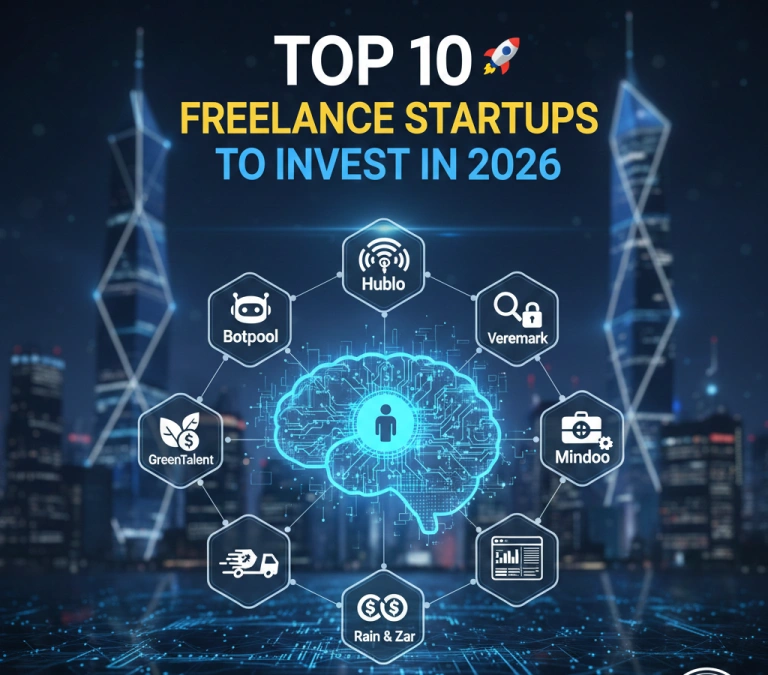
The $5 trillion global gig economy has reached its “Execution Era.” In 2026, the speculative hype surrounding generalist marketplaces like Upwork and Fiverr has cooled, giving way to a more sophisticated investment thesis: The Verticalization of Talent. Venture capital is no longer chasing “the next Uber for X.” Instead, smart money is flooding into startups that solve the Unit Economics and Operational Reliability problems of the modern enterprise. With over 1.57 billion freelancers worldwide, the 2026 landscape is defined by “Vertical AI-Agent Hybrids”—platforms that don’t just find you a human, but provide a pre-configured AI infrastructure for them to work within.
The 2026 Investment Landscape: Why Generalists are Losing Ground
According to recent Gartner 2026 Work Trends, the “Skill Gap” has become a “Structural Void.” Large enterprises now require 10x the specialized output in AI implementation, GreenTech compliance, and cybersecurity. Generalist platforms—burdened by 20% commission fees and high “noise” ratios—are being disrupted by lean, niche-specific challengers.
The Top 10 Freelance Startups for Investment in 2026
1. Botpool: The AI Deployment Powerhouse
Focus: Specialized AI & ML Engineering
Why it’s a Winner: While Upwork struggles with “generic” AI prompts, Botpool has cornered the market for high-fidelity AI developers. Their platform includes built-in AI-matching engines and lower fees for specialists in emerging markets.
- Thesis: Infrastructure over search.
2. Hublo: Healthcare Operational Efficiency
Focus: Medical & Healthcare Staffing
Why it’s a Winner: Healthcare is the most resilient sector in 2026. Hublo recently secured a €40 million reinvestment because it solves the “burnout” crisis through intelligent, asynchronous staffing for hospitals.
- Thesis: Critical infrastructure in a high-compliance industry.
3. Veremark: The Trust Layer
Focus: AI-Driven Background & Compliance Screening
Why it’s a Winner: As the line between human and AI-generated resumes blurs, Veremark’s €22 million Series B proves that “Workplace Trust” is a billion-dollar asset. They provide automated, “always-on” screening for global teams.
- Thesis: Security is the prerequisite for remote scale.
4. Contra: The Commission-Free Disruptor
Focus: Independent Professional Branding
Why it’s a Winner: Contra is the leader of the “Anti-Platform” movement. By charging 0% commission and offering premium tools, they have siphoned the top 1% of creative talent away from legacy sites.
- Thesis: High-talent retention via superior unit economics.
5. Mindoo: AI-Agent Staffing for Hospitals
Focus: Administrative AI-Human Hybrids
Why it’s a Winner: A Seed-stage darling, Mindoo uses AI agents to reduce administrative workloads, allowing medical staff to focus on patients. It represents the “Agentic Era” where software is the freelancer.
- Thesis: Replacing 80% of administrative “grunt work” with high-margin AI.
6. GreenTalent: The ESG Compliance Hub
Focus: Sustainability & ESG Reporting
Why it’s a Winner: With the GreenTech market hitting $62 billion, every EU and US corporation needs ESG-certified freelancers. GreenTalent provides the only vetted pipeline for this mandatory labor.
- Thesis: Regulatory-driven demand.
7. Orbio: AI-Native Human Capital Management
Focus: Full-stack HR for Freelance-first Firms
Why it’s a Winner: Many 2026 startups have no full-time employees. Orbio provides the “OS” for these liquid organizations, managing everything from stablecoin payouts to global taxes.
- Thesis: Selling the “pickaxes” to the gig-economy gold miners.
8. Kiku: High-Volume Frontline Recruitment
Focus: Retail & Logistic “Gig” Workers
Why it’s a Winner: Kiku uses multi-agent orchestration to fill thousands of shifts in seconds. It’s the essential backend for the $100B AR/VR and mobility sectors.
- Thesis: Scalability without linear headcount growth.
9. Rain & Zar: Stablecoin Payout Infrastructure
Focus: Global Remittances for Freelancers
Why it’s a Winner: In emerging markets where local currencies fail, Rain enables stablecoin payments that bypass legacy banking fees.
- Thesis: Financial inclusion as a talent acquisition tool.
10. Sedna: Maritime & Logistics Specialized Talent
Focus: High-Stakes Industrial Workflows
Why it’s a Winner: Sedna integrates AI with maritime logistics talent. It’s a “Vertical AI” moat where generalists can’t compete because they lack the specific industry data rails.
- Thesis: Industry-specific data creates the ultimate MOAT.
Investment Performance Indicators (2026 Forecast)
| Startup Model | Typical Valuation (2026) | Projected Growth (YoY) | Primary Risk Factor |
| Vertical AI Hybrids | $150M – $500M | 45% | Model Degradation |
| Commission-Free | $200M+ (SaaS Revenue) | 30% | Subscription Fatigue |
| Trust/Compliance | $100M – $300M | 60% | Regulatory Pivot |
| Stablecoin Payouts | $50M – $400M | 120% | Geo-political Sanctions |
Conclusion: Investing in the “Liquid Enterprise”
The investment opportunity in 2026 is no longer about the existence of the gig economy, but its optimization. Startups like Hublo and Veremark are winning because they treat freelancers as critical infrastructure, not disposable labor. For the venture capitalist, the highest ROI lies in the platforms that own the Compliance, Payment, and Verification layers of this new global workforce.
Key Takeaway for Investors
“The leaders in 2026 won’t be those who wait for a perfect AI moonshot; they’ll be the ones who invest in focused, high-impact vertical workflows.” — Pouya Mohammadi, VC Analyst.
Discover more from Remote Work Tips
Subscribe to get the latest posts sent to your email.
The freelance revolution isn’t coming—it’s already here. With 1.57 billion freelancers worldwide and the freelance market projected to surge beyond $16 billion by 2029, professionals are redefining what work means in 2026. But here’s what most freelancers miss: while platforms like Upwork, Fiverr, Freelancer.com, and PeoplePerHour offer opportunities, LinkedIn has quietly become the premium client goldmine that separates six-figure earners from those stuck in the race to the bottom.
LinkedIn now hosts over 1.2 billion members across 200 countries, with 69 million companies actively using the platform for business purposes. Unlike traditional freelance marketplaces where you compete on price, LinkedIn allows you to position yourself as the premium choice—the sought-after expert clients are willing to pay a premium to access.
This guide reveals the insider strategies I’ve used to help freelancers transition from bidding wars on Upwork to securing $10,000+ monthly retainers through LinkedIn. Whether you’re a developer, designer, consultant, or creative professional, you’re about to discover how to make LinkedIn your highest-converting client acquisition channel in 2026.
The LinkedIn Freelance Revolution: Why 2026 Changes Everything
The professional landscape has fundamentally shifted. Traditional freelance platforms operate on a transactional model—you bid, negotiate, complete a task, and move on. LinkedIn operates on a relationship model, where your expertise, credibility, and personal brand create a gravitational pull that attracts premium clients who are actively searching for specialists, not commodities.

The Numbers That Matter
The data is compelling. According to recent statistics, LinkedIn generates 80% of all B2B leads from social media, surpassing Facebook, X, and Instagram combined. Even more impressive: 40% of B2B marketers claim LinkedIn is the most effective channel for generating high-quality leads.
For freelancers, this translates to direct access to decision-makers. Over 45 million job seekers visit LinkedIn Jobs weekly, and six people are hired every minute on the platform. But here’s the kicker: only 3 million users post content weekly—that’s just 1% of the 260 million monthly active users. This massive visibility gap represents your unfair advantage.
Why LinkedIn Outperforms Traditional Platforms
Traditional freelance marketplaces like Upwork charge freelancers between 0-15% in service fees, while clients pay an additional 5-7.99% marketplace fee. Fiverr takes a flat 20% commission on every sale, and buyers pay a 5.5% service fee plus extra charges on smaller orders. These platforms position you in competitive bidding environments where price often trumps value.
LinkedIn changes the equation entirely. There are no platform fees for connecting directly with clients. No bidding wars. No race to the bottom. Instead, you build authority, demonstrate expertise, and attract clients who understand the difference between cost and value. Research shows that high-skill professionals—media buyers, consultants, specialized developers—command $50-$200+ per hour, with AI-related skills earning 23% more than average.
The 2026 Freelance Landscape
The freelance economy continues its explosive growth. Average freelancer earnings in the U.S. stand at $99,230 annually, with top earners reaching $200,000. According to recent data, U.S. freelancers average $108,028 per year, with most falling between $49,000 and $169,500.
The skills commanding premium rates in 2026? AI expertise, data analysis, machine learning, and specialized technical skills like Python, Java, and SQL. But here’s what separates average earners from top performers: positioning, not just skill. LinkedIn allows you to showcase not just what you do, but the transformative results you deliver.
Building Your Premium LinkedIn Freelance Profile: The Foundation of Authority
Your LinkedIn profile isn’t a resume—it’s your most powerful inbound marketing asset. While LinkedIn Premium members are 2.6× more likely to get hired than free users, the real differentiator isn’t subscription status but strategic profile optimization.
The Premium Profile Architecture
Professional Photo That Commands Authority
First impressions matter. Posts with images receive 2x higher comment rates on LinkedIn, and your profile photo is the first image prospects see. Invest in a professional headshot that communicates credibility—think approachable expert, not corporate robot.
Headline Optimization: Your 220-Character Pitch
Your headline appears in every search result, comment, and connection request. Most freelancers waste this prime real estate with generic titles like “Freelance Designer” or “Independent Consultant.” Instead, use this proven formula:
[What You Do] | [Specialization] | [Value Proposition] | [Social Proof]
Example: “Senior Full-Stack Developer | React & Node.js Specialist | Building Scalable SaaS Products | 50+ Successful Launches”
As industry research confirms, your headline is one of the most heavily weighted factors in LinkedIn’s search algorithm. Include keywords clients search for: your specialty, relevant tools/technologies, and industry focus.
Banner Image: Prime Real Estate 70% Leave Blank
The banner image (1584×396 pixels) is visual real estate that 70% of users leave blank. Use it strategically to communicate your specialty, showcase client logos, display certifications, or highlight your unique value proposition.
The About Section: Your Client Conversion Engine
Your About section is where good profiles become great. This isn’t a chronological work history—it’s a strategic narrative that speaks directly to your ideal client’s pain points and aspirations.
The Winning Formula:
- Opening Hook (2-3 sentences): Start with a problem your clients face or a transformation you deliver. Use “you” to speak directly to prospects.
- Credibility Building (150-200 words): Share your specialized expertise, years of experience, and unique methodology. Include specific, measurable results.
- Social Proof (100-150 words): Mention notable clients, impressive projects, or industry recognition. Quantify your impact.
- Call-to-Action: Make it easy for prospects to take the next step. Include your email or booking link.
Research indicates that profiles optimized with keyword-rich About sections see dramatically higher visibility. As noted by Huxley, LinkedIn is keyword-focused and will “crawl” your profile. Use relevant terms throughout—in your title, summary, and skillset.
Experience Section: Showcasing Premium Work
Unlike traditional platforms where clients see generic “Freelance Consultant” entries, LinkedIn allows you to tell a compelling story. Create a single entry for your freelance career, then use bullet points to highlight specific high-value clients and transformative projects.
For each project, include:
- Client type or industry (if not confidential)
- Specific challenge or goal
- Your unique approach or methodology
- Quantifiable results and business impact
- Technologies, tools, or frameworks used
According to research, you can also add a Projects section to highlight specific work with details like project name, description, skills used, and media showcasing results.
Featured Section: Your Portfolio Showcase
The Featured section is where you transform profile visitors into qualified leads. Include:
- Case studies demonstrating transformative results
- Portfolio pieces showcasing your best work
- Testimonials from satisfied clients
- Articles or content demonstrating thought leadership
- Booking links making it easy to schedule consultations
Industry data shows that adding a booking link to your Featured section dramatically increases conversion rates, allowing potential clients to schedule time with you instantly without back-and-forth messages.
Skills & Endorsements: The SEO Multiplier
Select 50 skills (LinkedIn’s maximum) that align with client search terms. Prioritize the top 3 skills you want to be known for—these appear most prominently on your profile. Request endorsements from clients and colleagues, and complete LinkedIn Skill Assessments to earn verified badges.
Research confirms that profiles with skill assessment badges and client recommendations dramatically outperform those without.
Custom URL: Professional and SEO-Friendly
Change your URL from the auto-generated gibberish (linkedin.com/in/john-smith-8b2a5412) to a clean, professional format (linkedin.com/in/johnsmithdesign). This makes your profile more shareable and improves search engine visibility. Your LinkedIn profile often appears first when potential clients Google your name.
Advanced LinkedIn Search Strategies for Premium Jobs
While 45 million job seekers visit LinkedIn Jobs weekly, the most lucrative opportunities never get posted publicly. They’re filled through direct outreach, strategic networking, and proactive client acquisition. Here’s how to find them.
LinkedIn Search Navigator: Your Client Database
LinkedIn’s search functionality is remarkably powerful. Use these advanced techniques to identify high-value prospects:
Boolean Search Operators:
- Use quotation marks for exact phrases: “VP of Marketing”
- Use AND to require multiple terms: “startup founder” AND “Series A”
- Use OR for alternative terms: “CMO” OR “Marketing Director”
- Use NOT to exclude terms: “Marketing Manager” NOT “agency”
Geographic Targeting:
Filter by location to find local clients or target high-paying markets like San Francisco, New York, or London.
Company Size Filtering:
Target companies by employee count. Mid-size companies (50-500 employees) often offer the sweet spot—large enough to afford premium rates, small enough for direct decision-maker access.
Seniority Level:
Focus on Director, VP, and C-level executives who have budget authority and understand the value of specialized expertise.
LinkedIn Sales Navigator: The Premium Advantage
For freelancers serious about LinkedIn as their primary client acquisition channel, LinkedIn Sales Navigator (starting at $99.99/month) offers powerful features:
- Advanced search filters including technology stack, company growth rate, and recent hiring activity
- Lead recommendations based on your ideal client profile
- InMail credits for reaching decision-makers outside your network
- CRM integration for tracking prospects and managing relationships
According to LinkedIn’s data, Premium users get immediate networking advantages and increased exposure to hiring managers. However, evaluate whether the investment makes sense based on your current stage and activity level.
Identifying High-Value Client Signals
Not all potential clients are created equal. Look for these signals indicating readiness to hire:
Company Growth Indicators:
- Recent funding announcements
- Rapid hiring (check company’s “People” tab)
- Job postings for complementary roles
- New leadership appointments
Content Engagement:
Executives posting about challenges in your area of expertise are broadcasting their pain points. These are warm leads ready for thoughtful outreach.
Shared Connections:
Second-degree connections offer warmer introductions. Research shows that 40% of users interact with business pages weekly, creating multiple touchpoints for relationship building.
Content Marketing on LinkedIn: The Client Attraction Engine
Here’s the secret top-earning freelancers understand: content isn’t about building an audience—it’s about building authority. With video content showing 5x more engagement and only 1% of users posting weekly, consistent content creation gives you a massive competitive advantage.
The Strategic Content Framework
Document, Don’t Create:
You don’t need to invent content from scratch. Document your process, share client wins (with permission), explain complex concepts, and provide actionable insights from your daily work.
The 4-Content-Type System:
- Educational Content (40%): How-to guides, tutorials, frameworks, and processes that demonstrate expertise.
- Thought Leadership (30%): Industry trends, predictions, and unique perspectives that position you as a forward-thinking expert.
- Social Proof (20%): Case studies, testimonials, and results that show the tangible impact of your work.
- Personal/Behind-the-Scenes (10%): Your journey, lessons learned, and human stories that build connection and trust.
Video Content: The 2026 Game-Changer
Video content on LinkedIn has increased 34% year-over-year, and users engage with video ads almost 3x longer than static ads. Even better, live videos generate 24x more reactions.
You don’t need expensive equipment. Phone videos recorded in good natural light with clear audio consistently outperform polished productions. Share quick tips, explain concepts, provide commentary on industry news, or document your workflow.
Algorithm Optimization Techniques
LinkedIn’s algorithm prioritizes content that generates meaningful conversation. Here’s how to work with it:
Post Timing:
Engagement peaks midweek mornings (Tuesday-Thursday, 7-9 AM in your audience’s timezone). Test different times to find your optimal window.
Comment Immediately:
Replying to LinkedIn comments can boost engagement by 30%. Respond to the first few comments within minutes of posting to signal the algorithm that your content sparks conversation.
Native Content Wins:
LinkedIn prioritizes native content (uploaded directly) over external links. If sharing an article, post the insights as native content first, then include the link in the comments.
Engagement Pods (Use Strategically):
While controversial, engagement groups can provide initial momentum. Use them to supplement—not replace—genuine audience building.
The Newsletter Advantage
With over 184,000 newsletters now published on LinkedIn, newsletters offer a direct line to your audience. Unlike regular posts that may or may not appear in followers’ feeds, newsletter subscribers receive notifications for each issue.
Create a weekly or bi-weekly newsletter sharing industry insights, practical tips, and exclusive content. LinkedIn Learning sees about 138 hours of learning content consumed every minute, indicating strong appetite for educational material.
Outreach and Networking Mastery: From Connection to Contract
Most freelancers fail at LinkedIn outreach because they approach it like cold email blasting. Premium opportunities come from warm relationships, strategic positioning, and value-first communication.
The Connection Request Framework
Generic connection requests get ignored. Use this proven template structure:
Line 1: Specific, genuine compliment based on their recent content or accomplishment
Line 2: Brief credibility statement showing relevance
Line 3: Specific value offer or mutual benefit
Example: “Your post on scaling content operations really resonated—I’ve solved this exact challenge for 3 SaaS companies in your space. Would love to connect and share what worked.”
InMail Strategy: When and How
InMail response rates for job seekers often fall under 10%, but targeted, personalized messages to the right prospects perform significantly better.
High-Response InMail Formula:
- Compelling subject line: Reference their company, challenge, or recent achievement
- Personalized opening: Demonstrate you’ve done your homework
- Credible positioning: Share relevant experience without bragging
- Specific value proposition: What’s in it for them?
- Low-friction CTA: Make next step easy (15-minute call, not “Let’s discuss”)
Building Strategic Partnerships
The fastest path to premium clients often runs through other freelancers and service providers. Identify complementary (not competing) professionals who serve your ideal clients and build referral relationships.
Partnership-Worthy Profiles:
- Agencies that outsource specialized work
- Consultants who need implementation support
- Freelancers in complementary disciplines
- Industry influencers who could amplify your visibility
According to recent data, professionals aged 25-34 make up over 47% of LinkedIn users, with the 18-24 cohort at 29%—these demographics are particularly open to collaborative relationships.
The Follow-Up Framework
Most opportunities are lost in the follow-up. Use this systematic approach:
Day 1: Initial connection or message
Day 4-5: Value-add follow-up (share relevant resource, no ask)
Day 10-12: Check-in with specific observation about their business
Day 20-25: Final touchpoint with clear offer
Track all interactions in a simple CRM or spreadsheet. With only 69% of U.S. users accessing LinkedIn daily, timing your follow-ups when prospects are active increases response rates.
Pricing Premium Services: Escaping the Race to the Bottom
Price is what you pay. Value is what you get. Premium clients understand this distinction—budget clients don’t. Your LinkedIn positioning should filter for the former and deter the latter.
Value-Based Pricing Models
Hourly billing caps your earnings and commoditizes your expertise. Premium freelancers price based on value delivered, not time spent. This paradigm shift changes everything.
The Value Pricing Framework:
- Understand the Business Impact: What’s the financial value of solving this problem or capturing this opportunity?
- Price Based on Value: If your solution generates $500,000 in new revenue or saves $200,000 in costs, charging $50,000-$100,000 is a steal.
- Offer Tiered Options: Good-Better-Best packages allow clients to self-select based on their priorities and budget.
Research shows that enterprise clients generally pay 10-20% more than startups, though sales cycles are longer. Premium positioning attracts these high-value clients.
Presenting Rates with Confidence
How you discuss pricing reveals your mindset. Budget freelancers apologize for their rates. Premium freelancers present them as an investment with predictable ROI.
The Pricing Conversation:
Instead of: “My rate is $X per hour, but I’m flexible…”
Try: “For projects of this scope, my fee is $X. That includes [specific deliverables], [key outcomes], and [ongoing support]. Most clients see [specific ROI] within [timeframe].”
Notice the difference? The first seeks permission. The second demonstrates confidence in the value delivered.
Package Creation Strategies
Packages transform you from vendor to strategic partner. Create 3 offerings:
Starter Package: Entry point for budget-conscious clients
Professional Package: Your “recommended” option (price anchor)
Premium Package: All-inclusive solution for clients seeking best results
According to platform data, PeoplePerHour’s package model allows freelancers to sell services alongside project applications, creating multiple revenue streams.
Cross-Platform Integration: LinkedIn + Traditional Marketplaces
LinkedIn shouldn’t operate in isolation. Strategic freelancers use LinkedIn to build authority and relationships, then drive prospects to platforms like Upwork, Fiverr, Freelancer.com, and PeoplePerHour where payment protection and structured processes create client confidence.
The LinkedIn-to-Platform Pipeline
Phase 1 – LinkedIn Authority Building:
- Optimize profile for premium positioning
- Create consistent thought leadership content
- Build targeted network of ideal clients
- Engage meaningfully with prospects’ content
Phase 2 – Strategic Platform Positioning:
- Mirror your LinkedIn positioning on Upwork/Fiverr profiles
- Include LinkedIn profile link in platform bios
- Reference LinkedIn content/case studies in proposals
- Maintain consistent personal brand across channels
Phase 3 – Cross-Channel Conversion:
- Direct LinkedIn prospects to platform profiles for reviews/credibility
- Use platform payment protection for initial projects
- Transition proven clients to direct relationships
- Maintain platform profiles as social proof
With Upwork’s client marketplace fees up to 7.99% and Fiverr’s flat 20% commission, transitioning clients to direct arrangements after establishing trust significantly increases your take-home earnings.
Platform-Specific Optimization Tips
Upwork:
- Leverage LinkedIn connections for warm introductions to posted jobs
- Reference LinkedIn thought leadership in proposals
- Use Job Success Score as social proof on LinkedIn
- With variable fees of 0-15%, factor platform costs into your LinkedIn-negotiated rates
Fiverr:
- Create premium gig packages that reflect your LinkedIn positioning
- Drive LinkedIn followers to Fiverr for streamlined booking
- Use Fiverr reviews as LinkedIn Featured content
- With 20% commission, price gigs to maintain target earnings
Freelancer.com:
- Position as a budget-friendly option while maintaining LinkedIn’s premium brand
- Use for smaller projects that build portfolio
- Transition successful clients to LinkedIn-based relationships
PeoplePerHour:
- Leverage the tiered commission structure (starting at 20%, dropping for repeat clients)
- Combine bidding with package offerings
- Strong in European markets where LinkedIn presence reinforces credibility
Multi-Channel Presence Strategy
According to market research, 85% of B2B marketers claim LinkedIn delivers the best value among all social media platforms. However, maintaining presence across multiple platforms creates:
- Risk Mitigation: Platform policy changes won’t destroy your entire business
- Market Segmentation: Different client types prefer different platforms
- Social Proof Multiplication: Reviews and ratings across platforms compound credibility
- Revenue Diversification: Multiple income streams create stability
Legal and Financial Considerations for International Freelancers
Premium earnings require premium business practices. As you scale your LinkedIn-sourced income, proper legal and financial structures become critical.
Contract Essentials
Every client engagement should begin with a clear, written agreement. Essential elements include:
Scope of Work:
- Specific deliverables
- Timeline and milestones
- Revision process and limitations
Payment Terms:
- Total fee or hourly rate
- Payment schedule (upfront deposit, milestone payments, final payment)
- Late payment penalties
- Currency and payment method
Intellectual Property:
- Rights transfer upon final payment
- Client ownership of final deliverables
- Your rights to use work in portfolio
Liability and Warranties:
- Limitation of liability clauses
- No warranty of specific results
- Professional indemnification
Termination Clauses:
- Kill fees for early termination
- Notice requirements
- Work-in-progress ownership
Industry research indicates that platforms like Upwork and PeoplePerHour offer payment protection through escrow systems, but direct LinkedIn relationships require your own contract framework.
Payment Protection Strategies
For New Clients:
- Require 50% upfront for projects under $5,000
- Use 33-33-34 milestone structure for larger projects
- Consider platform-mediated payments for first engagement
For Established Clients:
- Net-15 or Net-30 terms with penalty clauses
- Retainer arrangements with auto-renewal
- Annual prepayment discounts
Red Flags to Avoid:
- Clients refusing written agreements
- “Payment upon project success” arrangements
- Requests to work outside platform before trust established
- Vague scope with fixed budget
Tax Implications Across Jurisdictions
Freelance income requires proactive tax planning, especially for international work.
United States:
- Quarterly estimated tax payments required
- Self-employment tax (15.3%) in addition to income tax
- Retirement options include Solo 401(k)
- Home office deduction possibilities
- Health insurance deductibility for self-employed
European Union:
- VAT registration requirements vary by country
- Double taxation treaties with many countries
- Social security contributions for self-employed
- Different regulations across member states
United Kingdom:
- IR35 rules for contractors
- National Insurance contributions
- Making Tax Digital requirements
- Personal Allowance thresholds
Rest of World:
- Research local requirements thoroughly
- Consider foreign income exemptions
- Understand withholding tax obligations
- Consult with tax professionals familiar with freelance income
Platform-Specific Considerations:
Understand how platforms report income. With Upwork and similar platforms issuing 1099s (US) or similar tax documents, all income is reported to authorities.
Scaling Your LinkedIn Freelance Business in 2026
The ultimate goal isn’t to work more hours—it’s to earn more while working less. Here’s how to systematically scale beyond your personal capacity.
From Solo Freelancer to Agency Model
The natural evolution for successful freelancers is assembling a team. LinkedIn makes this transition remarkably smooth:
Phase 1 – Subcontractor Network:
- Identify specialists for tasks outside your core competency
- Build relationships with reliable contractors
- Maintain quality control and client relationships
- Increase project capacity without hiring
Phase 2 – Virtual Agency:
- Formalize team with regular collaborators
- Create standardized processes and templates
- Position as agency rather than individual freelancer
- Command premium rates for team expertise
Phase 3 – Hybrid Model:
- Some projects remain solo (highest margin)
- Team handles larger, multi-disciplinary projects
- You focus on strategy, client relationships, business development
- Build sustainable, scalable business
Research shows that LinkedIn’s market cap has grown from $7.8 billion in 2011 to approximately $22.6 billion by 2022, demonstrating the platform’s increasing value for business development.
Automation Tools and Productivity Systems
Premium earnings require premium systems. Essential tools for scaling:
Client Relationship Management:
- HubSpot CRM (free tier available)
- Pipedrive or Copper for pipeline management
- LinkedIn Sales Navigator integration
- Automated follow-up sequences
Project Management:
- Asana or Monday.com for team collaboration
- Notion for documentation and knowledge base
- Loom for async video communication
- Time tracking with Toggl or Harvest
Content Creation and Scheduling:
- Buffer or Hootsuite for LinkedIn scheduling
- Canva for visual content creation
- Otter.ai for transcription
- Grammarly for editing
Financial Management:
- QuickBooks or FreshBooks for invoicing
- Stripe or PayPal for payment processing
- Expensify for expense tracking
- Specialized tools for international payments
Long-Term Client Retention Strategies
Acquiring new clients is expensive. Retaining existing clients is profitable. With freelancers working an average of 43 hours per week, time spent on retention generates better ROI than constant prospecting.
The Retention Framework:
Exceed Expectations Consistently:
Deliver 110% on every project. Underpromise and overdeliver.
Regular Value-Add Communication:
Monthly check-ins sharing industry insights, optimization opportunities, or relevant resources.
Proactive Problem Solving:
Identify and address challenges before clients notice them.
Flexible Retainer Arrangements:
Monthly retainers create predictable income and deepen relationships.
Strategic Account Growth:
Position additional services and expand scope within existing accounts.
According to data, PeoplePerHour rewards long-term client relationships with decreasing commission rates, demonstrating the platform’s recognition of retention value.
Common Pitfalls and How to Avoid Them
Success leaves clues—so does failure. Learn from others’ mistakes rather than making them yourself.
Red Flags in Freelance Job Postings
Not every opportunity deserves your attention. Avoid these warning signs:
Unrealistic Expectations:
- “Quick project” requiring 200+ hours of work
- “Intern rates for expert work”
- Vague requirements with fixed budget
- Multiple revisions included with no limit
Payment Risk Indicators:
- “We’ll pay when we secure funding”
- “Percentage of profits” as primary compensation
- Reluctance to use contracts or platforms
- History of disputes in reviews
Scope Creep Setup:
- Poorly defined deliverables
- “Looking for long-term partnership” without specifics
- Multiple stakeholders with unclear decision authority
- “We’ll figure it out as we go” approach
With 82% of freelancers reporting more job opportunities in 2025, you can afford to be selective.
Scope Creep Prevention
Clear boundaries protect your profitability and sanity.
Prevention Strategies:
Detailed Statements of Work:
Document every deliverable, revision round, and communication expectation.
Change Order Process:
Establish formal procedure for scope changes including impact assessment and additional fees.
Regular Status Updates:
Weekly check-ins keep projects on track and prevent surprises.
“That’s Outside Current Scope” Language:
Practice saying this professionally: “That’s a valuable addition. I’d be happy to provide a separate proposal for that work.”
Burnout Management
With freelancers working an average of 43 hours per week and many exceeding 50+ hours, burnout is an occupational hazard.
Sustainable Practices:
Set Boundaries:
Define working hours and communicate them to clients. As recent trends show, one in five freelancers is looking forward to a three-day weekend—and that’s healthy.
Build Buffer Time:
Don’t book yourself at 100% capacity. Allow 20-30% margin for unexpected challenges.
Regular Breaks:
Schedule genuine time off. Block it in your calendar like client meetings.
Diversify Income Streams:
Multiple smaller clients (rather than one massive client) reduces stress and provides stability.
Invest in Self-Care:
Physical health directly impacts cognitive performance. Regular exercise, adequate sleep, and proper nutrition aren’t luxuries—they’re business investments.
Community Connection:
Freelancing can be isolating. Join communities, attend virtual coworking sessions, or work from coworking spaces periodically.
Conclusion: Your Premium LinkedIn Freelance Blueprint
The freelance revolution has reached a tipping point. With 1.57 billion freelancers worldwide and the market projected to exceed $16 billion by 2029, the question isn’t whether freelancing is viable—it’s whether you’ll position yourself as a commodity or a premium specialist.
LinkedIn offers what traditional platforms cannot: direct access to decision-makers, authority building through content, and relationship-based selling that commands premium rates. With 80% of B2B leads coming from LinkedIn and only 1% of users posting content weekly, your opportunity to stand out has never been greater.
The strategies in this guide—from profile optimization to pricing confidence, from content creation to client retention—represent the compound advantage successful freelancers leverage. Each element reinforces the others, creating a systematic approach to premium client acquisition.
Your next steps:
Week 1: Audit and optimize your LinkedIn profile using the Premium Profile Architecture framework. Update your headline, About section, and Featured content.
Week 2: Begin your content strategy. Commit to 3 posts per week documenting your expertise, sharing insights, and demonstrating value.
Week 3: Execute targeted outreach to 20 ideal prospects using the Connection Request Framework. Personalize every message.
Week 4: Create your first package offering using value-based pricing principles. Position yourself as an investment, not an expense.
The difference between $50,000 and $200,000 annual freelance income isn’t skill—it’s positioning. LinkedIn provides the platform. This guide provides the blueprint. Your consistent execution provides the results.
Start today. Optimize your profile. Create your first piece of content. Send your first strategic connection request. Every six-figure freelancer started exactly where you are now—with the decision to position themselves as the premium choice.
Your premium LinkedIn freelance business begins now.
Frequently Asked Questions
Q: How long does it take to see results from LinkedIn freelancing?
Most freelancers see their first meaningful inquiry within 30-60 days of consistent implementation. Profile optimization shows immediate improvement in search visibility, while content marketing typically requires 6-12 weeks of consistent posting to build momentum. The key is treating LinkedIn as a long-term relationship channel, not a quick-win platform.
Q: Should I use LinkedIn Premium or Sales Navigator?
LinkedIn Premium members are 2.6× more likely to get hired, but the investment makes most sense after you’ve maximized free features. Start with profile optimization and content creation on the free plan. Upgrade to Premium ($39.99/month) when you need InMail credits and advanced search. Graduate to Sales Navigator ($99.99/month) when LinkedIn becomes your primary client acquisition channel generating 5+ qualified leads monthly.
Q: How do I transition clients from LinkedIn to platforms like Upwork or Fiverr?
Use platforms as credibility builders and payment protection for initial projects. Once trust is established (typically 2-3 successful projects), transition to direct arrangements to avoid Upwork’s 0-15% fees and Fiverr’s 20% commission. Frame it as a win-win: clients avoid platform fees, you increase take-home earnings, and both benefit from direct relationship.
Q: What’s the fastest way to build credibility when starting from zero?
Start with strategic engagement—commenting thoughtfully on potential clients’ posts demonstrates expertise without requiring an audience. Simultaneously, create 10-15 pieces of educational content showing your process and expertise. Offer one pro bono project to a recognizable company in exchange for a detailed testimonial and LinkedIn recommendation. Use LinkedIn’s Featured section to showcase this work prominently.
Q: How do I handle pricing conversations with clients from different economic regions?
Value-based pricing transcends geography. Focus on the business impact of your work, not your location or theirs. A solution generating $500,000 in value justifies premium pricing regardless of client location. That said, research indicates that enterprise clients generally pay 10-20% more than startups, and North American/Western European clients typically have higher budgets than other regions. Price based on value delivered, client budget reality, and your desired positioning.
Q: How many connection requests should I send per week?
Quality trumps quantity. Send 10-15 highly targeted, personalized connection requests weekly rather than 50 generic messages. LinkedIn monitors connection request behavior, and accounts with high rejection rates face restrictions. Your acceptance rate should exceed 30%—if it’s lower, your targeting or messaging needs refinement.
Q: Should I accept every connection request I receive?
Be strategic. Accept requests from potential clients, industry peers, and potential referral sources. Decline obvious spam, competitors copying your strategies, and anyone whose profile suggests they’re building a network for sales spam. Your network quality impacts your credibility—a network of 500 targeted connections outperforms 5,000 random connections.
Q: How do I balance LinkedIn activity with actual client work?
LinkedIn activity is client work—it’s business development, not a distraction. Budget 45-60 minutes daily: 15 minutes for strategic engagement (commenting on prospects’ posts), 20-25 minutes for content creation/posting, and 10-15 minutes for connection requests and message responses. Schedule this during your peak creative time, treating it as non-negotiable as any client deadline.
Resources and Next Steps
Essential Reading:
- LinkedIn Official Blog – Platform updates and best practices
- Upwork Future Workforce Report – Annual freelance market trends
- Freelancer Map Blog – International freelancing insights
- Buffer LinkedIn Statistics – Data-driven platform insights
Tools to Accelerate Your Success:
- LinkedIn Learning – Platform-specific skill development
- Canva – Visual content creation
- Loom – Video messaging and presentations
- HubSpot CRM – Free client relationship management
Communities for Freelancers:
- Freelance Subreddit – Peer support and advice
- LinkedIn Freelancer Groups – Platform-specific networking
- Industry-specific professional associations – Niche networking
Your premium LinkedIn freelance career awaits. The strategies, frameworks, and insights in this guide have helped thousands of freelancers transition from competitive bidding to premium positioning. Now it’s your turn.
Take the first step today. Your future clients are already searching for someone with your expertise—make sure they find you.
Discover more from Remote Work Tips
Subscribe to get the latest posts sent to your email.


4 Must-Have Skills Every Nomadic Founder Needs to Build a Successful Online Business
Want to work from anywhere? I know this because I’ve been on both sides of that line. From Trucking Routes...


Unlock 50% More Billable Hours: Top 5 AI Tools Every Freelancer Needs in 2026
Here is a number worth sitting with: AI-enabled freelancers now save an average of eight hours per week and earn...


Challenges to Freelancers in the Age of 5G and AI in 2026
The Morning the Rates Dropped At 6:47 on a Tuesday morning in Bengaluru, Arjun Mehta refreshed his Upwork dashboard and...


The New Talent Arbitrage: Top 10 Freelance Startups for Investment in 2026
The $5 trillion global gig economy has reached its “Execution Era.” In 2026, the speculative hype surrounding generalist marketplaces like...


Top 15 AI-Powered Freelance Marketplaces for Massive Projects in 2026
The enterprise freelance landscape has undergone a seismic transformation. What began as a tactical hiring solution has evolved into a...


Top 10 AI Tools for Coders to Deliver Projects on Time
In the relentless world of software development, deadlines define success. Imagine a mid-level engineer at a fintech startup in late...


Top 10 Project Management Tools for Freelancers to Succeed in 2026
Discover the 10 best project management tools helping freelancers thrive in 2026. AI-powered platforms, pricing insights, and expert analysis from...


The Future of Work is Here: Mark Your Calendars for the Global Freelancers Festival 2026!
The gig economy is no longer just a trend; it is the backbone of the modern workforce. If you are...
-

 blogging4 years ago
How to Use Social Media to Promote Your Blog
-

 freelance4 years ago
6 Future-Focused Skills Freelance Creatives Can’t Afford to Ignore
-

 social media4 years ago
How to Learn Social Media Without Getting Scammed
-

 blogging4 years ago
20 Best Freelance Marketplaces for Freelancers in 2022 to Make Money
-

 freelance4 years ago
7 Highest Paying Freelance Jobs For Earning A Steady Income
-

 Digital Banking4 years ago
Pakistan Consumer Confidence Index increased by 8.8% in Q4 2021
-

 blogging4 years ago
30 “Proven” Ways to Make Money Online Blogging with WordPress
-

 Startups4 years ago
Private equity is buying up America’s newspapers