
Cyber Security
🏆 The $120k Remote Career Pivot: Your 90-Day Roadmap to a Cybersecurity Analyst Role (No Degree Required)

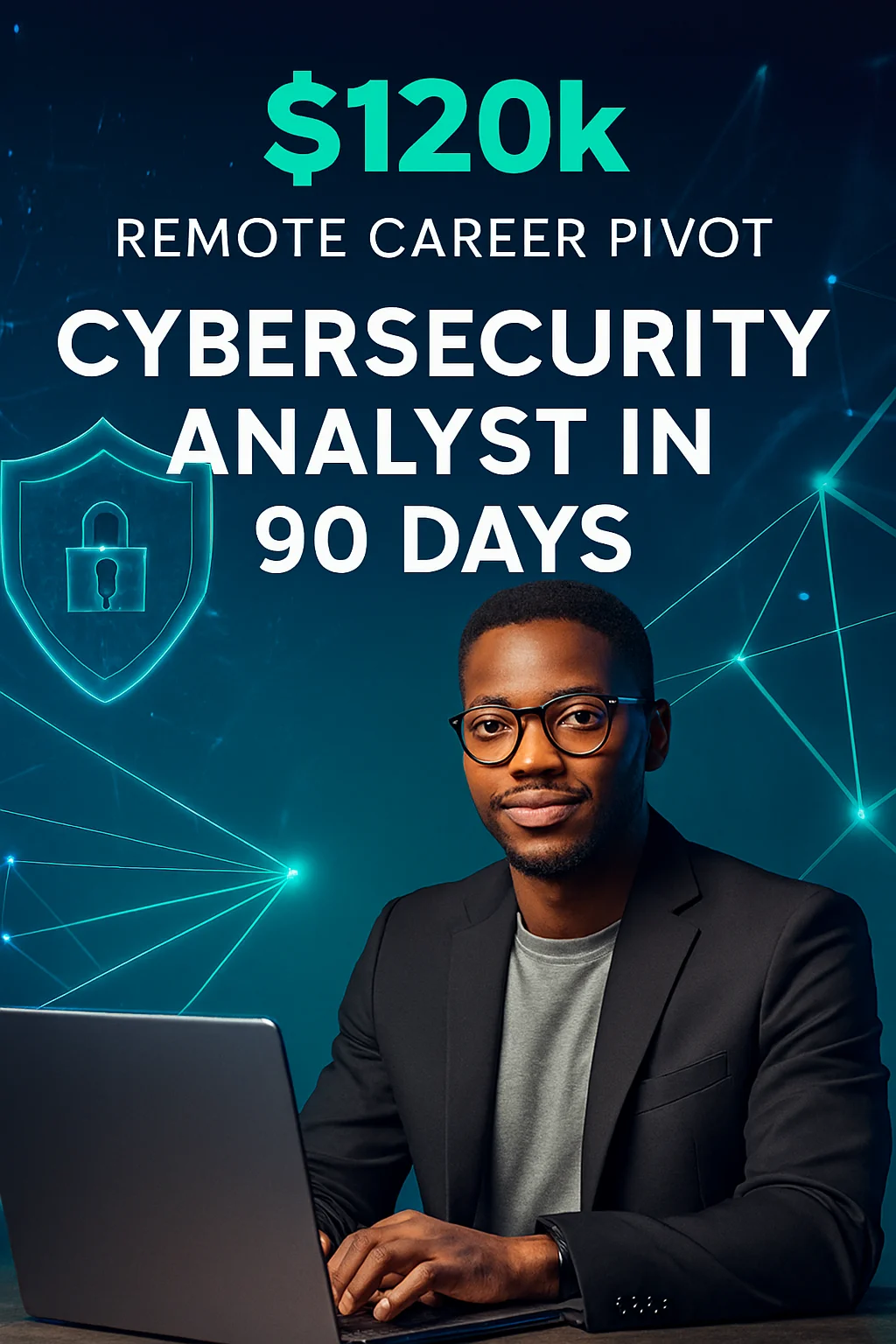
The cybersecurity shortage is your greatest financial asset. This is the step-by-step, skill-based roadmap to securing a six-figure, Remote Cybersecurity Jobs position in 90 days, bypassing the degree gatekeepers and proving that practical knowledge is the new currency.
Part 1: The Lede and The $120k Thesis
The single greatest lie the corporate world sells is the necessity of a four-year degree for a six-figure, white-collar career. In the current digital economy, this prerequisite has collapsed, especially within the relentless, hyper-demanding field of cybersecurity. Corporations don’t have time for academic prerequisites; they have immediate, escalating threats and a globally recognized talent shortage.
According to the U.S. Bureau of Labor Statistics (BLS), employment for Information Security Analysts is projected to grow by an astounding 35% between 2021 and 2031—a rate six times faster than the average occupation. This massive talent deficit, coupled with the proven earning potential of a Cybersecurity Analyst Salary No Degree (with average senior roles exceeding $120,000 annually), has created a unique window of opportunity: a high-speed, high-reward entry into the most stable market of the next decade.
This article is your ultra-specific, 90 Day Career Pivot plan. We are not aiming for an internship; we are aiming for a high-earning, remote, operational role. This transition is purely skill-based, driven by verifiable, industry-mandated certifications and a hands-on technical portfolio. Follow this precise roadmap, and you can transition from your current role to a six-figure remote security professional in three months.
Part 2: Day 1–30: The Foundation (The Theory and Vocabulary)
The first 30 days are about intense immersion. Before you touch a single hacking tool or install a virtual machine, you must master the fundamental language and philosophy of security. This foundation is what allows you to speak credibly in a remote interview and understand the dense material in your certification sprint, preparing you for successful Remote Cybersecurity Training.
Mastering the Core Principles: The Theory of Defense
Your goal is to build a rock-solid theoretical baseline. Focus intensely on these four pillars:
- The CIA Triad (The Mission Statement): This is the sacred text of cybersecurity. You must internalize the concepts of Confidentiality, Integrity, and Availability. Every decision a security analyst makes—from patching a server to updating a firewall rule—traces back to protecting these three principles. When you interview, you must be able to frame security priorities using the CIA Triad.
- Networking Fundamentals (The Map): A system cannot be secured if the network is not understood. Spend time mastering the OSI Model (Layers 1-7) and the core protocols: TCP/IP, DNS, DHCP, and ARP. Security threats often manifest at Layer 3 (Network) and Layer 7 (Application). Understanding protocols like ICMP (ping) and the functions of switches and routers is non-negotiable.
- Cryptography Basics (The Locksmith): Understand the difference between symmetric and asymmetric encryption, hashing (e.g., SHA-256), and the critical role of Public Key Infrastructure (PKI) and digital certificates. This is crucial for understanding secure communications, VPNs, and strong authentication.
- Security Architecture Principles: Beyond tools, you must understand concepts like Defense in Depth (using multiple layers of security) and Least Privilege (giving users only the necessary access). These principles inform every real-world security decision.
Affiliate Opportunity: Low-Cost Foundational Courses
To accelerate this foundational phase, leverage established, low-cost video platforms. Invest a small amount here to save potentially hundreds of hours.
- Resource 1 (Video): The highest-rated, current Network+ and Security+ fundamental video courses on Udemy or Coursera. Look for courses with a high volume of student reviews and recent updates. (Link to affiliate course)
- Resource 2 (Free): Professor Messer’s free video series on networking and foundational security provides an outstanding, no-cost theoretical grounding, specifically designed to prepare students for CompTIA exams. Supplement his materials with his low-cost practice exams.
Part 3: Day 31–60: The Certification Sprint (The Non-Negotiable Credential)
If degrees are the gatekeepers of the past, vendor-neutral certifications are the gate-openers of the present. For an entry-level remote analyst role, there is one non-negotiable credential: CompTIA Security+. It is universally recognized as the baseline for the industry.
CompTIA Security+ Remote Training: Your Bridge to $100k+
The Security+ is respected by organizations worldwide and is one of the few certifications that fulfills the U.S. Department of Defense directive for IT security roles (DoD 8570/8140 IAT Level II). It proves you understand the broad, operational security concepts every organization needs, directly preparing you for Remote Cybersecurity Training.
Metric CompTIA Security+ (SY0-701) Detail Passing Score 750 (on a scale of 100-900) Exam Cost $425 USD (Official CompTIA Voucher Price) Typical Study Time 90–140 hours total (4-6 weeks for aggressive, full-time study) Key Domain Weighting Security Operations (28%), Threats/Vulnerabilities (22%), Security Program Management (20%)
Your 30-Day Aggressive Study Plan for Security+:
- Weeks 1-2: Core Content Sprint: Dedicate 4-5 hours daily to consuming primary video courses and reading study guides. Prioritize the high-weight domains, especially Security Operations. You must understand incident response and monitoring.
- Week 3: Deep Dive & Practice Tests: Start taking full-length, timed practice exams. This is where the real learning happens. Review every single incorrect answer, not just the right ones. Your goal should be to score 85% consistently before sitting for the real exam.
- Week 4: Performance-Based Question (PBQ) Immersion: Focus on the hands-on, scenario-based questions (PBQs) that require configuration or analysis (e.g., placing the correct security control on a network diagram). This bridges the gap to the Practical Toolkit section. Schedule your exam for Day 60.
Affiliate Opportunity: Top 3 Paid Study Resources
To maximize efficiency and guarantee a pass, high-quality paid resources are essential for Remote Cybersecurity Training. (Affiliate Links go here)
- Resource 1 (Practice Exams): Recommend a top-tier practice exam provider that simulates the testing environment, featuring PBQ practice and question explanations.
- Resource 2 (Video/Lab Platform): Recommend an interactive video course that includes integrated virtual labs to practice command line and firewall configuration tasks.
- Resource 3 (Notes/Cramming): The best-rated official or renowned third-party book (e.g., Darril Gibson’s “Get Certified Get Ahead”) for quick-reference study and review.
Part 4: Day 61–75: The Practical Toolkit (Hands-On Experience)
Certification proves you can talk the talk. The Hands-On Portfolio proves you can walk the walk. This 15-day phase is dedicated to building the verifiable evidence that overrides the “No Degree” problem and directly addresses the high demands of Remote Cybersecurity Jobs.
Building Your Zero-Trust Home Lab for WFH
Your lab doesn’t require expensive hardware. It just requires dedication and accessible software. You will need a Virtual Machine (VM) hypervisor like VirtualBox or VMware Workstation Player.
Unconventional Data: Home Lab Resources & Space
The successful remote analyst must manage their technical resources effectively.
Component Minimum Specification Recommended Specification Processor Quad-core (i5 or Ryzen 5 equivalent) Hexa-core (i7 or Ryzen 7 equivalent) RAM 16 GB 32 GB (Highly Recommended for VMs) Disk Space 30 GB dedicated for Kali Linux and a target VM (Windows or Linux) 60 GB+ dedicated for log files and multiple VM snapshots Disk Type SSD (Solid State Drive) is mandatory for speed NVMe SSD
Actionable Lab Projects to Master (The Core Portfolio):
- Vulnerability Scanning (The Auditor):
- Tool: OpenVAS (free) or a trial of Nessus.
- Actionable Step: Install a deliberately vulnerable VM (like Metasploitable). Run a scan, generate a report, and then write a remediation plan that prioritizes vulnerabilities based on the CVSS (Common Vulnerability Scoring System) score. This demonstrates risk management, a key component of the Zero-Trust Framework for WFH.
- Packet Analysis (The Investigator):
- Tool: Wireshark.
- Actionable Step: Capture network traffic between your Kali VM and a target VM. Filter the traffic to identify clear-text protocols (FTP, Telnet) and encrypted protocols (HTTPS, SSH). Write a brief analysis on the risk of using unencrypted protocols. The ability to read a packet header is the analyst’s core technical superpower.
- SIEM Deployment (The Sentient Watcher):
- Tool: Splunk Free or ELK Stack (Elasticsearch, Logstash, Kibana).
- Actionable Step: Configure the target VM to forward logs to your Splunk instance. Create a simple dashboard to track events (e.g., successful vs. failed login attempts) and configure a basic alert based on three failed logins in five minutes. This demonstrates essential operational security monitoring for Endpoint Protection Tools Review.
The Remote Work Security Environment Metric
An analyst’s role is fundamentally different in a remote world. Your WFH setup is the network perimeter, and the Zero-Trust Framework for WFH philosophy—verify everything, trust nothing—must be applied to your own work setup.
- Tool Knowledge: Recruiters expect knowledge of commercial Endpoint Protection Tools Review solutions (e.g., CrowdStrike, SentinelOne). Be ready to discuss the difference between traditional Anti-Virus (AV) and modern Endpoint Detection and Response (EDR) solutions.
- Actionable Security: Implement a hardware security key (like a YubiKey) for MFA on all your professional accounts and ensure your local firewall is configured for maximum restriction. You must live the security you preach.
Part 5: Day 76–90: The Remote Job Strategy (Selling the Pivot)
With the Security+ certified (Day 60) and a hands-on portfolio complete (Day 75), the last two weeks are dedicated to landing the job. This requires a specific strategy for the highly competitive Remote Cybersecurity Jobs market.
Overcoming the “No Experience” Barrier in Remote Hiring
The “No Degree” hurdle is overcome by the cert and the lab. The “No Experience” hurdle is overcome by skillful resume framing and deep preparation that targets the Cybersecurity Analyst Salary No Degree level.
- The Portfolio Hack (The Evidence Converter):
- Create a clean, professional online document (Google Doc, Notion, or personal website) detailing your lab projects. Do not list tools; list business outcomes. Instead of “Ran a Nessus scan,” write “Identified and patched 14 critical vulnerabilities in a simulated Windows server environment, reducing the attack surface by 70%, and wrote a final remediation report.”
- Include a dedicated, documented case study titled: “The WFH Zero-Trust Implementation: A Personal Case Study,” demonstrating how you apply security principles to your own remote environment.
- The Resume Hack (The Re-Frame):
- You didn’t just do help desk or IT support; you were an “Initial Incident Responder,” and you “Managed Endpoint Security Tooling” and “Implemented Multi-Factor Authentication (MFA) Policies.”
- Move the “Certifications” section to the very top, directly under your professional summary. Your Security+ is your most valuable asset. Use High-Paying Remote Skills 2026 keywords like SIEM, Vulnerability Management, and Incident Response liberally throughout the document.
- The Interview Hack (The Confidence Builder):
- Remote interviews are highly technical and heavily behavioral. The interviewer wants to know how you think under pressure. The STAR method (Situation, Task, Action, Result) is mandatory for all behavioral questions.
- Top 5 Behavioral Questions (and the structure for answering them):
- “Describe a time you had to respond to a critical security alert. How did you handle the initial containment?” (Answer: Use the Containment, Eradication, Recovery framework. Focus on isolation and communication.)
- “An executive is refusing to implement MFA. How do you convince them to follow policy?” (Answer: Translate risk to business impact—data loss, regulatory fines, reputational damage. This shows security leadership.)
- “Tell us about a time you had to prioritize three security risks with limited resources.” (Answer: Use a Risk Matrix tied to the CIA Triad. Show your analytical process for deciding which threat has the highest probability and impact.)
- “How do you ensure you are following the principle of Least Privilege on your own remote workstation?” (Answer: Discuss using a separate, non-administrator account for daily tasks and a separate VM for high-risk analysis.)
- “What is your process for investigating a suspected phishing email that bypassed the email gateway?” (Answer: Detail checking headers, analysing embedded links safely (using sandboxes), and isolating the affected user’s machine. Focus on the analytical, step-by-step process.)
Part 6: Beyond Certification: The High-Income Stack (Future-Proofing)
Securing the first Remote Cybersecurity Jobs is the first step. To transition from an Analyst I salary of $95k to the $120k+ compensation target within two years, you must immediately begin future-proofing your skill stack. This is what defines the most valuable High-Paying Remote Skills 2026 professionals.
From Defender to Architect: The Skills That Drive Six Figures
- Cloud Security (The New Network Perimeter):
- Nearly all remote infrastructure runs on the cloud. You cannot be a senior analyst in 2026 without understanding cloud security.
- Action: Begin studying for the AWS Certified Cloud Practitioner (CCP – $100 USD) or the Microsoft Azure Fundamentals (AZ-900 – $99 USD). These low-barrier entry certifications prove you understand shared responsibility models, Identity and Access Management (IAM), and key security controls (e.g., Security Groups) in a cloud environment.
- Scripting & Automation (The Efficiency Driver):
- The highest-paid analysts automate tedious, repeatable tasks. This is where the 90 Day Career Pivot meets efficiency. Learning Python is non-negotiable.
- Action: Focus on Python scripts for log parsing (filtering millions of lines of SIEM data quickly using libraries like
refor regular expressions), interacting with simple APIs, and creating automated vulnerability reports. This is how you elevate your role from a reactive ticket-responder to a proactive security engineer.
- DevSecOps Principles (Security by Design):
- Understanding the DevSecOps pipeline—integrating security testing into the development process—is a major high-income skill. Learn what SAST (Static Application Security Testing) and DAST (Dynamic Application Security Testing) are and how they prevent vulnerabilities before they hit production. This knowledge proves you think at the organizational level.
- Introductory AI/ML for Threat Detection:
- Analysts today work alongside AI. You won’t be building the models, but you must know how to interpret the output of AI-powered SIEM and Endpoint Protection Tools Review. Understanding terms like “behavioral anomaly detection,” “machine learning baselines,” and the concepts of false positives and false negatives is essential to accurately triage sophisticated, next-generation alerts.
Part 7: Conclusion & Final Call to Action
The demand for skilled, certified, and proven cybersecurity professionals has created the greatest meritocratic opportunity in decades. Your college degree matters far less than your focused, documented, and verifiable commitment over the next 90 days.
By following this precise roadmap—mastering the foundational theory, securing the CompTIA Security+ certification, building a verifiable home lab portfolio, and executing a targeted Remote Cybersecurity Jobs search strategy—you are not just changing careers. You are future-proofing your entire income stream, all while earning a Cybersecurity Analyst Salary No Degree from the comfort of your own home.
The $120k Remote Career Pivot is not a dream; it’s a fully documented plan. The only remaining variable is your will to execute.
Ready to start Day 1 and unlock your potential for a six-figure remote salary? Download our free comprehensive checklist detailing every tool, video course, and practice test required to complete your personalised Remote Cybersecurity Training in 90 days.
Discover more from Remote Work Tips
Subscribe to get the latest posts sent to your email.




Freelancing has become an increasingly popular career choice in recent years, particularly in the technology industry. With the rise of remote work and the growing demand for tech talent, freelance coding jobs are expected to grow in popularity over the next few years. In this blog post, we will explore the opportunities for freelancers in the coding industry in 2024.
The Rise of Remote Work
Remote work has become more popular than ever, especially in the tech industry. According to a study by Upwork, 73% of all teams will have remote workers by 2028. With the rise of remote work, companies are more willing to hire freelancers to complete coding projects. Freelancers can work from anywhere, and companies can save money on office space and other overhead costs.
Increased Demand for Tech Talent
As technology continues to grow and evolve, the demand for skilled tech professionals is also increasing. According to the Bureau of Labor Statistics, employment in computer and information technology occupations is projected to grow 11% from 2019 to 2029, much faster than the average for all occupations. This demand for tech talent provides a great opportunity for freelancers to find work in the coding industry.
New Technologies and Platforms
As technology advances, new platforms and technologies are constantly being developed. Freelancers who stay up-to-date with the latest trends and technologies will have a competitive advantage in the marketplace. For example, blockchain technology is expected to become more mainstream in the coming years, providing opportunities for freelancers with expertise in this area.
Diverse Range of Projects
One of the benefits of freelance coding jobs is the diverse range of projects that freelancers can work on. From mobile app development to website design, freelancers can choose projects that match their skills and interests. This variety of work can help freelancers build a diverse portfolio and gain experience in a variety of areas.
Flexible Schedules
One of the biggest advantages of freelance coding jobs is their flexibility. Freelancers can choose their hours and work as much or as little as they want. This flexibility allows freelancers to work around other commitments, such as family or education and can provide a better work-life balance.
Conclusion
Freelance coding jobs are expected to grow in popularity in the coming years. The rise of remote work, increased demand for tech talent, new technologies and platforms, a diverse range of projects, and flexible schedules all provide opportunities for freelancers in the coding industry. Freelancers who stay up-to-date with the latest trends and technologies will have a competitive advantage in the marketplace and can build successful careers in the tech industry.
Discover more from Remote Work Tips
Subscribe to get the latest posts sent to your email.

The world of freelancing is constantly evolving, and the skills that are in demand are always changing. In 2023, there are a number of new skills that freelancers will need to be successful.
1. Data Science
Data science is the process of collecting, analyzing, and interpreting data to extract insights. This is a rapidly growing field, as businesses are increasingly looking to use data to make better decisions. Freelancers with data science skills will be in high demand, as they will be able to help businesses collect, analyze, and interpret data to make better business decisions.

2. Artificial Intelligence (AI)
AI is another rapidly growing field, and freelancers with AI skills will be in high demand. AI is being used in a variety of industries, including healthcare, finance, and customer service. Freelancers with AI skills will be able to help businesses develop and implement AI solutions.
3. Cybersecurity
Cybersecurity is another essential skill for freelancers in 2023. As businesses become increasingly reliant on technology, they are also becoming more vulnerable to cyberattacks. Freelancers with cybersecurity skills will be able to help businesses protect their data and systems from cyberattacks.

4. Blockchain
Blockchain is a distributed ledger technology that is used to record transactions. This technology is still in its early stages, but it has the potential to revolutionize a variety of industries. Freelancers with blockchain skills will be able to help businesses develop and implement blockchain solutions.

5. UX/UI Design
UX/UI design is the process of designing user interfaces and user experiences. This is a critical skill for freelancers in the digital age, as businesses are increasingly looking to create user-friendly and engaging websites and apps. Freelancers with UX/UI design skills will be able to help businesses create products that users love.

6. Content Marketing
Content marketing is the process of creating and distributing content to attract and retain customers. This is an essential skill for freelancers in any industry, as businesses are increasingly looking to create content that will engage their target audience. Freelancers with content marketing skills will be able to help businesses create content that drives traffic, leads, and sales.

7. Digital Marketing
Digital marketing is the process of using digital channels to reach and engage customers. This is a broad field that includes a variety of disciplines, such as search engine optimization (SEO), pay-per-click (PPC) advertising, social media marketing, and email marketing. Freelancers with digital marketing skills will be able to help businesses reach their target audience and achieve their marketing goals.

8. Virtual Assistant
Virtual assistants provide administrative, technical, or creative assistance to clients from a remote location. This is a growing field, as businesses are increasingly looking to outsource administrative tasks to freelancers. Virtual assistants with a variety of skills will be in high demand.

9. Transcriptionist
Transcriptionists convert audio or video recordings into text. This is a skill that is in high demand in a variety of industries, such as healthcare, legal, and education. Freelancers with transcription skills will be able to help businesses transcribe audio and video recordings quickly and accurately.

10. Translator
Translators translate text from one language to another. This is a skill that is in high demand in a globalized world. Freelancers with translation skills will be able to help businesses communicate with customers and partners in other countries.

Conclusion
These are just a few of the new skills that will be in demand for freelancers in 2023. As the world of work continues to evolve, the skills that are in demand will also continue to change. Freelancers who are able to stay ahead of the curve and develop the skills that are in demand will be the most successful in the years to come.
Discover more from Remote Work Tips
Subscribe to get the latest posts sent to your email.


Move by payment networks worsens country’s financial isolation over Ukraine invasion
Payment networks Visa, Mastercard and American Express have said they would suspend operations in Russia, dealing a new blow to the country’s financial system after its invasion of Ukraine. The decision followed a request by Ukraine’s President Volodymyr Zelensky on Saturday and threatens to further isolate a Russian economy facing crippling financial sanctions and a string of corporate boycotts.
San Francisco-based Visa said in a statement that it would immediately begin working with clients and partners in Russia to stop all transactions over the coming days. Once the process is completed, transactions by Visa cards issued in Russia will no longer work outside the country, and cards issued elsewhere in the world will not work within Russia.
“We are compelled to act following Russia’s unprovoked invasion of Ukraine, and the unacceptable events that we have witnessed,” said Al Kelly, chief executive of Visa. Mastercard said it was suspending its operations in Russia shortly afterwards on Saturday. American Express followed on Sunday, adding that it would also terminate all business operations in Belarus.
The payment networks blocked multiple financial institutions in Russia from using their networks last week following the imposition of sanctions. But the move to block all transactions will worsen the nation’s financial isolation. Russia’s central bank said on Sunday that credit cards using the Visa and Mastercard payments systems would stop functioning overseas after March 9.
But it has downplayed the impact of the suspension, suggesting all Visa and Mastercard cards issued by Russian banks would continue to work inside Russia as transactions could be handled by a domestic operator, according to Russia’s state news agency Tass. Some Russian banks, including Sberbank and Alfa-Bank, have said they might issue co-badged cards linked to Russia’s Mir and China’s UnionPay international payment systems. Some Russian banks already operate the UnionPay payment system, including Gazprombank and Rosselkhozbank, said Tass.
The sanctions announced last week had already caused Russians in Moscow and other cities to rush to withdraw cash from the nation’s banks on concerns that payment card services offered by Visa and Mastercard would stop working. Long queues have formed at ATMs waiting for fresh deliveries of cash and some western experts have warned about the liquidity of Russia’s banking system.
Earlier on Saturday, Zelensky called for the suspension of all commercial transactions, including by Visa and Mastercard, during a video call with US lawmakers. During the hour-long zoom call with Senators, Zelensky thanked the US for its support but called for more military aid and sanctions to isolate Russia. In a Twitter post following the call, senator Lindsey Graham said: “Anything that could hurt the Russian economy will help the Ukrainian people and may make this war more difficult for Putin.”
Mastercard, which has operated in Russia for more than 25 years, said that following its suspension of operations, cards issued by Russian banks will no longer be supported by its network, and any card issued outside of the country will not work at Russian merchants or ATMs. “We don’t take this decision lightly,” the company said in a statement, adding that it reflected “the unprecedented nature of the current conflict and the uncertain economic environment”. The company said it would restore operations “when it is appropriate, and if it is permissible under the law”.
Last week, Mastercard and Visa disclosed that about 4 per cent of their net revenues in 2021 came from business conducted within, into and out of Russia. Amid concerns the companies could face retaliatory action from Russian hackers following their action, Mastercard said it would remain vigilant to ensure the safety and security of the global payments ecosystem and its network.
“Our cyber and intelligence teams will continue to work with governments and partners around the world to ensure that stability, integrity and resiliency of our systems continue to guide our operations and response to potential cyber attacks,” said the company. Earlier on Saturday, PayPal announced it would shut down all its services in Russia. “Under the current circumstances, we are suspending PayPal services in Russia,” said chief executive Dan Schulman. “PayPal supports the Ukrainian people and stands with the international community in condemning Russia’s violent military aggression in Ukraine.”
Via FT
Discover more from Remote Work Tips
Subscribe to get the latest posts sent to your email.


Challenges to Freelancers in the Age of 5G and AI in 2026
The Morning the Rates Dropped At 6:47 on a Tuesday morning in Bengaluru, Arjun Mehta refreshed his Upwork dashboard and...


The New Talent Arbitrage: Top 10 Freelance Startups for Investment in 2026
The $5 trillion global gig economy has reached its “Execution Era.” In 2026, the speculative hype surrounding generalist marketplaces like...


Top 15 AI-Powered Freelance Marketplaces for Massive Projects in 2026
The enterprise freelance landscape has undergone a seismic transformation. What began as a tactical hiring solution has evolved into a...


Top 10 AI Tools for Coders to Deliver Projects on Time
In the relentless world of software development, deadlines define success. Imagine a mid-level engineer at a fintech startup in late...


Top 10 Project Management Tools for Freelancers to Succeed in 2026
Discover the 10 best project management tools helping freelancers thrive in 2026. AI-powered platforms, pricing insights, and expert analysis from...


The Future of Work is Here: Mark Your Calendars for the Global Freelancers Festival 2026!
The gig economy is no longer just a trend; it is the backbone of the modern workforce. If you are...


Top 20 Freelance Jobsites and Boards for Opinion Writers for Massive Growth
Explore the definitive guide to 20 premium freelance platforms where opinion writers can scale their careers, backed by authoritative research...


How to Build a Thriving Freelance Journalism Career in 2026: Remote Opportunities and Digital Reporting in the AI Era
In January 2026, the media landscape looks dramatically different from a decade ago. Traditional newsrooms have shrunk, with the U.S....
-

 blogging4 years ago
How to Use Social Media to Promote Your Blog
-

 freelance4 years ago
6 Future-Focused Skills Freelance Creatives Can’t Afford to Ignore
-

 blogging4 years ago
20 Best Freelance Marketplaces for Freelancers in 2022 to Make Money
-

 social media4 years ago
How to Learn Social Media Without Getting Scammed
-

 Digital Banking4 years ago
Pakistan Consumer Confidence Index increased by 8.8% in Q4 2021
-

 blogging4 years ago
30 “Proven” Ways to Make Money Online Blogging with WordPress
-

 freelance4 years ago
7 Highest Paying Freelance Jobs For Earning A Steady Income
-

 Startups4 years ago
Private equity is buying up America’s newspapers