
Data Entry
Typing Speed Required for Data Entry Operator


Most data entry jobs demand at least 45 words per minute. Transcriptionists, legal secretaries, and typists typically have a minimum word count of 60 to 90 words per minute on average. Typing speed is essential, but so is accuracy; typing faster may not be effective if accuracy is lost.
This post will discuss the typing speed required for data entry jobs, as well as what to look for in a potential employee.
Typing Speed Required to Work as a Data Entry Operator
When hiring a data entry operator, it is important to consider the typing speed required for the position. A fast and accurate typist is essential for ensuring that all of the data entered into the system is correct.
There is no minimum industry standard for typing speed, but it is considered good practice that a typist is able to type at least 60 words per minute before applying for any data entry position. Many typist job listing ads have a description for a typing job that requires a typist to type 80 to 90 words per minute.
However, if you’re not sure how fast your ideal typist can type, there are plenty of free typing tests available online that you can ask them to take. This will help avoid any costly hiring mistakes.
It is detrimental to a company’s productivity and profitability if a typist takes excessively long to input information. A rapid fulfillment rate from the typist implies more work and additional productivity for the company.
Typing speed is just one factor that you should consider when hiring a freelancer for data entry work. Keep in mind the cost of typing services, as well. Depending on the amount and type of data entry required, the rates for online typists can vary quite a bit. Make sure to get an accurate estimate before starting any project.
Ultimately, finding the right data entry operator for your team is essential for a smooth and successful project. By considering the typing speed required and taking other factors such as typing accuracy into account, you’re sure to find the perfect fit for your needs.
Typing Accuracy
In addition to typing speed, it is also important to find a data entry operator who has excellent typing accuracy. This means the majority of the information they enter will be entered correctly the first time.
It’s useless for a typist to type fast if they don’t do it correctly at the same time. Their job as a home-based online typist will demand the same degree of accuracy and productivity as any other kind of work.
Because many remote data entry tasks deal with complicated or detail-sensitive material, such as personal contacts and long strings of numbers that must be precisely entered in order to be effective, they need considerable attention to detail. Even a single mistake may ruin an entire input. A good typist will have an accuracy rate of 95% or higher.
By assessing the typing speed and accuracy of a potential data entry operator, you’ll be able to ensure that the project will go well and without any costly errors.
Typing Speed and Typing Service Rates
If you are searching for a data input operator who has excellent typing skills, it is important to keep in mind the typing speed and typing service rates. Freelancers can charge higher typing services rates if they have a faster typing speed.
As mentioned before, the cost of online typists can vary depending on the amount and type of data entry required. The most common charges for each page range from $4 to $15 USD, depending on the deadline and other criteria.
A typical page contains 350 words. However, as a general rule, most professional typists charge between $25 and $40 per hour.
When looking for a data entry operator, it is important to get an estimate from the typist before starting the project. This will help you avoid any surprises down the road.
Conclusion
When considering the cost of typing services, it is important to keep in mind the importance of finding a data entry operator with excellent typing accuracy and typing speed so you can be sure that your project will run smoothly and without any mistakes.
Are you looking for a data entry operator who has excellent typing skills? Check out our online typist directory! Our list of professional typists is sure to have the perfect fit for your needs!
Via Guru
Discover more from Remote Work Tips
Subscribe to get the latest posts sent to your email.



careers
The Sovereign Developer: The 5 Most Lucrative Coding Jobs in 2026 (And Why They Pay So Well)

For the past three years, the prevailing tech narrative has been dominated by a singular, slightly hysterical prediction: AI is going to automate software engineering. We were told that generative models would render the human coder obsolete, turning computer science degrees into expensive paperweights.
Welcome to 2026. The reality, as always, is far more nuanced—and significantly more lucrative for those who understood the shift.
It is true that the era of the “syntax translator”—the junior developer who takes highly specified Jira tickets and converts them into standard boilerplate—is fading. In fact, the Bureau of Labor Statistics explicitly projects a 6% decline in traditional “computer programmer” roles by 2034, noting that AI is successfully automating repetitive tasks.
But here is the twist: while programmers are declining, demand for software developers, architects, and quality engineers is surging by 15%, representing roughly 129,200 new openings per year. When AI writes the boilerplate, the human premium shifts away from writing code and toward orchestrating systems, designing architecture, and securing infrastructure.
The highest paying coding jobs in 2026 don’t belong to people who just write code; they belong to the “Sovereign Developers.” These are the engineers who understand how to deploy large language models in production, secure decentralized networks, and build internal platforms that multiply the productivity of entire organizations.
If you want to understand where the real money is in tech today, you have to look at the intersection of capital, complexity, and scale. Let’s dive into the data.
The Methodology: Tracking 2026 Tech Compensation
To identify the most lucrative coding jobs this year, we cannot rely on outdated, pre-AI salary surveys. The market has reorganized itself too quickly.
For this analysis, we synthesized real-time 2026 signed-offer data, crossing quantitative databases with qualitative hiring trends. Our primary sources include:
- Levels.fyi and Glassdoor for self-reported, equity-inclusive total compensation (TC) in Tier 1 and Tier 2 tech hubs.
- KORE1’s 2026 AI Salary Guide for production-grade machine learning compensation.
- Kube Careers Q1 2026 / State of Platform Engineering for the shifting economics of DevOps.
- Robert Half and InterviewPal for baseline corporate architecture ranges.
- BEON.tech’s 2026 Engineering Report for global and nearshore market benchmarking.
A note on compensation: We are focusing on “Total Compensation” (Base Salary + Bonus + Equity/RSUs). While base salaries often hit a ceiling around $250,000, equity is what pushes these roles into the half-million-dollar stratosphere.
Here are the top five most lucrative coding careers in 2026, the economic drivers behind them, and what it takes to break in.
1. AI Infrastructure Engineer (The Model Plumber)
We have officially moved past the “magic trick” phase of Artificial Intelligence. In 2023 and 2024, companies hired researchers to build prototypes. In 2026, companies are hiring AI Infrastructure Engineers to make those prototypes run at scale without bankrupting the company on cloud compute costs.
Why Demand is Exploding
According to Coursera’s 2026 AI Pay Guide, the hype has matured into operational reality. An AI Infrastructure Engineer (or MLOps Engineer) doesn’t necessarily invent new neural network architectures. Instead, they build the pipes. They figure out how to serve a 70-billion parameter open-source model to two million daily active users with sub-100 millisecond latency. They manage GPU clustering, optimize inference engines, and implement RAG (Retrieval-Augmented Generation) pipelines.
Because compute is the most expensive line item on a modern tech company’s P&L, an engineer who can optimize a model’s efficiency by 15% can save a corporation millions of dollars a month. That leverage commands an astronomical premium.
The 2026 Salary Range
- Mid-Level (3-5 years): $170,000 – $260,000 Total Comp
- Senior (6-9 years): $220,000 – $350,000+ Total Comp
- Staff / Principal (10+ years): $350,000 – $600,000+ Total Comp
As KORE1’s recent signed-offer data reveals, inside FAANG (Facebook, Amazon, Apple, Netflix, Google) and premier AI startups like Anthropic and OpenAI, Staff-level AI engineers are routinely seeing total compensation north of $600,000. Even in non-tech hubs like Denver or remote U.S. roles, senior base salaries easily clear $200,000.
The Toolbelt
- Languages: Python, C++, Rust (for performance-critical bottlenecks).
- Frameworks/Tools: PyTorch, vLLM, TensorRT, Triton, LangChain.
- Infrastructure: Kubernetes, CUDA programming, Vector Databases (Pinecone, Weaviate).
2. Platform Engineer (The Evolution of DevOps)
If you are still calling yourself a DevOps Engineer, you might be leaving 20% of your potential salary on the table. The breakout role of the last two years has undeniably been the Platform Engineer.
Why Demand is Exploding
For years, “DevOps” was less of a role and more of a chaotic culture where software engineers were suddenly forced to manage their own cloud infrastructure, leading to massive burnout. Enter Platform Engineering.
Instead of fixing individual deployment pipelines, Platform Engineers build an “Internal Developer Platform” (IDP). They treat their fellow developers as their customers, building self-service portals where a software engineer can spin up a secure, compliant cloud environment with a single click.
Gartner accurately predicted that by 2026, 80% of large engineering organizations would have dedicated platform teams. Because a great platform engineer accelerates the output of every other developer in the company, their multiplier effect is massive.
The 2026 Salary Range
- Average Base Salary: $172,038
- Senior Total Comp: $220,000 – $290,000
- The “Platform Premium”: According to Q1 2026 data from Kube Careers, Platform Engineers earn an average of 20% to 27% more than traditional DevOps engineers ($172K vs. $143K), simply because the role requires a broader, product-oriented mindset.
The Toolbelt
- Languages: Go, Python, TypeScript.
- Frameworks/Tools: Backstage (Spotify’s IDP framework), Crossplane, ArgoCD.
- Infrastructure: Kubernetes (absolute mastery required), Terraform, advanced CI/CD.
3. Data Architect (The Moat Builder)
In the age of ubiquitous AI, the algorithms are largely commoditized. Everyone has access to the same foundational models from OpenAI, Google, or Meta. Therefore, a company’s only remaining competitive moat is its proprietary, internal data. If your data is messy, your AI is useless.
Why Demand is Exploding
The Data Architect is the visionary who structures how an organization collects, governs, and utilizes petabytes of information. They are moving away from clunky, centralized data warehouses and toward modern “Data Mesh” architectures—treating data as a decentralized product.
As noted by InterviewPal’s 2026 Benchmarks, competencies in real-time data streaming and multi-cloud architectures add 15% to 25% salary premiums to an offer. You aren’t just writing SQL; you are designing the nervous system of the enterprise.
The 2026 Salary Range
- Median Total Comp: $203,250
- Top 10% (Senior/Enterprise): $400,000+ Total Comp
- Geographic Arbitrage: Remote Data Architects living in tier-2 cities are frequently securing San Francisco-level base salaries ($180,000 – $280,000) because the talent pool capable of bridging data engineering and machine learning workflows is incredibly shallow.
The Toolbelt
- Languages: SQL (advanced), Python, Scala.
- Frameworks/Tools: Apache Kafka, Flink, Spark, dbt (Data Build Tool).
- Infrastructure: Snowflake, Databricks, AWS Redshift/GCP BigQuery.
4. Cybersecurity Architect / Security Engineer (The Shield)
As code generation tools allow developers to ship software faster than ever, the surface area for cyber attacks has expanded exponentially. Furthermore, AI agents are now being weaponized by threat actors to find zero-day vulnerabilities at machine speed.
Why Demand is Exploding
The Cybersecurity Architect is no longer just the “department of no.” They are fundamental to business continuity. These professionals design “Zero Trust” networks and secure the sprawling, complex cloud environments deployed by the engineers mentioned above.
A 2026 Unihackers Salary Guide highlights that there are still millions of unfilled cybersecurity positions globally. The shift toward securing LLM supply chains (ensuring AI models aren’t poisoned with malicious training data) has created a hyper-niche, hyper-lucrative subfield. When the alternative is a $50 million ransomware payout and a destroyed reputation, companies do not bargain hunt for security architects.
The 2026 Salary Range
- Security Engineer (Mid): $150,000 – $247,000 Base
- Cloud Security Architect: $170,000 – $220,000 Base
- CISO (Chief Information Security Officer): $220,000 – $420,000+ Base (Total comp routinely exceeds $500K in enterprise).
The Toolbelt
- Languages: Python, Go, C (for reverse engineering).
- Frameworks/Tools: Cloud Security Posture Management (CSPM), SIEM tools, Identity and Access Management (IAM).
- Methodologies: Zero Trust Architecture, DevSecOps, Penetration Testing, AI Threat Modeling.
5. Cloud/Distributed Systems Architect (The Orchestrator)
While “Cloud Architect” might sound like a legacy title from 2018, the 2026 version of this role is practically unrecognizable. It is no longer about migrating on-premise servers to AWS. It is about managing terrifying levels of distributed complexity.
Why Demand is Exploding
Companies are now running “multi-cloud” strategies to avoid vendor lock-in, while simultaneously pushing compute to the “edge” (closer to the user) to support real-time AI features. The Cloud Architect designs systems that can survive entire regional data center outages without the user ever noticing.
According to Robert Half’s 2026 Tech Salary Data, cloud architecture remains foundational. They must balance high availability with ruthless cost optimization. A great Distributed Systems Architect pays for their own salary in their first month just by optimizing cloud egress fees and compute instances.
The 2026 Salary Range
- Mid-Level Base: $135,000 – $170,000
- High/Senior Base: $162,750 – $200,000+
- Total Comp: Frequently crosses $250,000 to $300,000 when factoring in equity at major tech firms and tier-1 consultancies.
The Toolbelt
- Languages: Java, Go, Rust.
- Frameworks/Tools: HashiCorp Stack (Terraform, Consul, Vault), gRPC.
- Infrastructure: Deep, native expertise in AWS, GCP, or Azure; Distributed consensus algorithms (Raft/Paxos).
2026 Coding Jobs Landscape: A Comparative View
| Role | Median Total Comp (US) | Primary Economic Driver | Barrier to Entry | Career Velocity |
| AI Infrastructure | $250,000+ | AI scale & compute optimization | Very High | Explosive |
| Platform Engineer | $210,000+ | Org-wide developer productivity | High | High |
| Data Architect | $203,000+ | Proprietary data as a business moat | High | Steady / High |
| Cybersecurity Arch. | $210,000+ | Cloud expansion & AI threat vectors | High (Requires high trust) | High |
| Cloud Architect | $190,000+ | Multi-cloud complexity & cost control | Medium / High | Steady |
(Note: Data aggregated from Levels.fyi, Kube Careers, and KORE1 Q1 2026 reports. Figures represent estimated medians for senior-level talent including equity).
How to Break In: Advice for Ambitious Tech Professionals
If you are looking at these numbers and wondering how to pivot your career, the advice for 2026 is fundamentally different than it was a decade ago. You cannot just “learn to code” in a vacuum anymore. You must learn to architect.
Here is how you upskill into these premium tiers:
1. Shift from “Syntax” to “Systems Thinking”
Stop defining yourself by the programming language you use. Being a “React Developer” or a “Java Developer” is a vulnerable position in an era of AI code generation. Instead, become an expert in the systems those languages run on. Understand networking, memory management, distributed databases, and cloud economics. AI is great at writing a discrete function; it is currently terrible at designing a resilient, SOC2-compliant microservices architecture.
2. Learn the Language of the Business
The highest-paid engineers don’t talk about code; they talk about leverage. A Platform Engineer commands $200,000 because they can say: “My internal portal reduced developer onboarding time from 3 weeks to 3 hours, saving the company $1.2M annually.” Learn to translate your technical implementations into P&L (Profit & Loss) impact.
3. Embrace the Open Source AI Ecosystem
You do not need a Ph.D. in mathematics to work in AI today. You need to understand implementation. Spend your weekends fine-tuning open-source models (like LLaMA 3 or Mistral) on your own data. Learn how to use vector databases. The gap between “traditional software engineer” and “AI engineer” is bridged by understanding the modern MLOps stack.
4. Master Cloud Economics (FinOps)
In the era of zero-interest rate phenomena (ZIRP), companies didn’t care about cloud bills. In 2026, efficiency is everything. If you can walk into an interview and demonstrate how your architectural decisions reduced AWS spend by 30% while improving performance, you write your own ticket.
The Broad View: Code as Capital
The panic surrounding the death of the software engineer was misplaced. What died was the commoditized coder.
As we look at the landscape of 2026, it is clear that programming is no longer viewed as a blue-collar digital trade. It has evolved into high-stakes capital allocation. When you deploy code today, you are deploying the autonomous agents, data pipelines, and security protocols that constitute the actual metabolic system of the modern corporation.
The roles that command a quarter-million dollars or more are those that require intense human judgment, strategic foresight, and an understanding of complex, interlocking systems. The AI will write the lines. But it is the Sovereign Developer who will build the world.
Frequently Asked Questions (FAQ)
Q: Will AI eventually automate these high-paying architecture jobs too?
A: Eventually is a long time, but architecture requires understanding ambiguous business requirements, navigating corporate politics, and balancing competing trade-offs (e.g., cost vs. latency vs. security). Current AI excels at deterministic tasks with clear boundaries, not ambiguous, high-stakes system design.
Q: Do I need a degree to get these jobs in 2026?
A: According to the BLS, a bachelor’s degree remains the standard entry point. However, in disciplines like Platform Engineering and Cloud Architecture, undeniable proof of work (open-source contributions, massive system design experience, top-tier certifications like AWS Solutions Architect Professional or Kubernetes CKA) routinely supersedes formal education requirements.
Q: What is the highest paying coding job without a management title?
A: Staff and Principal AI/ML Infrastructure Engineers. These are “Individual Contributor” (IC) roles that do not manage people, yet they frequently out-earn mid-level engineering managers and directors, easily pulling $400K+ in total compensation at top-tier tech firms.
Q: I’m a mid-level Full-Stack Developer. What is my fastest path to a $200K+ role?
A: The most logical lateral move is into Platform Engineering or Cloud Architecture. Your frontend/backend experience gives you empathy for the developers you will be building tools for. Upskill heavily in Kubernetes, Go, and Infrastructure as Code (Terraform), and reposition your resume around “developer experience” and “system reliability.”
Discover more from Remote Work Tips
Subscribe to get the latest posts sent to your email.
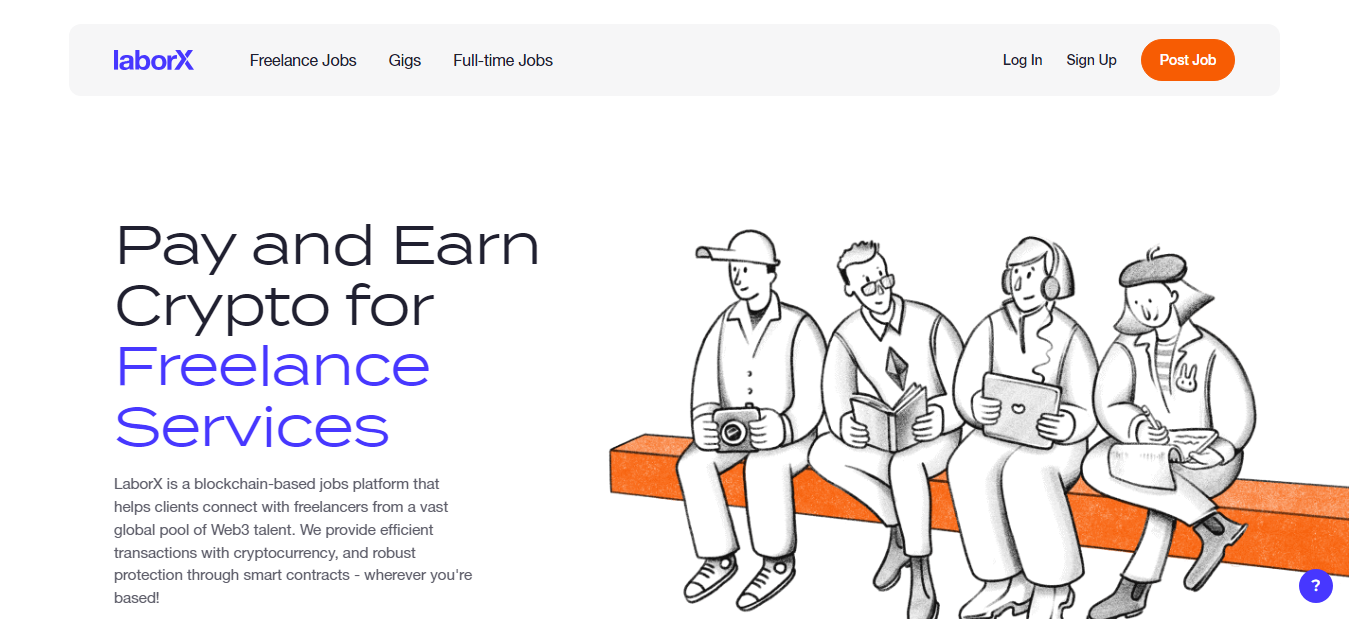
LabourX.com is a promising online platform that caters to job seekers and employers alike. As someone who recently explored the platform, I found several aspects worth highlighting in this review.
User-Friendly Interface:
One of the first things that struck me about LabourX.com was its user-friendly interface. Navigating the website was a breeze, thanks to its clean design and intuitive layout. Whether you’re a tech-savvy user or someone less experienced with online job platforms, you’ll find it easy to create an account, search for jobs, and post listings.

Diverse Job Categories:
LabourX.com offers a wide range of job categories to suit various industries and professions. From IT and healthcare to hospitality and creative arts, there’s something for everyone. This diversity makes it a valuable resource for job seekers with different skills and backgrounds.
Advanced Search Filters:
The platform’s advanced search filters are a notable feature. You can narrow down your job search by location, job type (full-time, part-time, freelance), salary range, and more. This customization helps job seekers find positions that match their specific criteria quickly.
Robust Job Listings:
During my exploration of LabourX.com, I was impressed by the quantity and quality of job listings. Employers seem to actively use the platform to find talent, resulting in a robust and constantly updated job pool. This is excellent news for job seekers who want access to fresh opportunities.
Employer-Focused Features:
LabourX.com also provides a range of features for employers. Creating and managing job listings is straightforward, and the platform offers tools for screening and communicating with potential candidates. Employers can also access a talent pool, making it easier to find the right fit for their organization.
Community and Support:
The platform’s community aspect is another positive aspect. Users can connect with other professionals, join discussion groups, and seek advice. This sense of community fosters a supportive environment for both job seekers and employers.
Room for Improvement:
While LabourX.com has many strengths, there are areas where it could improve. For instance, it would be beneficial to see more information about each company posting a job, including company reviews and ratings from employees. Additionally, adding a mobile app could enhance the user experience for those who prefer to job hunt on their smartphones.
Conclusion:
In summary, LabourX.com is a promising online job platform that offers a user-friendly experience, diverse job categories, advanced search options, and robust job listings. It caters to the needs of both job seekers and employers, fostering a supportive community. While there is room for improvement, LabourX.com is undoubtedly a valuable resource for anyone looking to advance their career or hire top talent. It’s worth exploring for those in the job market.
Discover more from Remote Work Tips
Subscribe to get the latest posts sent to your email.


How to Calculate Your Freelance Day Rate (& Raise It Without Losing Clients)
Setting your freelance day rate is one of the most critical commercial decisions you will make. Set it too low,...


Optimizing for AI Overviews: The Freelancer’s Guide to Schema Markup & Generative Engine Optimization (GEO)
Traditional search engine optimization is undergoing a seismic shift. As Google AI Overviews, Perplexity, and SearchGPT handle millions of daily...


Top 6 Payment Solutions for Freelancers Faster Than Banks
Midway through a project in Milan, a freelance UX designer named Elena watched her rent payment bounce. The client’s bank...


10 Freelancing Tips for Landing Projects in the AI Era
The Market Split No One Warned You About In February 2026, a mid-career graphic designer in Austin posted to a...


The Sovereign Developer: The 5 Most Lucrative Coding Jobs in 2026 (And Why They Pay So Well)
For the past three years, the prevailing tech narrative has been dominated by a singular, slightly hysterical prediction: AI is...


Top 10 Most Demanded Freelance Skills in 2026
The Trillion-Dollar Talent Shift Nobody Is Talking About Honestly There is a number that should stop every career-minded professional in...


Fiverr Denies ‘Major Security Lapse’ Despite Private User Data Appearing in Google Search
Imagine logging into Google on a Tuesday morning to check your own name — a routine vanity search, the kind...


4 Must-Have Skills Every Nomadic Founder Needs to Build a Successful Online Business
Want to work from anywhere? I know this because I’ve been on both sides of that line. From Trucking Routes...
-

 blogging5 years ago
How to Use Social Media to Promote Your Blog
-

 freelance5 years ago
6 Future-Focused Skills Freelance Creatives Can’t Afford to Ignore
-

 social media5 years ago
How to Learn Social Media Without Getting Scammed
-

 freelance9 months ago
The Economics of Remote Work: How Hybrid Models Are Reshaping Global Productivity
-

 blogging5 years ago
20 Best Freelance Marketplaces for Freelancers in 2022 to Make Money
-

 freelance5 years ago
7 Highest Paying Freelance Jobs For Earning A Steady Income
-

 Digital Banking5 years ago
Pakistan Consumer Confidence Index increased by 8.8% in Q4 2021
-

 blogging5 years ago
30 “Proven” Ways to Make Money Online Blogging with WordPress